-
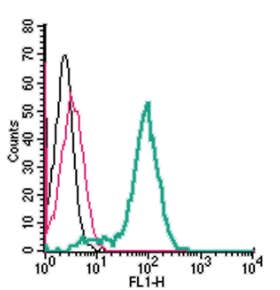 A Rabbit Polyclonal Antibody to Human Tumor Necrosis Factor Receptor 2 (extracellular)
- Product Code: ANT-042
- Short Description: A Rabbit Polyclonal Antibody to Human Tumor Necrosis Factor Receptor 2 (extracellular)
- Host: Rabbit
- Label: Unconjugated
- Reactivity: Human
- Applications: Indirect flow cytometry, Live cell imaging, Western blot
- Target: TNFR2, Tumor Necrosis Factor Receptor Superfamily Member 1B, TNFRSF1B, Tumor Necrosis Factor Receptor Type II, TNF-RII, CD120b
-
 A Rabbit Polyclonal Antibody to TNF Receptor 1
- Product Code: ANT-041
- Short Description: A Rabbit Polyclonal Antibody to TNF Receptor 1
- Host: Rabbit
- Label: Unconjugated
- Reactivity: Human
- Applications: Indirect flow cytometry, Live cell imaging, Western blot
- Target: Tumor necrosis factor receptor 1, TNFR1, TNFRSF1A, TNF receptor superfamily member 1A, CD120a
-
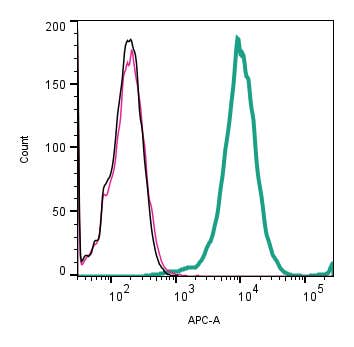 A Rabbit Polyclonal Antibody to TROY
- Product Code: ANT-033
- Short Description: A Rabbit Polyclonal Antibody to TROY
- Host: Rabbit
- Label: Unconjugated
- Reactivity: Human, Rat, Mouse
- Applications: Indirect flow cytometry, Live cell imaging, Western blot, Immunocytochemistry, Immunofluorescence
- Target: TNF receptor superfamily member 19, Toxicity and JNK inducer, TAJ, TRADE
-
 A Rabbit Polyclonal Antibody to LINGO-1
- Product Code: ANT-032
- Short Description: A Rabbit Polyclonal Antibody to LINGO-1
- Host: Rabbit
- Label: Unconjugated
- Reactivity: Human, Rat, Mouse
- Applications: Western blot, Immunofluorescence, Immunohistochemistry
- Target: Leucine-rich repeat and immunoglobulin-like domain-containing nogo receptor-interacting protein 1, Leucine-rich repeat neuronal protein 1, Leucine-rich repeat neuronal protein 6A, LRRN6A, LERN1
-
 A Rabbit Polyclonal antibody to GFRAL
- Product Code: ANT-029
- Short Description: A Rabbit Polyclonal antibody to GFRAL
- Host: Rabbit
- Label: Unconjugated
- Reactivity: Rat, Mouse
- Applications: Western blot, Immunohistochemistry
- Target: GDNF Family Receptor Alpha-Like
-
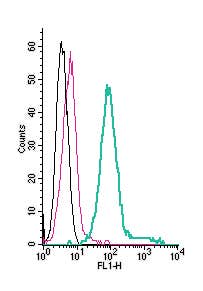 A Rabbit Polyclonal Antibody to Ret receptor (extracellular) conjugated to the fluorescent dye FITC
- Product Code: ANT-025-F
- Short Description: A Rabbit Polyclonal Antibody to Ret receptor (extracellular) conjugated to the fluorescent dye FITC
- Host: Rabbit
- Label: FITC
- Reactivity: Human, Rat, Mouse
- Applications: Live cell imaging, Flow cytometry
- Target: Proto-oncogene tyrosine-protein kinase receptor Ret, Proto-oncogene c-Ret, Cadherin family member 12, CDHF12, PTC, RET51
-
 A Rabbit Polyclonal Antibody to Ret Receptor
- Product Code: ANT-025
- Short Description: A Rabbit Polyclonal Antibody to Ret Receptor
- Host: Rabbit
- Label: Unconjugated
- Reactivity: Human, Rat, Mouse
- Applications: Indirect flow cytometry, Live cell imaging, Western blot, Immunocytochemistry, Immunofluorescence, Immunohistochemistry
- Target: Proto-oncogene tyrosine-protein kinase receptor Ret, Proto-oncogene c-Ret, Cadherin family member 12, CDHF12
-
 A Rabbit Polyclonal Antibody to GDNF Family Receptor α4
- Product Code: ANT-024
- Short Description: A Rabbit Polyclonal Antibody to GDNF Family Receptor α4
- Host: Rabbit
- Label: Unconjugated
- Reactivity: Rat, Mouse
- Applications: Live cell imaging, Western blot, Immunocytochemistry, Immunofluorescence, Immunohistochemistry
- Target: GFRA4, GFRα4, GDNF family receptor α4, GDNF receptor alpha 4, Persephin receptor
-
 A Rabbit Polyclonal Antibody to GDNF Family Receptor α3
- Product Code: ANT-023
- Short Description: A Rabbit Polyclonal Antibody to GDNF Family Receptor α3
- Host: Rabbit
- Label: Unconjugated
- Reactivity: Rat, Mouse
- Applications: Western blot
- Target: GFRA3, GFRα3, GDNF family receptor α3, GDNF receptor alpha 3
-
 A Rabbit Polyclonal Antibody to GDNF Family Receptor α1
- Product Code: ANT-021
- Short Description: A Rabbit Polyclonal Antibody to GDNF Family Receptor α1
- Host: Rabbit
- Label: Unconjugated
- Reactivity: Human, Rat, Mouse
- Applications: Live cell imaging, Western blot, Immunocytochemistry, Immunofluorescence, Immunohistochemistry
- Target: GFRA1, GFRα1, GDNF family receptor α1, GDNF receptor alpha 1, Ret ligand 1, RETL1, TRNR1
Loading...