
-
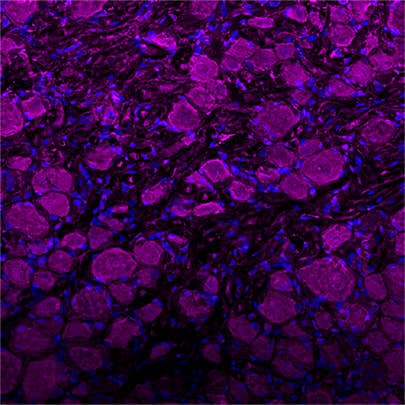
 A fluorescent recombinant human BDNF for highly sensitive detection of TrkB/p75NTR receptors, live-cell imaging, neuronal development, and synaptic plasticity studies
- Product Code: B-250-FRN
- Short Description: A fluorescent recombinant human BDNF for highly sensitive detection of TrkB/p75NTR receptors, live-cell imaging, neuronal development, and synaptic plasticity studies
- Applications: Apoptosis assay, Cell-Based Assays, Ex vivo, In vivo, Survival assay, Direct flow cytometry, Fluorescence staining, Live cell imaging, Immunofluorescence, Western blot
- MW: 14134 Da
-
 A biotinylated human BDNF for sensitive detection of TrkB, p75NTR receptors, and the study of neuronal survival and synaptic plasticity
- Product Code: B-250-B
- Short Description: A biotinylated human BDNF for sensitive detection of TrkB, p75NTR receptors, and the study of neuronal survival and synaptic plasticity
- Label: Biotin
- Applications: Apoptosis assay, Cell Culture, Differentiation assay, Ex vivo, In vivo, Survival assay, Fluorescence staining, Live cell imaging, Immunofluorescence, Western blot
- MW: ~28 kDa (dimer)
-
 A synthetic human GDNF prodomain, primarily used for studying the intracellular trafficking and regulated secretion of mature GDNF via the SorLA receptor
- Product Code: SPG-100
- Short Description: A synthetic human GDNF prodomain, primarily used for studying the intracellular trafficking and regulated secretion of mature GDNF via the SorLA receptor
- Applications: Cell-Based Assays, Western blot
- MW: 6334 Da
-
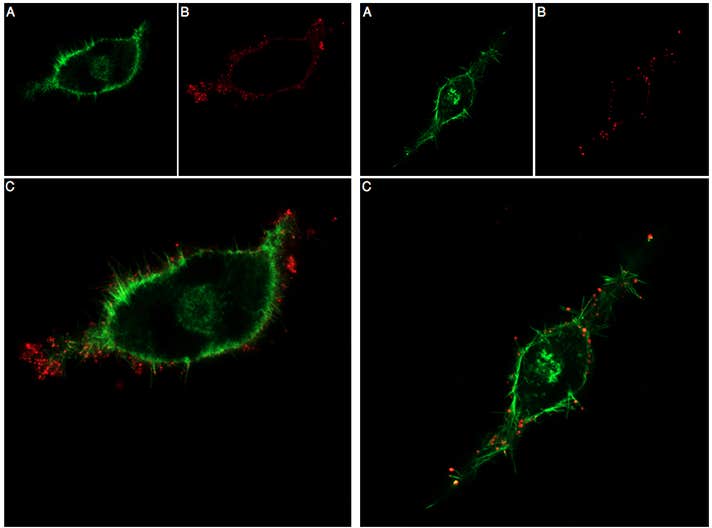 A biotinylated human GDNF for imaging and sensitive detection of GFRα1/RET receptors and the study of dopaminergic neuron survival
- Product Code: G-240-B
- Short Description: A biotinylated human GDNF for imaging and sensitive detection of GFRα1/RET receptors and the study of dopaminergic neuron survival
- Label: Biotin
- Applications: Axon growth, Cell Culture, Fluorescence staining, Live cell imaging, Immunofluorescence, Indirect flow cytometry, Western blot
- MW: 30.8 kDa (dimer)
-
 A recombinant human GFRα1-Fc fusion protein that acts as an inhibitor of GDNF activity, preventing its binding to the native RET receptor complex
- Product Code: RPC-003
- Short Description: A recombinant human GFRα1-Fc fusion protein that acts as an inhibitor of GDNF activity, preventing its binding to the native RET receptor complex
- Applications: Cell Culture, Western blot
- MW: ~85 kDa
-
 A biotinylated human proBDNF for sensitive detection of p75NTR, sortilin receptors, and the study of neuronal apoptosis and long-term depression (LTD)
- Product Code: B-257-B
- Short Description: A biotinylated human proBDNF for sensitive detection of p75NTR, sortilin receptors, and the study of neuronal apoptosis and long-term depression (LTD)
- Label: Biotin
- Applications: Cell Culture, In vitro binding assay, Western blot, Live imaging
- MW: ~52.5 kDa (dimer)
-
 A biotinylated human proBDNF for sensitive detection of p75NTR, sortilin receptors, and the study of neuronal apoptosis and long-term depression (LTD)
- Product Code: B-256-B
- Short Description: A biotinylated human proBDNF for sensitive detection of p75NTR, sortilin receptors, and the study of neuronal apoptosis and long-term depression (LTD)
- Label: Biotin
- Applications: Cell Culture, Western blot, Live imaging
- MW: ~52 kDa (dimer)
-
 A recombinant human TrkB-Fc fusion protein that acts as an inhibitor of BDNF and NT-4 activity, preventing their binding to native TrkB receptors
- Product Code: RPC-001
- Short Description: A recombinant human TrkB-Fc fusion protein that acts as an inhibitor of BDNF and NT-4 activity, preventing their binding to native TrkB receptors
- Applications: Cell Culture, Western blot
- MW: ~120 kDa
-
 A recombinant human TrkC-Fc fusion protein that acts as an inhibitor of NT-3 activity, preventing its binding to native TrkC receptors
- Product Code: RPC-004
- Short Description: A recombinant human TrkC-Fc fusion protein that acts as an inhibitor of NT-3 activity, preventing its binding to native TrkC receptors
- Applications: Cell Culture, Western blot
- MW: ~100 kDa
-
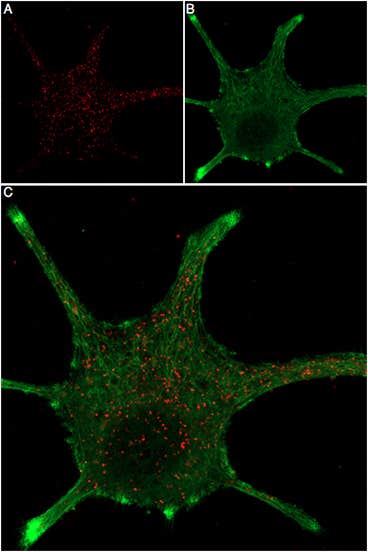 A fluorescent mouse NGF 2.5S for sensitive detection, live-cell imaging, and tracking of TrkA and p75NTR receptors and NGF internalization dynamics
- Product Code: N-240-FRN
- Short Description: A fluorescent mouse NGF 2.5S for sensitive detection, live-cell imaging, and tracking of TrkA and p75NTR receptors and NGF internalization dynamics
- Label: ATTO 647N
- Applications: Binding kinetics, Cell Culture, Survival assay, Electrophysiology, Direct flow cytometry, Fluorescence staining, Live cell imaging, Immunofluorescence, Neurite outgrowth assay
- MW: ~26.6 kDa (dimer)
Loading...