
-

 A Rabbit Polyclonal Antibody to TRPM2 Channel
- Product Code: ACC-043
- Short Description: A Rabbit Polyclonal Antibody to TRPM2 Channel
- Host: Rabbit
- Label: Unconjugated
- Reactivity: Human, Rat, Mouse
- Applications: Western blot, Immunocytochemistry, Immunofluorescence, Immunohistochemistry
- Target: Transient receptor potential cation channel subfamily M member 2, LTrpC2, TrpC7
-
 A Rabbit Polyclonal Antibody to TRPM2 Channel Conjugated to the Fluorescent Dye ATTO-594
- Product Code: ACC-043-AR
- Short Description: A Rabbit Polyclonal Antibody to TRPM2 Channel Conjugated to the Fluorescent Dye ATTO-594
- Host: Rabbit
- Label: ATTO 594
- Reactivity: Human, Rat, Mouse
- Applications: Immunocytochemistry, Immunofluorescence, Immunohistochemistry
- Target: Transient receptor potential cation channel subfamily M member 2, LTrpC2, TrpC7
-
 A Rabbit Polyclonal Antibody to TRPV2 (VRL1) Channel
- Product Code: ACC-039
- Short Description: A Rabbit Polyclonal Antibody to TRPV2 (VRL1) Channel
- Host: Rabbit
- Label: Unconjugated
- Reactivity: Rat, Mouse
- Applications: Indirect flow cytometry, Live cell imaging, Western blot, Immunocytochemistry, Immunofluorescence, Immunoprecipitation, Immunohistochemistry
- Target: Transient receptor potential cation channel subfamily V member 2, Vanilloid receptor-like protein 1, VRL-1, Osm-9-like TRP channel 2, OTRPC2, Stretch-activated channel 2B, SAC2B
-
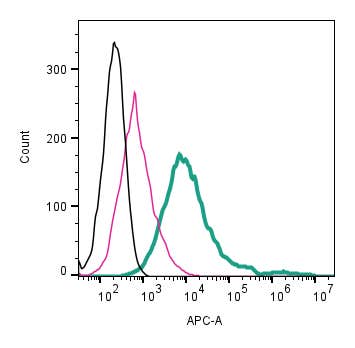 A Rabbit Polyclonal Antibody to TRPV2 (VRL1) (extracellular) conjugated to the fluorescent dye Allophycocyanin (APC)
- Product Code: ACC-039-APC
- Short Description: A Rabbit Polyclonal Antibody to TRPV2 (VRL1) (extracellular) conjugated to the fluorescent dye Allophycocyanin (APC)
- Host: Rabbit
- Label: APC
- Reactivity: Rat, Mouse
- Applications: Live cell imaging, Flow cytometry
- Target: Transient receptor potential cation channel subfamily V member 2, Vanilloid receptor-like protein 1, VRL-1, Osm-9-like TRP channel 2, OTRPC2, Stretch-activated channel 2B, SAC2B
-
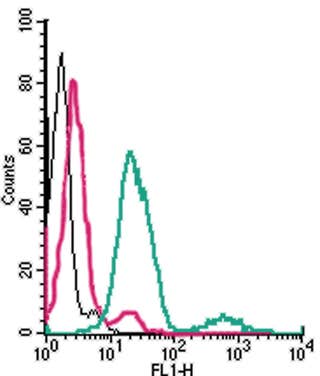 A Rabbit Polyclonal Antibody to TRPV2 (VRL1) Channel Conjugated to the Fluorescent Dye FITC
- Product Code: ACC-039-F
- Short Description: A Rabbit Polyclonal Antibody to TRPV2 (VRL1) Channel Conjugated to the Fluorescent Dye FITC
- Host: Rabbit
- Label: FITC
- Reactivity: Rat, Mouse
- Applications: Flow cytometry
- Target: Transient receptor potential cation channel subfamily V member 2, Vanilloid receptor-like protein 1, VRL-1, Osm-9-like TRP channel 2, OTRPC2, Stretch-activated channel 2B, SAC2B
-
 A Rabbit Polyclonal Antibody to TRPV2 (VRL1) Channel
- Product Code: ACC-032
- Short Description: A Rabbit Polyclonal Antibody to TRPV2 (VRL1) Channel
- Host: Rabbit
- Label: Unconjugated
- Reactivity: Rat, Mouse
- Applications: Western blot, Immunofluorescence, Immunoprecipitation, Immunohistochemistry
- Target: Transient receptor potential cation channel subfamily V member 2, Vanilloid receptor-like protein 1, VRL-1, Osm-9-like TRP channel 2, OTRPC2, Stretch-activated channel 2B, SAC2B
-
 A Guinea Pig Polyclonal Antibody to EMR1
- Product Code: AER-051-GP
- Short Description: A Guinea Pig Polyclonal Antibody to EMR1
- Host: Guinea Pig
- Label: Unconjugated
- Reactivity: Human, Rat, Mouse
- Applications: Western blot
- Target: MR1 hormone receptor, EGF-like module-containing mucin-like hormone receptor-like 1, Adhesion G protein-coupled receptor E1, TM7LN3, F4/80, GPF480
-
 A Guinea Pig Polyclonal Antibody to IBA1/AIF1
- Product Code: ACS-010-GP
- Short Description: A Guinea Pig Polyclonal Antibody to IBA1/AIF1
- Host: Guinea Pig
- Label: Unconjugated
- Reactivity: Human, Rat, Mouse
- Applications: Western blot, Immunohistochemistry
- Target: Ionized calcium-binding adapter molecule 1, Allograft Inflammatory Factor 1, MRF-1, Microglia response factor
-
 A Guinea Pig Polyclonal Antibody to P2X4 Receptor
- Product Code: APR-002-GP
- Short Description: A Guinea Pig Polyclonal Antibody to P2X4 Receptor
- Host: Guinea Pig
- Label: Unconjugated
- Reactivity: Human, Rat, Mouse
- Applications: Western blot
- Target: P2RX4, P2X purinoceptor 4, ATP receptor
-
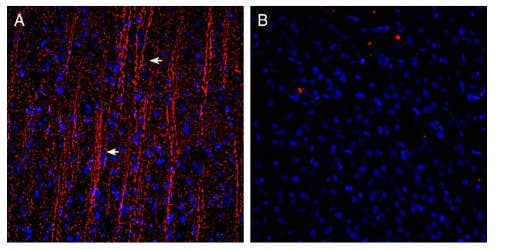 A Guinea Pig Polyclonal Antibody to P2Y12 Receptor
- Product Code: APR-020-GP
- Short Description: A Guinea Pig Polyclonal Antibody to P2Y12 Receptor
- Host: Guinea Pig
- Label: Unconjugated
- Reactivity: Human, Rat, Mouse
- Applications: Live cell imaging, Western blot, Immunocytochemistry, Immunofluorescence, Immunohistochemistry
- Target: P2Y purinoceptor 12, P2RY12, ADP-glucose receptor, Platelet ADP receptor, HORK3
Loading...