-
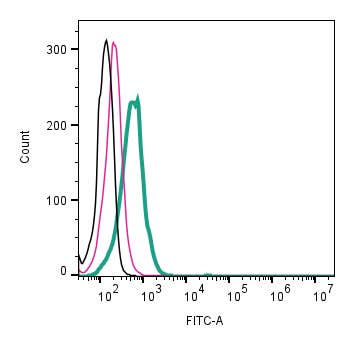 A Rabbit Polyclonal Antibody to Neuropeptide S Receptor (extracellular) conjugated to the fluorescent dye FITC
- Product Code: ANR-029-F
- Short Description: A Rabbit Polyclonal Antibody to Neuropeptide S Receptor (extracellular) conjugated to the fluorescent dye FITC
- Host: Rabbit
- Label: FITC
- Reactivity: Human, Rat, Mouse
- Applications: Live cell imaging, Flow cytometry
- Target: NPSR1, G-Protein Coupled Receptor 154, GPR154, G-Protein Coupled Receptor for Asthma Susceptibility, GPRA
-
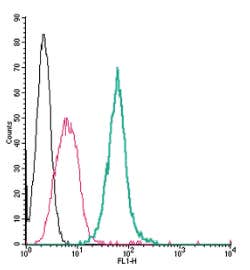 A Rabbit Polyclonal Antibody to Neuropilin-1 (NRP1) (extracellular) conjugated to the fluorescent dye FITC.
- Product Code: ANR-063-F
- Short Description: A Rabbit Polyclonal Antibody to Neuropilin-1 (NRP1) (extracellular) conjugated to the fluorescent dye FITC.
- Host: Rabbit
- Label: FITC
- Reactivity: Human, Rat, Mouse
- Applications: Flow cytometry
- Target: Vascular endothelial cell growth factor 165 receptor, VEGF165R, CD304
-
 A Rabbit Polyclonal Antibody to Neuropilin-2 Conjugated to the Fluorescent Dye FITC
- Product Code: ANR-062-F
- Short Description: A Rabbit Polyclonal Antibody to Neuropilin-2 Conjugated to the Fluorescent Dye FITC
- Host: Rabbit
- Label: FITC
- Reactivity: Human, Rat, Mouse
- Applications: Flow cytometry
- Target: Vascular endothelial cell growth factor 165 receptor 2, VEGF165R2
-
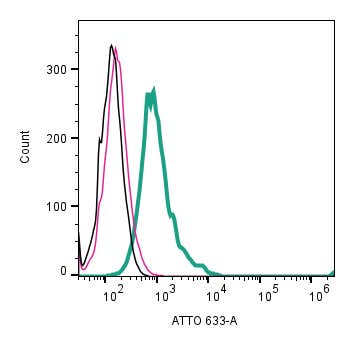 A Rabbit Polyclonal Antibody to Nicotinic Acetylcholine Receptor α7 Conjugated to the Fluorescent Dye ATTO-633
- Product Code: ANC-007-FR
- Short Description: A Rabbit Polyclonal Antibody to Nicotinic Acetylcholine Receptor α7 Conjugated to the Fluorescent Dye ATTO-633
- Host: Rabbit
- Label: ATTO 633
- Reactivity: Human, Rat, Mouse
- Applications: Live cell imaging, Flow cytometry
- Target: nAChR α7, Cholinergic receptor nicotinic alpha 7, Neuronal acetylcholine receptor subunit alpha-7, ACRA7
-
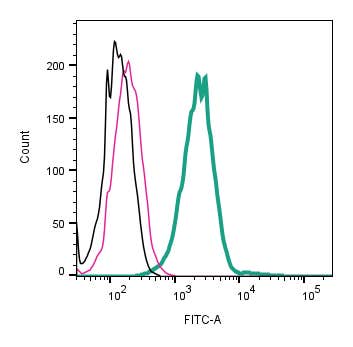 A Rabbit Polyclonal Antibody to Nicotinic Acetylcholine Receptor α7 Conjugated to the Fluorescent Dye FITC
- Product Code: ANC-007-F
- Short Description: A Rabbit Polyclonal Antibody to Nicotinic Acetylcholine Receptor α7 Conjugated to the Fluorescent Dye FITC
- Host: Rabbit
- Label: FITC
- Reactivity: Human, Rat, Mouse
- Applications: Live cell imaging, Flow cytometry
- Target: nAChR α7, Cholinergic receptor nicotinic alpha 7, Neuronal acetylcholine receptor subunit alpha-7, ACRA7
-
 A Rabbit Polyclonal Antibody to Nicotinic Acetylcholine Receptor β2 Conjugated to the Fluorescent Dye ATTO-594
- Product Code: ANC-012-AR
- Short Description: A Rabbit Polyclonal Antibody to Nicotinic Acetylcholine Receptor β2 Conjugated to the Fluorescent Dye ATTO-594
- Host: Rabbit
- Label: ATTO 594
- Reactivity: Human, Rat, Mouse
- Applications: Live cell imaging, Immunocytochemistry, Immunofluorescence, Immunohistochemistry
- Target: nAChR β2, Neuronal acetylcholine receptor subunit beta-2, Cholinergic receptor nicotinic beta 2, ACRB2, EFNL3
-
 A Rabbit Polyclonal Antibody to Nicotinic Acetylcholine Receptor β4 Conjugated to the Fluorescent Dye ATTO-594
- Product Code: ANC-014-AR
- Short Description: A Rabbit Polyclonal Antibody to Nicotinic Acetylcholine Receptor β4 Conjugated to the Fluorescent Dye ATTO-594
- Host: Rabbit
- Label: ATTO 594
- Reactivity: Human, Rat, Mouse
- Applications: Live cell imaging, Immunocytochemistry, Immunofluorescence, Immunohistochemistry
- Target: nAChR β4, Neuronal acetylcholine receptor subunit beta-4, Cholinergic receptor nicotinic beta 4
-
 A Rabbit Polyclonal Antibody to NMDA Receptor 2A (GluN2A) Conjugated to the Fluorescent Dye ATTO-488
- Product Code: AGC-002-AG
- Short Description: A Rabbit Polyclonal Antibody to NMDA Receptor 2A (GluN2A) Conjugated to the Fluorescent Dye ATTO-488
- Host: Rabbit
- Label: ATTO 488
- Reactivity: Human, Rat, Mouse
- Applications: Immunofluorescence, Immunohistochemistry
- Target: NMDA receptor 2A, NR2A, GRIN2A, Ionotropic glutamate receptor subunit ε1, N-methyl-D-aspartate receptor subunit 2A
-
 A Rabbit Polyclonal Antibody to NMDA Receptor 2B (GluN2B) Conjugated to the Fluorescent Dye ATTO-594
- Product Code: AGC-003-AR
- Short Description: A Rabbit Polyclonal Antibody to NMDA Receptor 2B (GluN2B) Conjugated to the Fluorescent Dye ATTO-594
- Host: Rabbit
- Label: ATTO 594
- Reactivity: Human, Rat, Mouse
- Applications: Immunofluorescence, Immunohistochemistry
- Target: NMDA receptor 2B, Ionotropic glutamate receptor subunit ε2, N-methyl-D-aspartate receptor subunit 2B, GRIN2B, NR2B
-
 A Rabbit Polyclonal Antibody to Nociceptin Receptor Conjugated to the Fluorescent Dye ATTO-594
- Product Code: AOR-015-AR
- Short Description: A Rabbit Polyclonal Antibody to Nociceptin Receptor Conjugated to the Fluorescent Dye ATTO-594
- Host: Rabbit
- Label: ATTO 594
- Reactivity: Human, Rat, Mouse
- Applications: Immunofluorescence, Immunohistochemistry
- Target: κ-Type 3 opioid receptor, KOR-3, Orphanin FQ receptor, ROR-C, XOR1, ORL1, N/OFQ receptor
Loading...