-
 A Guinea Pig Polyclonal Antibody to SCN2A (NaV1.2) Channel
- Product Code: ASC-002-GP
- Short Description: A Guinea Pig Polyclonal Antibody to SCN2A (NaV1.2) Channel
- Host: Guinea Pig
- Label: Unconjugated
- Reactivity: Human, Rat, Mouse
- Applications: Western blot, Immunofluorescence, Immunohistochemistry
- Target: BII, Brain type II Na+ channel, Sodium channel protein type 2 subunit alpha
-
 A Guinea Pig Polyclonal Antibody to Stargazin (CaVγ2 Subunit)
- Product Code: ACC-012-GP
- Short Description: A Guinea Pig Polyclonal Antibody to Stargazin (CaVγ2 Subunit)
- Host: Guinea Pig
- Label: Unconjugated
- Reactivity: Rat, Mouse
- Applications: Western blot
- Target: CaVγ2, Voltage-dependent calcium channel gamma-2 subunit, CACNG2, TARP gamma-2, Transmembrane AMPAR regulatory protein gamma-2, Waggler
-
 A Guinea Pig Polyclonal Antibody to Synaptophysin
- Product Code: ANR-013-GP
- Short Description: A Guinea Pig Polyclonal Antibody to Synaptophysin
- Host: Guinea Pig
- Label: Unconjugated
- Reactivity: Human, Rat, Mouse
- Applications: Western blot, Immunohistochemistry
- Target: Major synaptic vesicle protein p38, SYP
-
 A Guinea Pig Polyclonal Antibody to Anti-Synaptotagmin-1 (SYT1)
- Product Code: ANR-003-GP
- Short Description: A Guinea Pig Polyclonal Antibody to Anti-Synaptotagmin-1 (SYT1)
- Host: Guinea Pig
- Label: Unconjugated
- Reactivity: Rat, Mouse
- Applications: Western blot, Immunohistochemistry
- Target: Synaptotagmin I, SytI, p65, SVP65
-
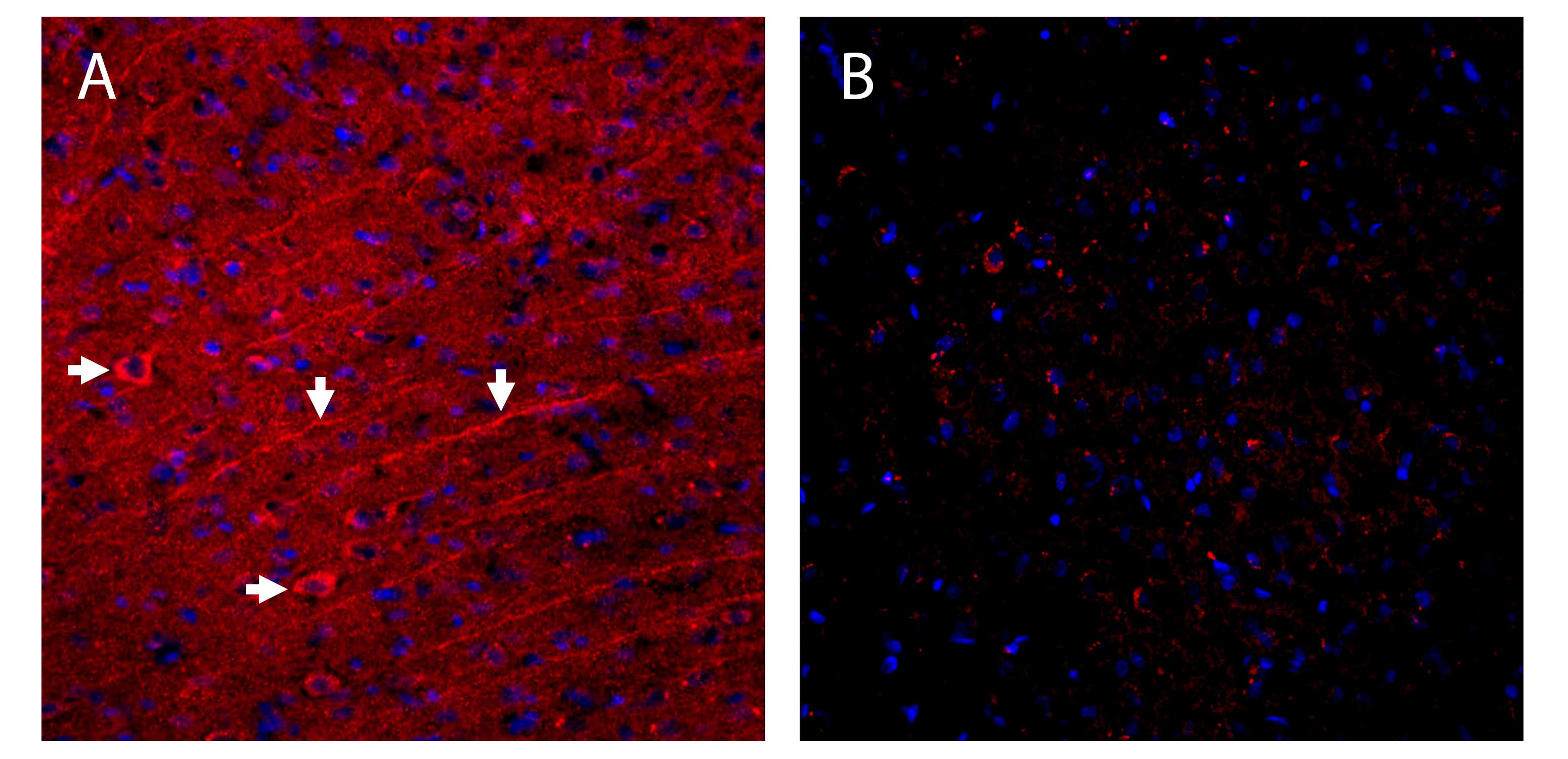 A Guinea Pig Polyclonal Antibody to SynGAP protein
- Product Code: APZ-032-GP
- Short Description: A Guinea Pig Polyclonal Antibody to SynGAP protein
- Host: Guinea Pig
- Label: Unconjugated
- Reactivity: Human, Rat, Mouse
- Applications: Western blot, Immunohistochemistry
- Target: SynGAP
-
 A Guinea Pig Polyclonal Antibody to TrkB
- Product Code: ANT-019-GP
- Short Description: A Guinea Pig Polyclonal Antibody to TrkB
- Host: Guinea Pig
- Label: Unconjugated
- Reactivity: Human, Rat, Mouse
- Applications: Western blot, Immunohistochemistry
- Target: Neurotrophic tyrosine kinase receptor type 2, NTRK2, BDNF/NT-3 growth factors receptor, TrkB Tyrosine Kinase
-
 A Guinea Pig Polyclonal Antibody to TRPA1 (extracellular)
- Product Code: ACC-037-GP
- Short Description: A Guinea Pig Polyclonal Antibody to TRPA1 (extracellular)
- Host: Guinea Pig
- Label: Unconjugated
- Reactivity: Human, Rat, Mouse
- Applications: Western blot, Immunohistochemistry
- Target: Transient receptor potential cation channel subfamily A member 1, ANKTM1, Ankyrin-like with transmembrane domains protein 1, Transformation-sensitive protein p120, Wasabi Receptor
-
 A Guinea Pig Polyclonal Antibody to TRPC3 Channel
- Product Code: ACC-016-GP
- Short Description: A Guinea Pig Polyclonal Antibody to TRPC3 Channel
- Host: Guinea Pig
- Label: Unconjugated
- Reactivity: Rat, Mouse
- Applications: Western blot, Immunohistochemistry
- Target: Short transient receptor potential channel 3, Transient receptor protein 3, TRP3
-
 A Guinea Pig Polyclonal Antibody to TRPC6 Channel
- Product Code: ACC-017-GP
- Short Description: A Guinea Pig Polyclonal Antibody to TRPC6 Channel
- Host: Guinea Pig
- Label: Unconjugated
- Reactivity: Rat, Mouse
- Applications: Western blot, Immunofluorescence, Immunohistochemistry
- Target: Short transient receptor potential channel 6, Transient receptor protein 6, TRP6
-
 A Guinea Pig Polyclonal Antibody to TRPV1 (VR1) Channel
- Product Code: ACC-030-GP
- Short Description: A Guinea Pig Polyclonal Antibody to TRPV1 (VR1) Channel
- Host: Guinea Pig
- Label: Unconjugated
- Reactivity: Mouse
- Applications: Western blot, Immunofluorescence, Immunohistochemistry
- Target: Transient receptor potential cation channel subfamily V member 1, Capsaicin receptor, Vanilloid receptor 1, OTRPC1
Loading...