-
 A Rabbit Polyclonal Antibody to GABA(A) ε Receptor Conjugated to the Fluorescent Dye ATTO-633
- Product Code: AGA-015-FR
- Short Description: A Rabbit Polyclonal Antibody to GABA(A) ε Receptor Conjugated to the Fluorescent Dye ATTO-633
- Host: Rabbit
- Label: ATTO 633
- Reactivity: Rat, Mouse
- Applications: Live cell imaging, Immunocytochemistry, Immunofluorescence, Immunohistochemistry
- Target: GABA(A) receptor subunit epsilon, Gamma-aminobutyric acid receptor subunit epsilon
-
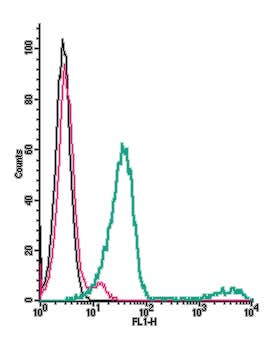 A Rabbit Polyclonal Antibody to GABBR1 (extracellular) conjugated to the fluorescent dye FITC
- Product Code: AGB-001-F
- Short Description: A Rabbit Polyclonal Antibody to GABBR1 (extracellular) conjugated to the fluorescent dye FITC
- Host: Rabbit
- Label: FITC
- Reactivity: Human, Rat, Mouse
- Applications: Live cell imaging, Flow cytometry
- Target: γ-Aminobutyric acid type B receptor subunit 1, GABA B receptor 1, GABABR1, Gb1, GABBR1, GPRC3A
-
 A Rabbit Polyclonal Antibody to GFAP conjugated to the fluorescent dye ATTO Fluor-647N
- Product Code: AFP-001-FRN
- Short Description: A Rabbit Polyclonal Antibody to GFAP conjugated to the fluorescent dye ATTO Fluor-647N
- Host: Rabbit
- Label: ATTO 647N
- Reactivity: Rat, Mouse
- Applications: Immunocytochemistry, Immunohistochemistry
- Target: Glial fibrillary acidic protein
-
 A Rabbit Polyclonal Antibody to Ghrelin Receptor (GHSR) Conjugated to the Fluorescent Dye FITC
- Product Code: AGR-031-F
- Short Description: A Rabbit Polyclonal Antibody to Ghrelin Receptor (GHSR) Conjugated to the Fluorescent Dye FITC
- Host: Rabbit
- Label: FITC
- Reactivity: Human, Rat, Mouse
- Applications: Flow cytometry
- Target: Growth hormone secretagogue receptor type 1, GHS-R, GH-releasing peptide receptor, GHRP
-
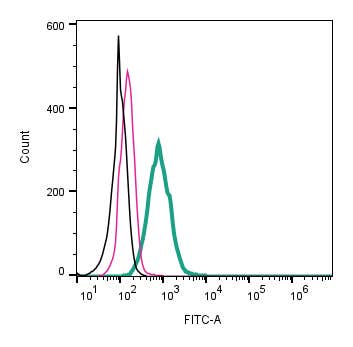 A Rabbit Polyclonal Antibody to Glucagon-like Peptide 1 Receptor Conjugated to the Fluorescent Dye FITC
- Product Code: AGR-021-F
- Short Description: A Rabbit Polyclonal Antibody to Glucagon-like Peptide 1 Receptor Conjugated to the Fluorescent Dye FITC
- Host: Rabbit
- Label: FITC
- Reactivity: Human, Rat, Mouse
- Applications: Live cell imaging, Flow cytometry
- Target: Glucagon-like peptide 1 receptor, GLP-1 receptor
-

 A Rabbit Polyclonal Antibody to AMPA-Selective Glutamate Receptor 1 (GluR1) Conjugated to the Fluorescent Dye ATTO-594
- Product Code: AGC-004-AR
- Short Description: A Rabbit Polyclonal Antibody to AMPA-Selective Glutamate Receptor 1 (GluR1) Conjugated to the Fluorescent Dye ATTO-594
- Host: Rabbit
- Label: ATTO 594
- Reactivity: Human, Rat, Mouse
- Applications: Live cell imaging, Immunocytochemistry, Immunofluorescence
- Target: AMPA Receptor 1, Glutamate receptor 1, Ionotropic glutamate receptor 1, AMPA-selective glutamate receptor 1, GRIA1, GluR-A, GluR-K1
-
 A Rabbit Polyclonal Antibody to AMPA-Selective Glutamate Receptor 2 (GluR2) Conjugated to the Fluorescent Dye ATTO-488
- Product Code: AGC-005-AG
- Short Description: A Rabbit Polyclonal Antibody to AMPA-Selective Glutamate Receptor 2 (GluR2) Conjugated to the Fluorescent Dye ATTO-488
- Host: Rabbit
- Label: ATTO 488
- Reactivity: Rat, Mouse
- Applications: Immunofluorescence, Immunohistochemistry
- Target: AMPA receptor 2, Glutamate receptor 2, Ionotropic glutamate receptor 2, AMPA-selective glutamate receptor 2, GRIA2, GluR-B, GluR-K2
-
 A Rabbit Polyclonal Antibody to Glucose Transporter 1 Conjugated to the Fluorescent Dye FITC
- Product Code: AGT-041-F
- Short Description: A Rabbit Polyclonal Antibody to Glucose Transporter 1 Conjugated to the Fluorescent Dye FITC
- Host: Rabbit
- Label: FITC
- Reactivity: Human, Rat, Mouse
- Applications: Flow cytometry
- Target: Glucose transporter 1, Facilitated glucose transporter member 1, SLC2A1
-
 A Rabbit Polyclonal Antibody to Glucose Transporter 2 Conjugated to the Fluorescent Dye ATTO-488
- Product Code: AGT-022-AG
- Short Description: A Rabbit Polyclonal Antibody to Glucose Transporter 2 Conjugated to the Fluorescent Dye ATTO-488
- Host: Rabbit
- Label: ATTO 488
- Reactivity: Rat, Mouse
- Applications: Immunofluorescence, Immunohistochemistry
- Target: Glucose transporter 2, Facilitated glucose transporter member 2
-
 A Rabbit Polyclonal Antibody to Glucose Transporter 3 Conjugated to the Fluorescent Dye FITC
- Product Code: AGT-023-F
- Short Description: A Rabbit Polyclonal Antibody to Glucose Transporter 3 Conjugated to the Fluorescent Dye FITC
- Host: Rabbit
- Label: FITC
- Reactivity: Rat, Mouse
- Applications: Flow cytometry
- Target: Glucose transporter 3, Facilitated glucose transporter member 3, SLC2A3
Loading...