-
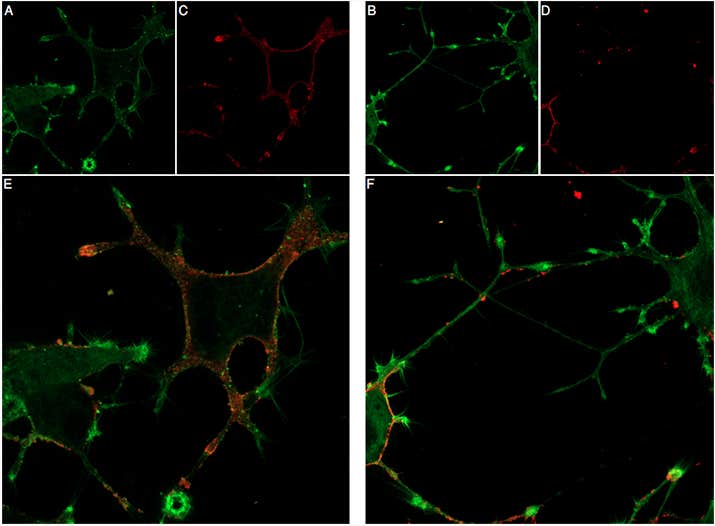
 A fluorescent probe for imaging and sensitive detection of mechanosensitive ion channels (Piezo1, TRPC1, TRPC6) and NaV1.7 sodium channels
- Product Code: STG-100-FRN
- Short Description: A fluorescent probe for imaging and sensitive detection of mechanosensitive ion channels (Piezo1, TRPC1, TRPC6) and NaV1.7 sodium channels
- Label: ATTO 647N
- Applications: Electrophysiology, Direct flow cytometry, Fluorescence staining, Live cell imaging, Immunofluorescence
- MW: 4723 Da
-
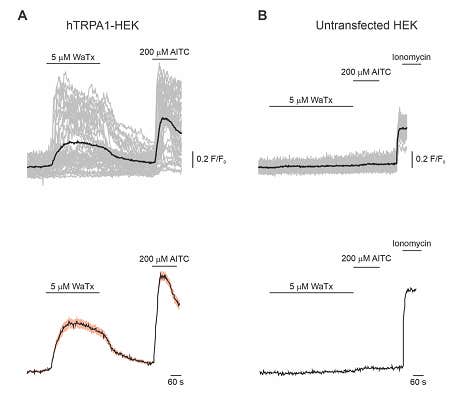 A cell-penetrating activator of TRPA1 channels
- Product Code: STW-200
- Short Description: A cell-penetrating activator of TRPA1 channels
- Applications: Electrophysiology
- CAS No.: 2569291-86-5
- MW: 3855.3 Da
-
 A blocker/gating modifier of NaV, CaV3.1, KV2.1 and TRPA1 channels
- Product Code: STP-400
- Short Description: A blocker/gating modifier of NaV, CaV3.1, KV2.1 and TRPA1 channels
- Applications: Electrophysiology
- CAS No.: 484598-35-8
- MW: 3987.6 Da
-
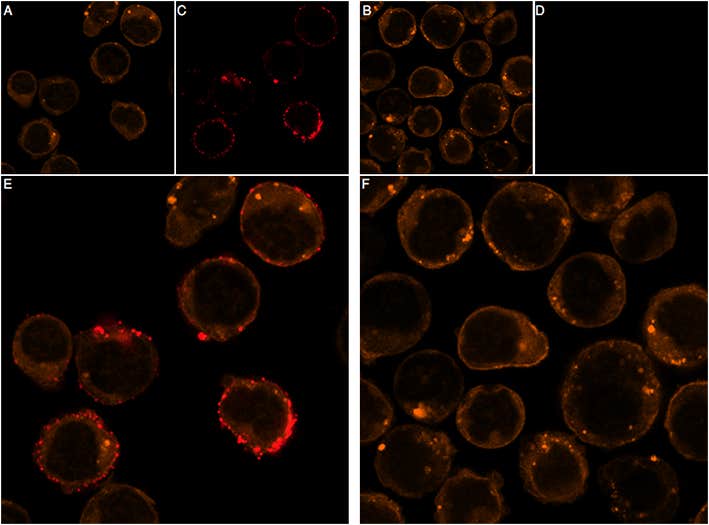 A biotinylated probe for the detection and imaging of mechanosensitive ion channels (Piezo1, TRPC1, TRPC6) and NaV1.7 sodium channels
- Product Code: STG-100-B
- Short Description: A biotinylated probe for the detection and imaging of mechanosensitive ion channels (Piezo1, TRPC1, TRPC6) and NaV1.7 sodium channels
- Label: Biotin
- Applications: Electrophysiology, Fluorescence staining, Live cell imaging, Immunofluorescence, Indirect flow cytometry
- MW: 4435 Da
-
 A potent inhibitor of mechanosensitive ion channels (Piezo1, TRPC1, TRPC6) and NaV1.7 sodium channels
- Product Code: STG-100
- Short Description: A potent inhibitor of mechanosensitive ion channels (Piezo1, TRPC1, TRPC6) and NaV1.7 sodium channels
- Applications: Electrophysiology
- CAS No.: 1209500-46-8
- MW: 4096 Da
-
 A reversible activator of TRPV1 channels
- Product Code: STD-020
- Short Description: A reversible activator of TRPV1 channels
- Applications: Electrophysiology
- MW: 3675.3 Da
-
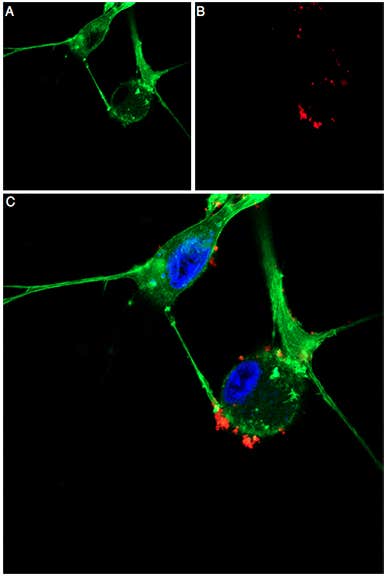 A fluorescent probe for imaging and sensitive detection of TRPV1 Channel
- Product Code: STD-010-FRN
- Short Description: A fluorescent probe for imaging and sensitive detection of TRPV1 Channel
- Label: ATTO 647N
- Applications: Direct flow cytometry, Fluorescence staining, Live cell imaging, Immunofluorescence
- MW: 9155 Da
-
 A potent, nearly irreversible activator of TRPV1 channels
- Product Code: STD-010
- Short Description: A potent, nearly irreversible activator of TRPV1 channels
- Applications: Electrophysiology
- MW: 8529 Da
Loading...