-
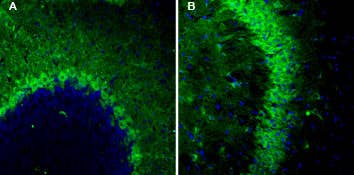
 A Blocking Peptide for Anti-Adenosine A3 Receptor (extracellular) Antibody
- Product Code: BLP-AR035
- Short Description: A Blocking Peptide for Anti-Adenosine A3 Receptor (extracellular) Antibody
- Applications: Western blot, Immunohistochemistry
- Target: ADORA3
-
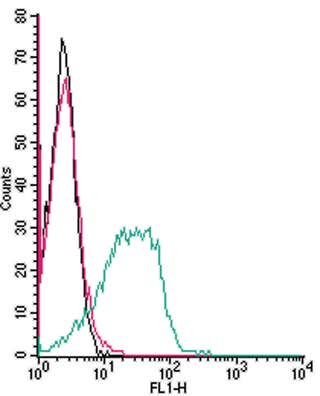 A Rabbit Polyclonal antibody to Adenosine A3 Receptor (extracellular)
- Product Code: AAR-035
- Short Description: A Rabbit Polyclonal antibody to Adenosine A3 Receptor (extracellular)
- Host: Rabbit
- Label: Unconjugated
- Reactivity: Rat, Mouse
- Applications: Indirect flow cytometry, Live cell imaging, Western blot
- Target: ADORA3, A3AR, Adenosine Receptor A3
-
 A Rabbit Polyclonal Antibody to Adenosine A3 Receptor (extracellular) conjugated to the fluorescent dye FITC
- Product Code: AAR-035-F
- Short Description: A Rabbit Polyclonal Antibody to Adenosine A3 Receptor (extracellular) conjugated to the fluorescent dye FITC
- Host: Rabbit
- Label: FITC
- Reactivity: Rat, Mouse
- Applications: Live cell imaging, Flow cytometry
- Target: ADORA3, A3AR, Adenosine Receptor A3
-
 A Rabbit Polyclonal Antibody to Aquaporin 5 Channel
- Product Code: AQP-005
- Short Description: A Rabbit Polyclonal Antibody to Aquaporin 5 Channel
- Host: Rabbit
- Label: Unconjugated
- Reactivity: Human, Rat, Mouse
- Applications: Western blot, Immunocytochemistry, Immunofluorescence, Immunohistochemistry
- Target: AQP5
-
 A Rabbit Polyclonal Antibody to CCR7 Chemokine Receptor
- Product Code: ACR-027
- Short Description: A Rabbit Polyclonal Antibody to CCR7 Chemokine Receptor
- Host: Rabbit
- Label: Unconjugated
- Reactivity: Human, Rat
- Applications: Indirect flow cytometry, Live cell imaging, Western blot, Immunohistochemistry
- Target: C-C chemokine receptor type 7, C-C CKR-7, Epstein-Barr virus-induced G-protein coupled receptor 1, EBI1, CD197
-
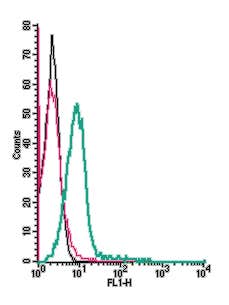 A Rabbit Polyclonal Antibody to CCR9 Chemokine Receptor
- Product Code: ACR-029
- Short Description: A Rabbit Polyclonal Antibody to CCR9 Chemokine Receptor
- Host: Rabbit
- Label: Unconjugated
- Reactivity: Human, Rat, Mouse
- Applications: Indirect flow cytometry, Live cell imaging, Western blot
- Target: C-C chemokine receptor type 9, CC-CKR-9, G-protein coupled receptor 28, GPR28, GPR-9-6, CDw199
-
 A Rabbit Polyclonal antibody to CD38 (extracellular)
- Product Code: ANT-068
- Short Description: A Rabbit Polyclonal antibody to CD38 (extracellular)
- Host: Rabbit
- Label: Unconjugated
- Reactivity: Rat, Mouse
- Applications: Indirect flow cytometry, Live cell imaging, Western blot, Immunohistochemistry
- Target: ADP-Ribosyl Cyclase 1, ADPRC 1, Cyclic ADP-Ribose Hydrolase 1, cADPR hydrolase 1, CADPR1
-
 A Rabbit Polyclonal Antibody to CD39
- Product Code: ANT-065
- Short Description: A Rabbit Polyclonal Antibody to CD39
- Host: Rabbit
- Label: Unconjugated
- Reactivity: Human, Rat
- Applications: Indirect flow cytometry, Live cell imaging, Western blot
- Target: Ectonucleoside triphosphate diphosphohydrolase 1, NTPDase 1, Ecto-ATP diphosphohydrolase 1, Ecto-ATPDase 1, Ecto-apyrase, Lymphoid cell activation antigen, ENTPD1
-
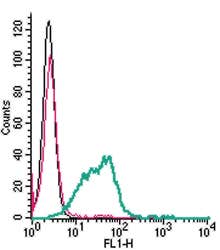 A Rabbit Polyclonal Antibody to CD39 Conjugated to the Fluorescent Dye FITC
- Product Code: ANT-065-F
- Short Description: A Rabbit Polyclonal Antibody to CD39 Conjugated to the Fluorescent Dye FITC
- Host: Rabbit
- Label: FITC
- Reactivity: Human, Rat, Mouse
- Applications: Live cell imaging, Flow cytometry
- Target: Ectonucleoside Triphosphate Diphosphohydrolase 1, Ecto-ATP diphosphohydrolase 1, Lymphoid cell activation antigen, ENTPD1
-
 A Rabbit Polyclonal Antibody to CRAC Channel Regulator 2A
- Product Code: ACC-324
- Short Description: A Rabbit Polyclonal Antibody to CRAC Channel Regulator 2A
- Host: Rabbit
- Label: Unconjugated
- Reactivity: Human, Mouse
- Applications: Western blot
- Target: CRAC channel regulator 2A, Calcium release-activated calcium channel regulator 2A, EF-hand calcium-binding domain-containing protein 4B, EFC4B
Loading...