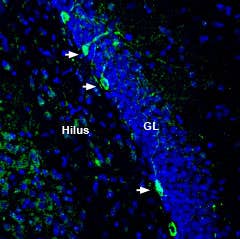
-
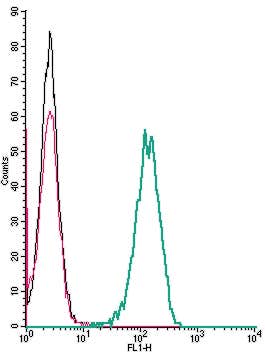 A Rabbit Polyclonal Antibody to Human FPR1
- Product Code: AFR-001
- Short Description: A Rabbit Polyclonal Antibody to Human FPR1
- Host: Rabbit
- Label: Unconjugated
- Reactivity: Human
- Applications: Indirect flow cytometry, Live cell imaging, Western blot
- Target: N-formyl peptide receptor 1, fMLP receptor
-
 A Guinea Pig Polyclonal Antibody to Glial Fibrillary Acidic Protein
- Product Code: AFP-001-GP
- Short Description: A Guinea Pig Polyclonal Antibody to Glial Fibrillary Acidic Protein
- Host: Guinea Pig
- Label: Unconjugated
- Reactivity: Rat, Mouse
- Applications: Western blot, Immunohistochemistry
- Target: Glial fibrillary acidic protein
-
 A Rabbit Polyclonal Antibody to GFAP conjugated to the fluorescent dye ATTO Fluor-647N
- Product Code: AFP-001-FRN
- Short Description: A Rabbit Polyclonal Antibody to GFAP conjugated to the fluorescent dye ATTO Fluor-647N
- Host: Rabbit
- Label: ATTO 647N
- Reactivity: Rat, Mouse
- Applications: Immunocytochemistry, Immunohistochemistry
- Target: Glial fibrillary acidic protein
-
 A Rabbit Polyclonal Antibody to Glial Fibrillary Acidic Protein
- Product Code: AFP-001
- Short Description: A Rabbit Polyclonal Antibody to Glial Fibrillary Acidic Protein
- Host: Rabbit
- Label: Unconjugated
- Reactivity: Rat, Mouse
- Applications: Western blot, Immunofluorescence, Immunohistochemistry
- Target: Glial fibrillary acidic protein
-
 A Rabbit Polyclonal Antibody to CD97/ADGRE5
- Product Code: AER-055
- Short Description: A Rabbit Polyclonal Antibody to CD97/ADGRE5
- Host: Rabbit
- Label: Unconjugated
- Reactivity: Human
- Applications: Indirect flow cytometry, Western blot
- Target: Adhesion G protein-coupled receptor E5, Leukocyte antigen CD97, Seven-transmembrane heterodimeric receptor associated with inflammation
-
 A Guinea Pig Polyclonal Antibody to EMR1
- Product Code: AER-051-GP
- Short Description: A Guinea Pig Polyclonal Antibody to EMR1
- Host: Guinea Pig
- Label: Unconjugated
- Reactivity: Human, Rat, Mouse
- Applications: Western blot
- Target: MR1 hormone receptor, EGF-like module-containing mucin-like hormone receptor-like 1, Adhesion G protein-coupled receptor E1, TM7LN3, F4/80, GPF480
-
 A Rabbit Polyclonal Antibody to EMR1 Conjugated to the Fluorescent Dye FITC
- Product Code: AER-051-F
- Short Description: A Rabbit Polyclonal Antibody to EMR1 Conjugated to the Fluorescent Dye FITC
- Host: Rabbit
- Label: FITC
- Reactivity: Human, Rat, Mouse
- Applications: Flow cytometry
- Target: EMR1 hormone receptor, EGF-like module-containing mucin-like hormone receptor-like 1, Adhesion G protein-coupled receptor E1, TM7LN3, F4/80, GPF480
-
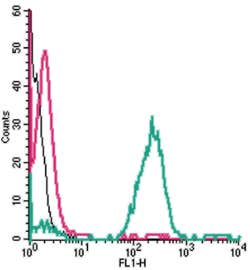 A Rabbit Polyclonal Antibody to EMR1
- Product Code: AER-051
- Short Description: A Rabbit Polyclonal Antibody to EMR1
- Host: Rabbit
- Label: Unconjugated
- Reactivity: Human, Rat, Mouse
- Applications: Indirect flow cytometry, Live cell imaging, Western blot, Immunocytochemistry, Immunofluorescence
- Target: EMR1 hormone receptor, EGF-like module-containing mucin-like hormone receptor-like 1, Adhesion G protein-coupled receptor E1, TM7LN3, F4/80, GPF480
-
 A Rabbit Polyclonal Antibody to G-Protein Coupled Estrogen Receptor 1
- Product Code: AER-050
- Short Description: A Rabbit Polyclonal Antibody to G-Protein Coupled Estrogen Receptor 1
- Host: Rabbit
- Label: Unconjugated
- Reactivity: Rat, Mouse
- Applications: Western blot, Immunofluorescence, Immunohistochemistry
- Target: G-protein coupled estrogen receptor 1, GPER1, GPR41, Chemoattractant receptor-like 2, Cmkrl2
-
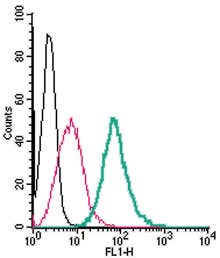 A Rabbit Polyclonal Antibody to GPER1 Conjugated to the Fluorescent Dye FITC
- Product Code: AER-049-F
- Short Description: A Rabbit Polyclonal Antibody to GPER1 Conjugated to the Fluorescent Dye FITC
- Host: Rabbit
- Label: FITC
- Reactivity: Human, Rat, Mouse
- Applications: Flow cytometry
- Target: G Protein-Coupled Estrogen Receptor 1, G Protein-Coupled Receptor 30, Membrane Estrogen Receptor, Chemoattractant Receptor-Like 2, GPER
Loading...