-

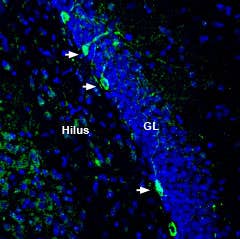
 A Rabbit Polyclonal Antibody to STIM1
- Product Code: ACC-063
- Short Description: A Rabbit Polyclonal Antibody to STIM1
- Host: Rabbit
- Label: Unconjugated
- Reactivity: Human, Rat, Mouse
- Applications: Indirect flow cytometry, Live cell imaging, Western blot, Immunocytochemistry, Immunofluorescence, Immunoprecipitation, Immunohistochemistry
- Target: Stromal interaction molecule 1, GOK
-
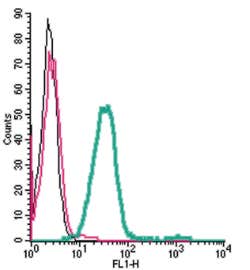 A Rabbit Polyclonal Antibody to Orai1 (extracellular) conjugated to the fluorescent dye FITC.
- Product Code: ACC-062-F
- Short Description: A Rabbit Polyclonal Antibody to Orai1 (extracellular) conjugated to the fluorescent dye FITC.
- Host: Rabbit
- Label: FITC
- Reactivity: Rat, Mouse
- Applications: Live cell imaging, Flow cytometry
- Target: TMEM142A, Calcium release-activated calcium channel protein 1, CRACM1
-
 A Rabbit Polyclonal Antibody to Orai1 Channel Conjugated to the Fluorescent Dye ATTO-488
- Product Code: ACC-062-AG
- Short Description: A Rabbit Polyclonal Antibody to Orai1 Channel Conjugated to the Fluorescent Dye ATTO-488
- Host: Rabbit
- Label: ATTO 488
- Reactivity: Rat, Mouse
- Applications: Immunocytochemistry, Immunofluorescence
- Target: TMEM142A, CRACM1, Calcium release-activated calcium channel protein 1
-
 A Rabbit Polyclonal Antibody to Orai1 Channel
- Product Code: ACC-062
- Short Description: A Rabbit Polyclonal Antibody to Orai1 Channel
- Host: Rabbit
- Label: Unconjugated
- Reactivity: Rat, Mouse
- Applications: Indirect flow cytometry, Live cell imaging, Western blot, Immunocytochemistry, Immunofluorescence, Immunohistochemistry
- Target: TMEM142A, CRACM1, Calcium release-activated calcium channel protein 1
-
 A Rabbit Polyclonal Antibody to Orai2 Channel
- Product Code: ACC-061
- Short Description: A Rabbit Polyclonal Antibody to Orai2 Channel
- Host: Rabbit
- Label: Unconjugated
- Reactivity: Human, Rat, Mouse
- Applications: Western blot, Immunofluorescence, Immunohistochemistry
- Target: TMEM142B
-
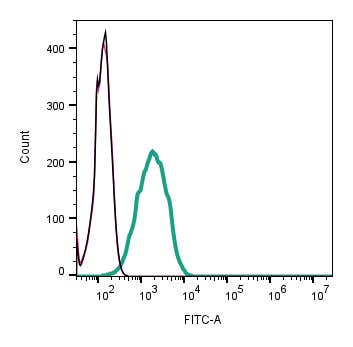 A Rabbit Polyclonal Antibody to Human Orai1 Channel Conjugated to the Fluorescent Dye FITC
- Product Code: ACC-060-F
- Short Description: A Rabbit Polyclonal Antibody to Human Orai1 Channel Conjugated to the Fluorescent Dye FITC
- Host: Rabbit
- Label: FITC
- Reactivity: Human
- Applications: Flow cytometry
- Target: TMEM142A, CRACM1, Calcium release-activated calcium channel protein 1
-
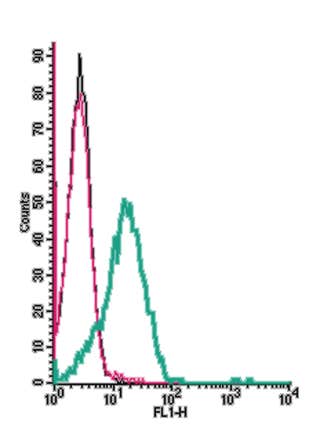 A Rabbit Polyclonal Antibody to Human Orai1 Channel
- Product Code: ACC-060
- Short Description: A Rabbit Polyclonal Antibody to Human Orai1 Channel
- Host: Rabbit
- Label: Unconjugated
- Reactivity: Human
- Applications: Indirect flow cytometry, Live cell imaging, Western blot, Immunocytochemistry, Immunofluorescence, Immunohistochemistry
- Target: TMEM142A, CRACM1, Calcium release-activated calcium channel protein 1
-
 A Rabbit Polyclonal Antibody to TRPP1 (PKD2) Channel
- Product Code: ACC-052
- Short Description: A Rabbit Polyclonal Antibody to TRPP1 (PKD2) Channel
- Host: Rabbit
- Label: Unconjugated
- Reactivity: Human, Rat, Mouse
- Applications: Western blot, Immunocytochemistry, Immunofluorescence, Immunohistochemistry
- Target: Polycystin-2, Polycystic kidney disease 2 protein, PC2
-
 A Rabbit Polyclonal Antibody to TRPM3 Channel
- Product Code: ACC-050
- Short Description: A Rabbit Polyclonal Antibody to TRPM3 Channel
- Host: Rabbit
- Label: Unconjugated
- Reactivity: Human, Rat, Mouse
- Applications: Western blot, Immunocytochemistry, Immunofluorescence, Immunohistochemistry
- Target: Transient receptor potential cation channel subfamily M member 3, Long transient receptor potential channel 3, LTrpC3, Melastatin-2, MLSN2
-
 A Rabbit Polyclonal Antibody to TRPM8 Channel
- Product Code: ACC-049
- Short Description: A Rabbit Polyclonal Antibody to TRPM8 Channel
- Host: Rabbit
- Label: Unconjugated
- Reactivity: Human, Rat, Mouse
- Applications: Indirect flow cytometry, Live cell imaging, Western blot, Immunocytochemistry, Immunofluorescence, Immunoprecipitation, Neutralization, Immunohistochemistry
- Target: TRPP8, LTrpC6, Transient receptor potential cation channel subfamily M member 8
Loading...