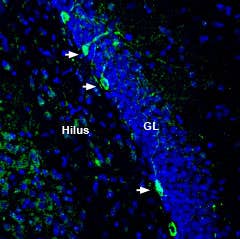
-
 A Rabbit Polyclonal Antibody to Connexin-37
- Product Code: ACC-204
- Short Description: A Rabbit Polyclonal Antibody to Connexin-37
- Host: Rabbit
- Label: Unconjugated
- Reactivity: Human, Rat, Mouse
- Applications: Western blot
- Target: CX37, Gap junction α4 protein, GJA4
-
 A Guinea Pig Polyclonal Antibody to Connexin-43
- Product Code: ACC-201-GP
- Short Description: A Guinea Pig Polyclonal Antibody to Connexin-43
- Host: Guinea Pig
- Label: Unconjugated
- Reactivity: Human, Rat, Mouse
- Applications: Western blot, Immunofluorescence, Immunohistochemistry
- Target: CX43, Gap junction α1 protein, GJA1, GJAL, Gap junction 43 kDa heart protein
-
 A Rabbit Polyclonal Antibody to Connexin-43
- Product Code: ACC-201
- Short Description: A Rabbit Polyclonal Antibody to Connexin-43
- Host: Rabbit
- Label: Unconjugated
- Reactivity: Human, Rat, Mouse
- Applications: Western blot, Immunocytochemistry, Immunofluorescence, Immunohistochemistry
- Target: CX43, Gap junction α1 protein, GJA1, GJAL, Gap junction 43 kDa heart protein
-
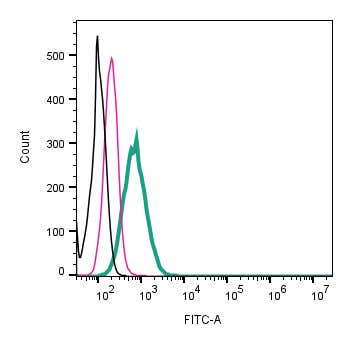 A Rabbit Polyclonal Antibody to Human TRPV2 (extracellular) conjugated to the fluorescent dye FITC
- Product Code: ACC-139-F
- Short Description: A Rabbit Polyclonal Antibody to Human TRPV2 (extracellular) conjugated to the fluorescent dye FITC
- Host: Rabbit
- Label: FITC
- Reactivity: Human
- Applications: Live cell imaging, Flow cytometry
- Target: Vanilloid receptor-like protein 1, VRL-1, Osm-9-like TRP channel 2, OTRPC2
-
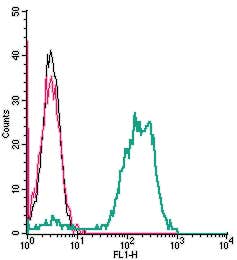 A Rabbit Polyclonal Antibody to TRPV2
- Product Code: ACC-139
- Short Description: A Rabbit Polyclonal Antibody to TRPV2
- Host: Rabbit
- Label: Unconjugated
- Reactivity: Human
- Applications: Indirect flow cytometry, Live cell imaging, Western blot
- Target: Vanilloid receptor-like protein 1, VRL-1, Osm-9-like TRP channel 2, OTRPC2, Strech-activated channel 2B, SAC2B
-
 A Rabbit Polyclonal antibody to CaV1.2 (extracellular)
- Product Code: ACC-130
- Short Description: A Rabbit Polyclonal antibody to CaV1.2 (extracellular)
- Host: Rabbit
- Label: Unconjugated
- Reactivity: Human, Rat, Mouse
- Applications: Indirect flow cytometry, Live cell imaging, Western blot, Immunohistochemistry
- Target: Voltage-dependent L-type calcium channel subunit alpha-1C, Calcium Voltage-Gated Channel Subunit Alpha1C
-
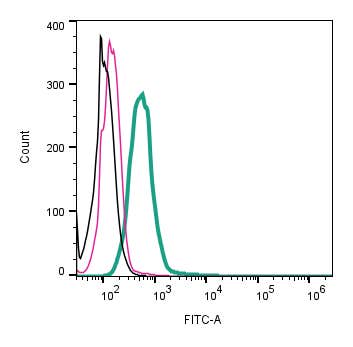 A Rabbit Polyclonal Antibody to TRPM7 (extracellular) conjugated to the fluorescent dye FITC
- Product Code: ACC-129-F
- Short Description: A Rabbit Polyclonal Antibody to TRPM7 (extracellular) conjugated to the fluorescent dye FITC
- Host: Rabbit
- Label: FITC
- Reactivity: Human, Rat, Mouse
- Applications: Live cell imaging, Flow cytometry
- Target: Transient receptor potential cation channel subfamily M member 7, Long transient receptor potential channel 7, LTRPC7, Channel-kinase 1, CHAK1, Transient receptor potential-phospholipase C-interacting kinase, TRP-PLIK
-
 A Rabbit Polyclonal antibody to TRPM7 (extracellular)
- Product Code: ACC-129
- Short Description: A Rabbit Polyclonal antibody to TRPM7 (extracellular)
- Host: Rabbit
- Label: Unconjugated
- Reactivity: Human, Rat, Mouse
- Applications: Indirect flow cytometry, Live cell imaging, Western blot, Immunohistochemistry
- Target: Transient receptor potential cation channel subfamily M member 7, Long transient receptor potential channel 7, LTRPC7, Channel-kinase 1, CHAK1, Transient receptor potential-phospholipase C-interacting kinase, TRP-PLIK
-
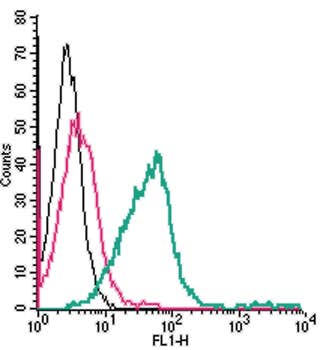 A Rabbit Polyclonal Antibody to TRPM2 Channel conjugated to the fluorescent dye FITC
- Product Code: ACC-128-F
- Short Description: A Rabbit Polyclonal Antibody to TRPM2 Channel conjugated to the fluorescent dye FITC
- Host: Rabbit
- Label: FITC
- Reactivity: Human, Rat, Mouse
- Applications: Live cell imaging, Flow cytometry
- Target: Transient receptor potential cation channel subfamily M member 2, Transient receptor potential melastatin 2, LTrpC2, TrpC7
-
 A Rabbit Polyclonal Antibody to TRPM2 Channel
- Product Code: ACC-128
- Short Description: A Rabbit Polyclonal Antibody to TRPM2 Channel
- Host: Rabbit
- Label: Unconjugated
- Reactivity: Human, Rat, Mouse
- Applications: Indirect flow cytometry, Live cell imaging, Western blot, Immunohistochemistry
- Target: Transient receptor potential cation channel subfamily M member 2, Transient receptor potential melastatin 2, LTrpC2, TrpC7
Loading...