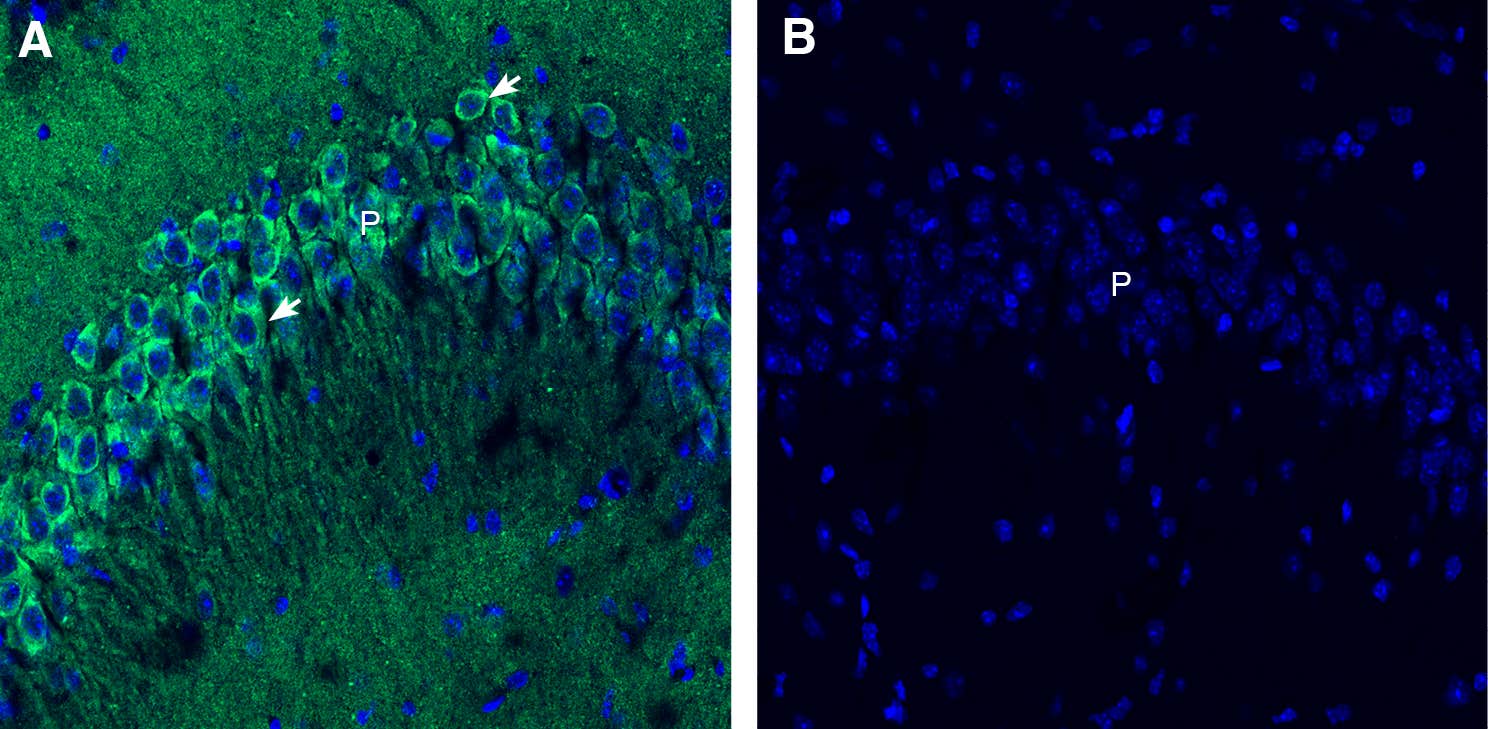
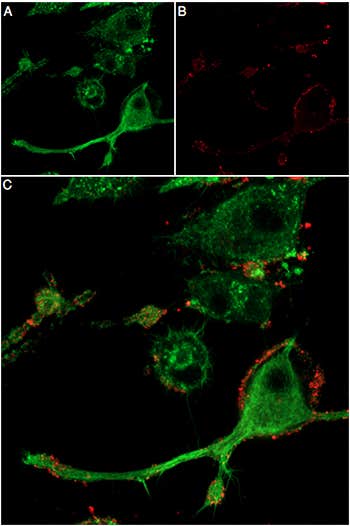
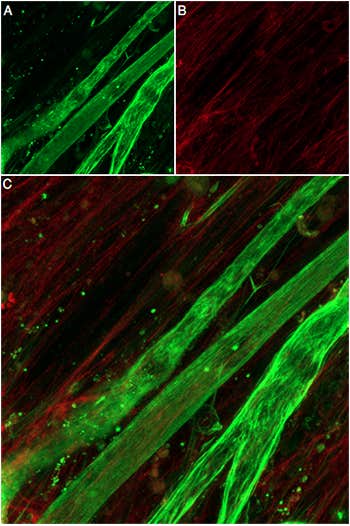
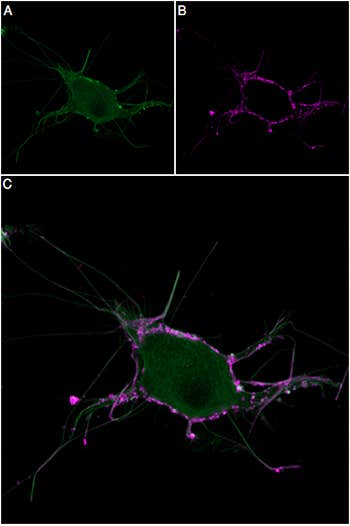
In 1988, a 21-amino acid endothelium-derived bioactive peptide was cloned and named endothelin (ET)1. Later, two other isoforms differing from the original ET-1 in two or six residues, respectively, were cloned and named ET-2 and ET-32. All endothelins bear the common structure with two disulfide links. ETs are among the most powerful vasoconstrictive substances known today. They also act as growth factors involved in fetal development and vascular regulation5. Two types of endothelin receptors have been cloned and named ET-A3 and ET-B4. The two classes differ in their affinity to different ETs. ET-A has a stronger affinity to ET-1 (ET-1>ET-2>> ET-3), while ET-B has an equal affinity towards all three ETs. ET-A and ET-B are both G-protein coupled receptors with extracellular N-termini, 7 transmembrane domains and intracellular C-termini. They share ~60% homology.
Endothelin Receptors
By Gregory H. Idelson, Ph.D.
Reference
- Yanagisawa, M. et al. (1988) Nature 332, 411.
- Inoue, A. et al. (1989) Proc. Natl. Acad. Sci. USA 86, 2863.
- Arai, H. et al. (1990) Nature 348, 730.
- Sakurai, T. et al. (1990) Nature 348, 732.
- Stjernquist, M. et al. (1998) Cell Tissue Res. 292, 1.

Read More
In Focus: Ionotropic Glutamate Receptors
By Alomone Labs
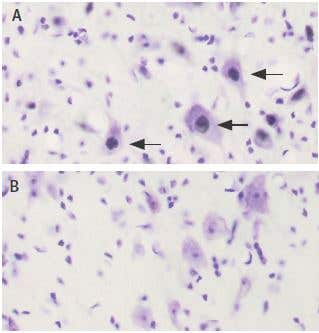
GABA(A) Receptor Family
By Ofra Gohar, Ph.D.
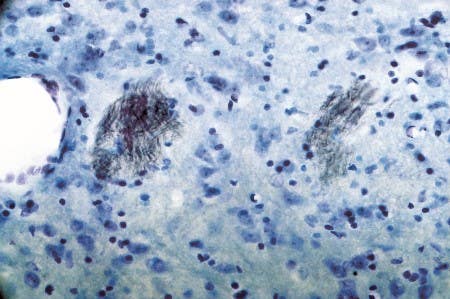
The Purinergic P2Y Receptors
By Ofra Gohar, Ph.D.
Mentioned Products
Anti-Adenosine A<sub>2A</sub> Receptor (extracellular)-APC Antibody
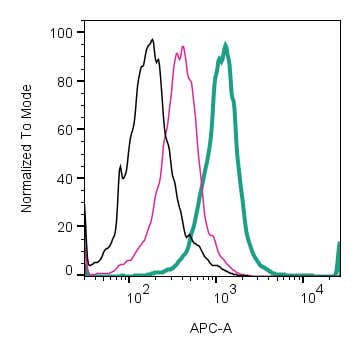
Anti-Adenosine A2A Receptor (extracellular)-APC Antibody
View Product
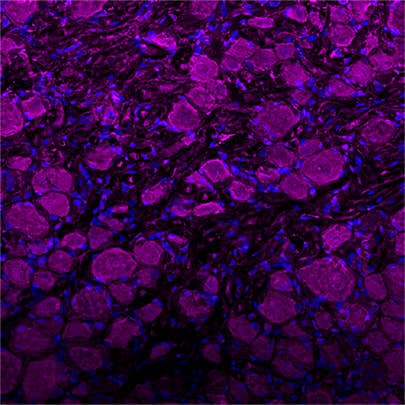
Anti-P2X7 Receptor (Splice variant B) Antibody

Anti-P2X7 Receptor (Splice variant B) Antibody
View Product