
-
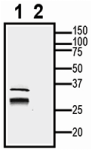 Aquaporin 4 (AQP4) protein, overexpressed in Xenopus oocytes, used as a positive control for Western blot analysis.
- Product Code: XB-004
- Applications: Western blot
-
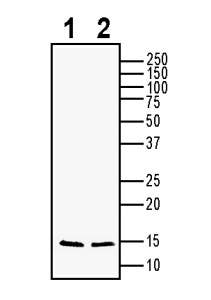 A ready-to-use BDNF positive control for Western Blot
- Product Code: PCP-B250
- Short Description: A ready-to-use BDNF positive control for Western Blot
- Applications: Western blot
- Target: Brain-derived neurotrophic factor
-
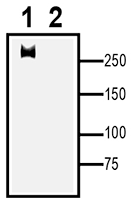 CACNA1C (CaV1.2) protein, overexpressed in Xenopus oocytes, used as a positive control for Western blot analysis.
- Product Code: XB-002
- Applications: Western blot
-
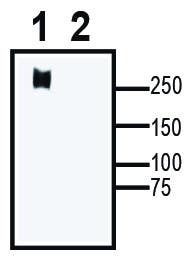 CACNA1G (rat CaV3.1) protein, overexpressed in Xenopus oocytes, used as a positive control for Western blot analysis.
- Product Code: XB-014
- Applications: Western blot
-
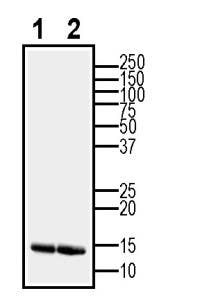 A ready-to-use GDNF positive control for Western Blot
- Product Code: PCP-G240
- Short Description: A ready-to-use GDNF positive control for Western Blot
- Applications: Western blot
-
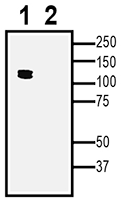 KCNMA1 (Kca1.1) protein, overexpressed in Xenopus oocytes, used as a positive control for Western blot analysis.
- Product Code: XB-009
- Applications: Western blot
-
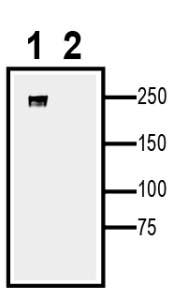 SCN1A (human NaV1.1) protein, overexpressed in Xenopus oocytes, used as a positive control for Western blot analysis.
- Product Code: XB-001
- Applications: Western blot
-
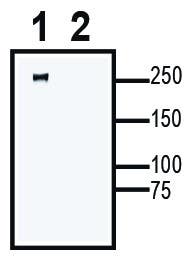 SCN2A (human NaV1.2) protein, overexpressed in Xenopus oocytes, used as a positive control for Western blot analysis.
- Product Code: XB-015
- Applications: Western blot
-
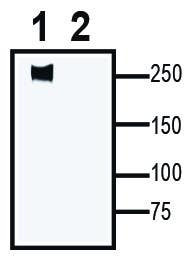 SCN5A (human NaV1.5) protein, overexpressed in Xenopus oocytes, used as a positive control for Western blot analysis.
- Product Code: XB-005
- Applications: Western blot
-
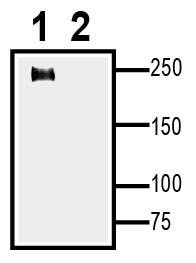 SCN9A (human NaV1.7) protein, overexpressed in Xenopus oocytes, used as a positive control for Western blot analysis.
- Product Code: XB-007
- Applications: Western blot
Loading...