-
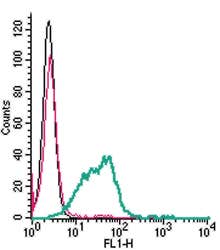 A Rabbit Polyclonal Antibody to CD39 Conjugated to the Fluorescent Dye FITC
- Product Code: ANT-065-F
- Short Description: A Rabbit Polyclonal Antibody to CD39 Conjugated to the Fluorescent Dye FITC
- Host: Rabbit
- Label: FITC
- Reactivity: Human, Rat, Mouse
- Applications: Live cell imaging, Flow cytometry
- Target: Ectonucleoside Triphosphate Diphosphohydrolase 1, Ecto-ATP diphosphohydrolase 1, Lymphoid cell activation antigen, ENTPD1
-

 A Rabbit Polyclonal Antibody to Neural Cell Adhesion Molecule 1 (CD56)
- Product Code: ANR-041
- Short Description: A Rabbit Polyclonal Antibody to Neural Cell Adhesion Molecule 1 (CD56)
- Host: Rabbit
- Label: Unconjugated
- Reactivity: Human, Rat, Mouse
- Applications: Indirect flow cytometry, Live cell imaging, Western blot, Immunocytochemistry, Immunofluorescence, Immunohistochemistry
- Target: Neural cell adhesion molecule 1, NCAM-1
-
 A Rabbit Polyclonal Antibody to CD56/NCAM1
- Product Code: ANR-041-AG
- Short Description: A Rabbit Polyclonal Antibody to CD56/NCAM1
- Host: Rabbit
- Label: ATTO 488
- Reactivity: Human, Rat, Mouse
- Applications: Immunohistochemistry
- Target: NCAM-1, CD56
-
 A Rabbit Polyclonal antibody to CD63 (extracellular)
- Product Code: ANR-210
- Short Description: A Rabbit Polyclonal antibody to CD63 (extracellular)
- Host: Rabbit
- Label: Unconjugated
- Reactivity: Rat, Mouse
- Applications: Indirect flow cytometry, Live cell imaging, Western blot, Immunohistochemistry
- Target: Tetraspanin-30, TSPAN30, Lysosomal-Associated Membrane Protein 3, LAMP-3, Granulophysin, Melanoma-Associated Antigen ME491
-
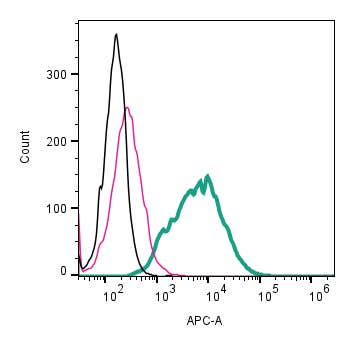 A Rabbit Polyclonal antibody to CD63 (extracellular) conjugated to the fluorescent dye Allophycocyanin (APC)
- Product Code: ANR-210-APC
- Short Description: A Rabbit Polyclonal antibody to CD63 (extracellular) conjugated to the fluorescent dye Allophycocyanin (APC)
- Host: Rabbit
- Label: APC
- Reactivity: Rat, Mouse
- Applications: Live cell imaging, Flow cytometry
- Target: Tetraspanin-30, TSPAN30, Lysosomal-Associated Membrane Protein 3, LAMP-3, Granulophysin, Melanoma-Associated Antigen ME491
-
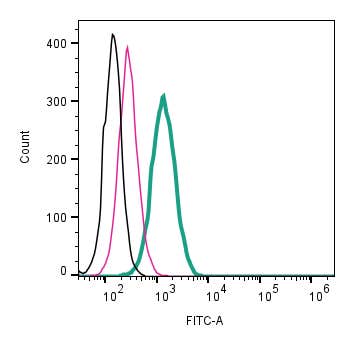 A Rabbit Polyclonal antibody to CD63 (extracellular) conjugated to the fluorescent dye FITC
- Product Code: ANR-210-F
- Short Description: A Rabbit Polyclonal antibody to CD63 (extracellular) conjugated to the fluorescent dye FITC
- Host: Rabbit
- Label: FITC
- Reactivity: Rat, Mouse
- Applications: Live cell imaging, Flow cytometry
- Target: Tetraspanin-30, TSPAN30, Lysosomal-Associated Membrane Protein 3, LAMP-3, Granulophysin, Melanoma-Associated Antigen ME491
-
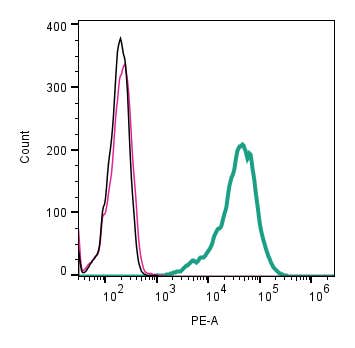 A Rabbit Polyclonal antibody to CD63 (extracellular) conjugated to the fluorescent dye Phycoerythrin (PE).
- Product Code: ANR-210-PE
- Short Description: A Rabbit Polyclonal antibody to CD63 (extracellular) conjugated to the fluorescent dye Phycoerythrin (PE).
- Host: Rabbit
- Label: R-PE
- Reactivity: Rat, Mouse
- Applications: Live cell imaging, Flow cytometry
- Target: Tetraspanin-30, TSPAN30, Lysosomal-Associated Membrane Protein 3, LAMP-3, Granulophysin, Melanoma-Associated Antigen ME491
-
 A Rabbit Polyclonal Antibody to CD73
- Product Code: ANT-066
- Short Description: A Rabbit Polyclonal Antibody to CD73
- Host: Rabbit
- Label: Unconjugated
- Reactivity: Human, Rat, Mouse
- Applications: Indirect flow cytometry, Live cell imaging, Western blot, Immunofluorescence, Immunohistochemistry
- Target: Ecto-5-nucleotidase, E5NT, 5'-Nucleotidase, 5'-NT, NT5E
-
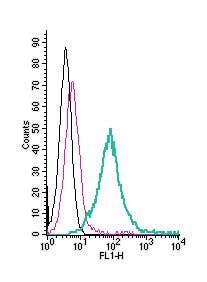 A Rabbit Polyclonal Antibody to CD73 (extracellular) conjugated to the fluorescent dye FITC
- Product Code: ANT-066-F
- Short Description: A Rabbit Polyclonal Antibody to CD73 (extracellular) conjugated to the fluorescent dye FITC
- Host: Rabbit
- Label: FITC
- Reactivity: Human, Rat, Mouse
- Applications: Flow cytometry
- Target: Ecto-5-nucleotidase, E5NT, 5'-Nucleotidase, 5'-NT, NT5E, ENT
-
 A Rabbit Polyclonal antibody to CD81 (extracellular)
- Product Code: ANR-211
- Short Description: A Rabbit Polyclonal antibody to CD81 (extracellular)
- Host: Rabbit
- Label: Unconjugated
- Reactivity: Human, Rat, Mouse
- Applications: Indirect flow cytometry, Live cell imaging, Western blot, Immunohistochemistry
- Target: Tetraspanin-28, TSPAN28, Target of the Antiproliferative Antibody 1, TAPA-1
Loading...