-
 A Rabbit Polyclonal Antibody to RIM1
- Product Code: AIP-014
- Short Description: A Rabbit Polyclonal Antibody to RIM1
- Host: Rabbit
- Label: Unconjugated
- Reactivity: Rat, Mouse
- Applications: Western blot
- Target: Regulating synaptic membrane exocytosis 1, Rab-3-interacting molecule 1, RIMS1
-
 A Rabbit Polyclonal Antibody to Robo1
- Product Code: ANR-181
- Short Description: A Rabbit Polyclonal Antibody to Robo1
- Host: Rabbit
- Label: Unconjugated
- Reactivity: Human, Rat, Mouse
- Applications: Indirect flow cytometry, Live cell imaging, Western blot, Immunofluorescence, Immunohistochemistry
- Target: Roundabout Guidance Receptor 1, Roundabout Homolog 1, Deleted In U Twenty Twenty, DUTT1
-
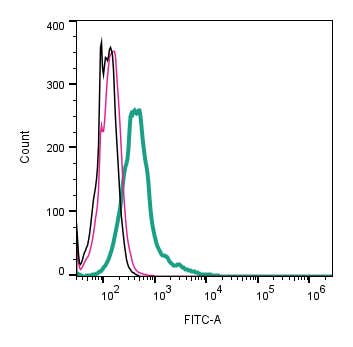 A Rabbit Polyclonal Antibody to Robo1 (extracellular) conjugated to the fluorescent dye FITC
- Product Code: ANR-181-F
- Short Description: A Rabbit Polyclonal Antibody to Robo1 (extracellular) conjugated to the fluorescent dye FITC
- Host: Rabbit
- Label: FITC
- Reactivity: Human, Rat, Mouse
- Applications: Live cell imaging, Flow cytometry
- Target: Roundabout Guidance Receptor 1, Roundabout Homolog 1, Deleted In U Twenty Twenty, DUTT1
-
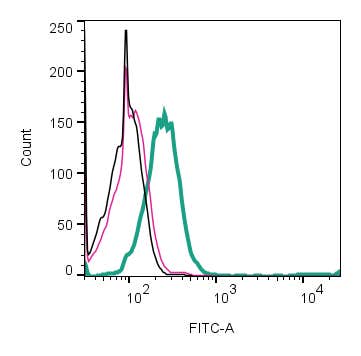 A Rabbit Polyclonal Antibody to Robo2
- Product Code: ANR-182
- Short Description: A Rabbit Polyclonal Antibody to Robo2
- Host: Rabbit
- Label: Unconjugated
- Reactivity: Human, Rat, Mouse
- Applications: Indirect flow cytometry, Western blot
- Target: Roundabout homolog 2, Roundabout Guidance Receptor 2
-
 A Rabbit Polyclonal Antibody to Ryanodine Receptor 1
- Product Code: ARR-001
- Short Description: A Rabbit Polyclonal Antibody to Ryanodine Receptor 1
- Host: Rabbit
- Label: Unconjugated
- Reactivity: Human, Rat, Mouse
- Applications: Western blot, Immunocytochemistry, Immunofluorescence, Immunohistochemistry
- Target: RyR1, Skeletal muscle-type ryanodine receptor
-
 A Rabbit Polyclonal Antibody to Ryanodine Receptor 3
- Product Code: ARR-003
- Short Description: A Rabbit Polyclonal Antibody to Ryanodine Receptor 3
- Host: Rabbit
- Label: Unconjugated
- Reactivity: Human, Rat, Mouse
- Applications: Western blot, Immunocytochemistry, Immunofluorescence, Immunohistochemistry
- Target: RyR3, Brain-type ryanodine receptor
-
 A Rabbit Polyclonal Antibody to SAP-97
- Product Code: APZ-010
- Short Description: A Rabbit Polyclonal Antibody to SAP-97
- Host: Rabbit
- Label: Unconjugated
- Reactivity: Human, Rat, Mouse
- Applications: Western blot
- Target: Synapse-associated protein 97, Discs large homolog 1
-
 A Rabbit Polyclonal Antibody to SAP-102
- Product Code: APZ-003
- Short Description: A Rabbit Polyclonal Antibody to SAP-102
- Host: Rabbit
- Label: Unconjugated
- Reactivity: Mouse
- Applications: Western blot, Immunohistochemistry
- Target: Synapse-associated protein 102, SAP-102, Discs large homolog 3, DLG3, NE-DLG
-
 A Rabbit Polyclonal Antibody to SARM1
- Product Code: ANR-138
- Short Description: A Rabbit Polyclonal Antibody to SARM1
- Host: Rabbit
- Label: Unconjugated
- Reactivity: Human, Rat, Mouse
- Applications: Western blot, Immunohistochemistry
- Target: Sterile Alpha And TIR Motif-Containing Protein 1, NAD(+) Hydrolase SARM1, Sterile Alpha And Armadillo Repeat Protein
-
 A Rabbit Polyclonal Antibody to Semaphorin 3A
- Product Code: ASR-051
- Short Description: A Rabbit Polyclonal Antibody to Semaphorin 3A
- Host: Rabbit
- Label: Unconjugated
- Reactivity: Human, Rat, Mouse
- Applications: Western blot
- Target: Semaphorin III, Collapsin 1
Loading...