-

 A Rabbit Polyclonal Antibody to CACNA1G (CaV3.1) Channel
- Product Code: ACC-021
- Short Description: A Rabbit Polyclonal Antibody to CACNA1G (CaV3.1) Channel
- Host: Rabbit
- Label: Unconjugated
- Reactivity: Human, Rat, Mouse
- Applications: Western blot, Immunocytochemistry, Immunofluorescence, Immunohistochemistry
- Target: Voltage-dependent T-type calcium channel subunit α1G
-
 A Rabbit Polyclonal Antibody to CACNA1G (CaV3.1) Conjugated to the Fluorescent Dye ATTO-594
- Product Code: ACC-021-AR
- Short Description: A Rabbit Polyclonal Antibody to CACNA1G (CaV3.1) Conjugated to the Fluorescent Dye ATTO-594
- Host: Rabbit
- Label: ATTO 594
- Reactivity: Human, Rat, Mouse
- Applications: Immunofluorescence, Immunohistochemistry
- Target: Voltage-dependent T-type calcium channel subunit α1G
-
 A Rabbit Polyclonal Antibody to CACNA2D2 (CaVα2δ2) Subunit
- Product Code: ACC-102
- Short Description: A Rabbit Polyclonal Antibody to CACNA2D2 (CaVα2δ2) Subunit
- Host: Rabbit
- Label: Unconjugated
- Reactivity: Human, Rat, Mouse
- Applications: Indirect flow cytometry, Live cell imaging, Western blot, Immunofluorescence, Immunohistochemistry
- Target: Voltage-dependent calcium channel subunit alpha-2/delta-2
-
 A Rabbit Polyclonal antibody to CADM1/SynCAM (extracellular)
- Product Code: ANR-201
- Short Description: A Rabbit Polyclonal antibody to CADM1/SynCAM (extracellular)
- Host: Rabbit
- Label: Unconjugated
- Reactivity: Human, Rat, Mouse
- Applications: Indirect flow cytometry, Live cell imaging, Western blot, Immunohistochemistry
- Target: Cell Adhesion Molecule 1, Synaptic Cell Adhesion Molecule, Nectin-Like 2, NECL-2, Immunoglobulin Superfamily Member 4, IgSF4
-
 A Rabbit Polyclonal Antibody to Calcium Homeostasis Modulator 1
- Product Code: ACC-101
- Short Description: A Rabbit Polyclonal Antibody to Calcium Homeostasis Modulator 1
- Host: Rabbit
- Label: Unconjugated
- Reactivity: Human, Rat, Mouse
- Applications: Western blot, Immunofluorescence, Immunohistochemistry
- Target: Calcium homeostasis modulator 1, FAM26C
-
 A Rabbit Polyclonal Antibody to Calcium Homeostasis Modulator 1 Conjugated to the Fluorescent Dye ATTO-594
- Product Code: ACC-101-AR
- Short Description: A Rabbit Polyclonal Antibody to Calcium Homeostasis Modulator 1 Conjugated to the Fluorescent Dye ATTO-594
- Host: Rabbit
- Label: ATTO 594
- Reactivity: Human, Rat, Mouse
- Applications: Immunocytochemistry, Immunofluorescence, Immunohistochemistry
- Target: Calcium homeostasis modulator 1, FAM26C
-
 A Rabbit Polyclonal antibody to CALHM2 (extracellular)
- Product Code: ACC-142
- Short Description: A Rabbit Polyclonal antibody to CALHM2 (extracellular)
- Host: Rabbit
- Label: Unconjugated
- Reactivity: Human, Rat, Mouse
- Applications: Indirect flow cytometry, Live cell imaging, Western blot, Immunohistochemistry
- Target: Calcium homeostasis modulator protein 2, Protein FAM26B, FAM26B
-
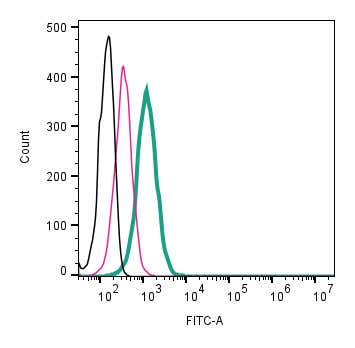 A Rabbit Polyclonal antibody to CALHM2 (extracellular) conjugated to the fluorescent dye FITC
- Product Code: ACC-142-F
- Short Description: A Rabbit Polyclonal antibody to CALHM2 (extracellular) conjugated to the fluorescent dye FITC
- Host: Rabbit
- Label: FITC
- Reactivity: Human, Rat, Mouse
- Applications: Live cell imaging, Flow cytometry
- Target: Calcium homeostasis modulator protein 2, Protein FAM26B, FAM26B
-
 A Rabbit Polyclonal Antibody to Calcium Homeostasis Modulator 3
- Product Code: ACC-323
- Short Description: A Rabbit Polyclonal Antibody to Calcium Homeostasis Modulator 3
- Host: Rabbit
- Label: Unconjugated
- Reactivity: Human, Rat, Mouse
- Applications: Western blot
- Target: Calcium homeostasis modulator 3, FAM26A
-
 A Rabbit Polyclonal Antibody to Calnexin
- Product Code: ACS-009
- Short Description: A Rabbit Polyclonal Antibody to Calnexin
- Host: Rabbit
- Label: Unconjugated
- Reactivity: Human, Rat, Mouse
- Applications: Western blot, Immunofluorescence, Immunohistochemistry
- Target: Canx, Calx, CNX, Major histocompatibility complex class I antigen-binding protein p88, p90, IP90
Loading...