-
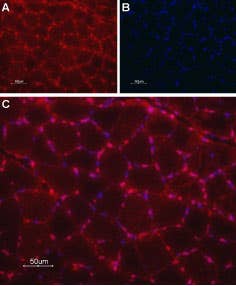
 A Rabbit Polyclonal Antibody to ENaC? Channel
- Product Code: ASC-011
- Short Description: A Rabbit Polyclonal Antibody to ENaC? Channel
- Host: Rabbit
- Label: Unconjugated
- Reactivity: Mouse
- Applications: Western blot, Immunohistochemistry
- Target: Amiloride-sensitive sodium channel subunit gamma, Epithelial sodium channel γ subunit, Gamma-ENaC, Gamma-NaCH, Nonvoltage-gated sodium channel 1 subunit gamma, SCNEG
-

 A Rabbit Polyclonal Antibody to GIRK3 (Kir3.3) Channel
- Product Code: APC-038
- Short Description: A Rabbit Polyclonal Antibody to GIRK3 (Kir3.3) Channel
- Host: Rabbit
- Label: Unconjugated
- Reactivity: Human, Rat, Mouse
- Applications: Western blot, Immunocytochemistry, Immunofluorescence, Immunohistochemistry
- Target: G protein-activated inward rectifier potassium channel 3, KCNJ9
-
 A Rabbit Polyclonal Antibody to GPR126
- Product Code: AGR-056
- Short Description: A Rabbit Polyclonal Antibody to GPR126
- Host: Rabbit
- Label: Unconjugated
- Reactivity: Human, Rat, Mouse
- Applications: Western blot
- Target: Adhesion G-Protein Coupled Receptor G6, G-Protein Coupled Receptor 126, Developmentally Regulated G-Protein-Coupled Receptor, DREG, Vascular Inducible G Protein-Coupled Receptor, VIGR
-
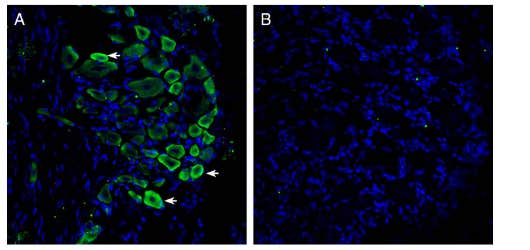 A Rabbit Polyclonal Antibody to GPR35 (extracellular)
- Product Code: AGR-051
- Short Description: A Rabbit Polyclonal Antibody to GPR35 (extracellular)
- Host: Rabbit
- Label: Unconjugated
- Reactivity: Rat, Mouse
- Applications: Indirect flow cytometry, Live cell imaging, Western blot, Immunohistochemistry
- Target: G-Protein Coupled Receptor 35, Kynurenic Acid Receptor
-
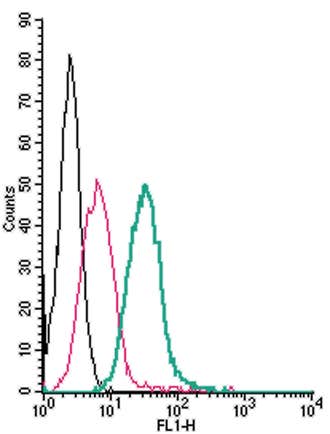 A Rabbit Polyclonal Antibody to GPR35 (extracellular) conjugated to the fluorescent dye FITC
- Product Code: AGR-051-F
- Short Description: A Rabbit Polyclonal Antibody to GPR35 (extracellular) conjugated to the fluorescent dye FITC
- Host: Rabbit
- Label: FITC
- Reactivity: Rat, Mouse
- Applications: Live cell imaging, Flow cytometry
- Target: G-Protein Coupled Receptor 35, Kynurenic Acid Receptor
-
 A Rabbit Polyclonal antibody to GPR97 (ADGRG3) (extracellular)
- Product Code: AGR-057
- Short Description: A Rabbit Polyclonal antibody to GPR97 (ADGRG3) (extracellular)
- Host: Rabbit
- Label: Unconjugated
- Reactivity: Human, Rat, Mouse
- Applications: Indirect flow cytometry, Live cell imaging, Western blot, Immunohistochemistry
- Target: Adhesion G Protein-Coupled Receptor G3, G-protein coupled receptor 97
-
 A Rabbit Polyclonal Antibody to KCNE4 (MiRP3) Subunit
- Product Code: APC-129
- Short Description: A Rabbit Polyclonal Antibody to KCNE4 (MiRP3) Subunit
- Host: Rabbit
- Label: Unconjugated
- Reactivity: Human, Rat, Mouse
- Applications: Western blot
- Target: Potassium channel subunit β MiRP3, MinK-related peptide 3, Potassium voltage-gated channel subfamily E member 4
-
 A Rabbit Polyclonal Antibody to KCNF1 (KV5.1) Channel
- Product Code: APC-134
- Short Description: A Rabbit Polyclonal Antibody to KCNF1 (KV5.1) Channel
- Host: Rabbit
- Label: Unconjugated
- Reactivity: Human, Rat, Mouse
- Applications: Western blot
- Target: Potassium voltage-gated channel subfamily F member 1
-
 A Rabbit Polyclonal Antibody to KV11.3 (ERG-3) Channel
- Product Code: APC-112
- Short Description: A Rabbit Polyclonal Antibody to KV11.3 (ERG-3) Channel
- Host: Rabbit
- Label: Unconjugated
- Reactivity: Human, Rat, Mouse
- Applications: Western blot, Immunocytochemistry, Immunofluorescence, Immunohistochemistry
- Target: KV11.3, Potassium voltage-gated channel subfamily H member 7, Ether-a-go-go-related channel 3, Eag-related protein 3, ERG-3, hERG3
-
 A Rabbit Polyclonal Antibody to KCNJ1 (Kir1.1) Channel
- Product Code: APC-001
- Short Description: A Rabbit Polyclonal Antibody to KCNJ1 (Kir1.1) Channel
- Host: Rabbit
- Label: Unconjugated
- Reactivity: Human, Rat, Mouse
- Applications: Western blot, Immunocytochemistry, Immunofluorescence, Immunoprecipitation, Immunohistochemistry
- Target: ROMK1, ATP-sensitive inward rectifier potassium channel 1
Loading...