-
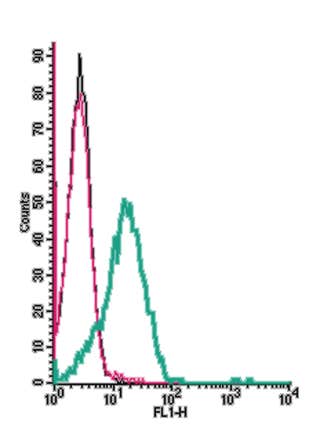
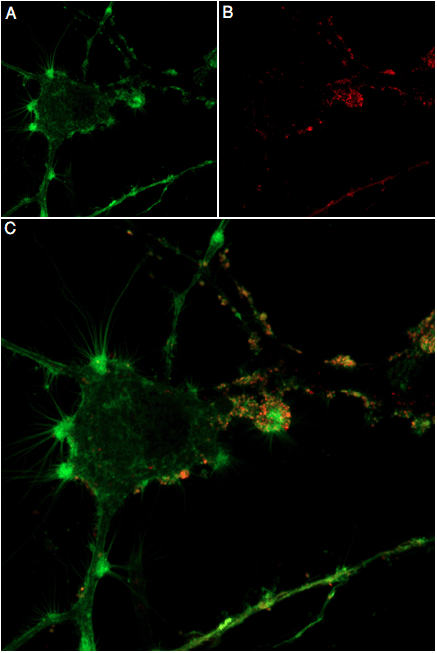
 A Rabbit Polyclonal Antibody to Human Orai1 Channel
- Product Code: ACC-060
- Short Description: A Rabbit Polyclonal Antibody to Human Orai1 Channel
- Host: Rabbit
- Label: Unconjugated
- Reactivity: Human
- Applications: Indirect flow cytometry, Live cell imaging, Western blot, Immunocytochemistry, Immunofluorescence, Immunohistochemistry
- Target: TMEM142A, CRACM1, Calcium release-activated calcium channel protein 1
-
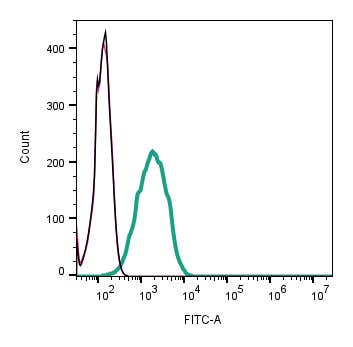 A Rabbit Polyclonal Antibody to Human Orai1 Channel Conjugated to the Fluorescent Dye FITC
- Product Code: ACC-060-F
- Short Description: A Rabbit Polyclonal Antibody to Human Orai1 Channel Conjugated to the Fluorescent Dye FITC
- Host: Rabbit
- Label: FITC
- Reactivity: Human
- Applications: Flow cytometry
- Target: TMEM142A, CRACM1, Calcium release-activated calcium channel protein 1
-
 A Rabbit Polyclonal Antibody to Human TRPV6 Channel
- Product Code: ACC-028
- Short Description: A Rabbit Polyclonal Antibody to Human TRPV6 Channel
- Host: Rabbit
- Label: Unconjugated
- Reactivity: Human
- Applications: Live cell imaging, Western blot, Immunocytochemistry, Immunofluorescence
- Target: Epithelial calcium channel 2, ECaC2, Calcium transport protein 1, CaT1, CaT-like, CaT-L, Transient receptor potential cation channel subfamily V member 6
-
 A Rabbit Polyclonal Antibody to KCNE1
- Product Code: APC-163
- Short Description: A Rabbit Polyclonal Antibody to KCNE1
- Host: Rabbit
- Label: Unconjugated
- Reactivity: Rat, Mouse
- Applications: Western blot
- Target: Delayed rectifier potassium channel subunit IsK, Minimal potassium channel, MinK
-
 A Rabbit Polyclonal Antibody to KCNE2 (MiRP1) Subunit
- Product Code: APC-054
- Short Description: A Rabbit Polyclonal Antibody to KCNE2 (MiRP1) Subunit
- Host: Rabbit
- Label: Unconjugated
- Reactivity: Human, Rat, Mouse
- Applications: Western blot, Immunocytochemistry, Immunofluorescence, Immunoprecipitation, Immunohistochemistry
- Target: Potassium channel subunit β MiRP1, MinK-related peptide 1, Potassium voltage-gated channel subfamily E member 2
-
 A Rabbit Polyclonal Antibody to KCNE3 (MiRP2) Subunit
- Product Code: APC-118
- Short Description: A Rabbit Polyclonal Antibody to KCNE3 (MiRP2) Subunit
- Host: Rabbit
- Label: Unconjugated
- Reactivity: Human, Rat, Mouse
- Applications: Western blot, Immunocytochemistry, Immunofluorescence, Immunohistochemistry
- Target: Potassium channel subunit β MiRP2, MinK-related peptide 2, Potassium voltage-gated channel subfamily E member 3, HOKPP
-
 A Rabbit Polyclonal Antibody to KV11.1 (ERG-1) Channel
- Product Code: APC-016
- Short Description: A Rabbit Polyclonal Antibody to KV11.1 (ERG-1) Channel
- Host: Rabbit
- Label: Unconjugated
- Reactivity: Human, Rat, Mouse
- Applications: Western blot, Immunocytochemistry, Immunofluorescence, Immunoprecipitation, Immunohistochemistry
- Target: KV11.1, Potassium voltage-gated channel subfamily H member 2, Ether-a-go-go-related channel 1, Eag-related protein 1, ERG-1, HERG
-
 A Rabbit Polyclonal Antibody to KV11.1 Channel
- Product Code: APC-109
- Short Description: A Rabbit Polyclonal Antibody to KV11.1 Channel
- Host: Rabbit
- Label: Unconjugated
- Reactivity: Human, Mouse
- Applications: Indirect flow cytometry, Live cell imaging, Western blot, Immunocytochemistry, Immunofluorescence, Immunoprecipitation, Immunohistochemistry
- Target: KV11.1, Potassium voltage-gated channel subfamily H member 2, Ether-a-go-go-related channel 1
-
 A Rabbit Polyclonal Antibody KV11.1 Channel Conjugated to the Fluorescent Dye FITC
- Product Code: APC-109-F
- Short Description: A Rabbit Polyclonal Antibody KV11.1 Channel Conjugated to the Fluorescent Dye FITC
- Host: Rabbit
- Label: FITC
- Reactivity: Human, Mouse
- Applications: Live cell imaging, Flow cytometry
- Target: KV11.1, Potassium voltage-gated channel subfamily H member 2, Ether-a-go-go-related channel 1
-
 A Rabbit Polyclonal Antibody to KV11.1 Channel
- Product Code: APC-062
- Short Description: A Rabbit Polyclonal Antibody to KV11.1 Channel
- Host: Rabbit
- Label: Unconjugated
- Reactivity: Human, Rat, Mouse
- Applications: Western blot, Immunocytochemistry, Immunofluorescence, Immunoprecipitation, Immunohistochemistry
- Target: KV11.1, Potassium voltage-gated channel subfamily H member 2, Ether-a-go-go-related channel 1
Loading...