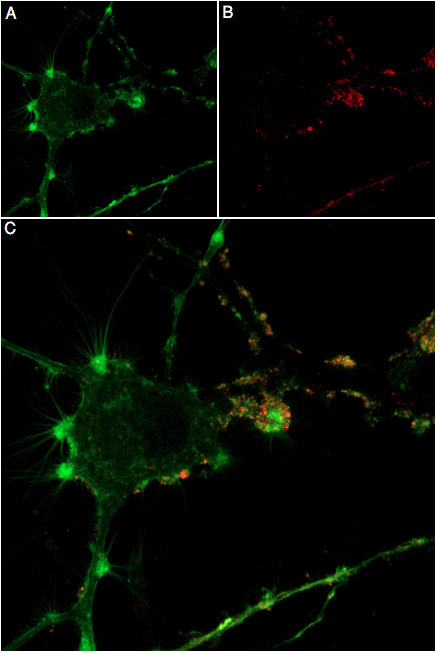
-

 A Rabbit Polyclonal Antibody to Orai1 Channel
- Product Code: ACC-062
- Short Description: A Rabbit Polyclonal Antibody to Orai1 Channel
- Host: Rabbit
- Label: Unconjugated
- Reactivity: Rat, Mouse
- Applications: Indirect flow cytometry, Live cell imaging, Western blot, Immunocytochemistry, Immunofluorescence, Immunohistochemistry
- Target: TMEM142A, CRACM1, Calcium release-activated calcium channel protein 1
-
 A Rabbit Polyclonal Antibody to Orai1 Channel Conjugated to the Fluorescent Dye ATTO-488
- Product Code: ACC-062-AG
- Short Description: A Rabbit Polyclonal Antibody to Orai1 Channel Conjugated to the Fluorescent Dye ATTO-488
- Host: Rabbit
- Label: ATTO 488
- Reactivity: Rat, Mouse
- Applications: Immunocytochemistry, Immunofluorescence
- Target: TMEM142A, CRACM1, Calcium release-activated calcium channel protein 1
-
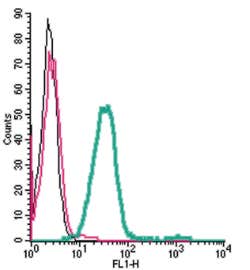 A Rabbit Polyclonal Antibody to Orai1 (extracellular) conjugated to the fluorescent dye FITC.
- Product Code: ACC-062-F
- Short Description: A Rabbit Polyclonal Antibody to Orai1 (extracellular) conjugated to the fluorescent dye FITC.
- Host: Rabbit
- Label: FITC
- Reactivity: Rat, Mouse
- Applications: Live cell imaging, Flow cytometry
- Target: TMEM142A, Calcium release-activated calcium channel protein 1, CRACM1
-
 A Rabbit Polyclonal Antibody to Orai2 Channel
- Product Code: ACC-061
- Short Description: A Rabbit Polyclonal Antibody to Orai2 Channel
- Host: Rabbit
- Label: Unconjugated
- Reactivity: Human, Rat, Mouse
- Applications: Western blot, Immunofluorescence, Immunohistochemistry
- Target: TMEM142B
-
 A Rabbit Polyclonal Antibody to Orai3 Channel
- Product Code: ACC-065
- Short Description: A Rabbit Polyclonal Antibody to Orai3 Channel
- Host: Rabbit
- Label: Unconjugated
- Reactivity: Human, Rat, Mouse
- Applications: Western blot
- Target: TMEM142C
-
 A Rabbit Polyclonal Antibody to Piezo1 Channel
- Product Code: APC-087
- Short Description: A Rabbit Polyclonal Antibody to Piezo1 Channel
- Host: Rabbit
- Label: Unconjugated
- Reactivity: Rat, Mouse
- Applications: Indirect flow cytometry, Live cell imaging, Western blot, Immunofluorescence, Immunohistochemistry
- Target: Piezo-type mechanosensitive ion channel component 1, Protein FAM38A, Mib, Membrane protein induced by beta-amyloid treatment
-
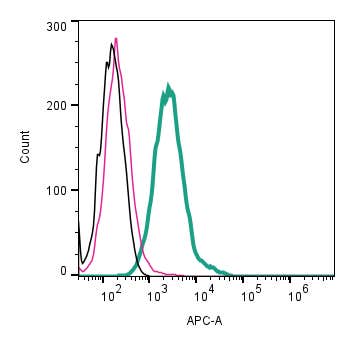 A Rabbit Polyclonal Antibody to Piezo1 (extracellular) conjugated to the fluorescent dye Allophycocyanin (APC)
- Product Code: APC-087-APC
- Short Description: A Rabbit Polyclonal Antibody to Piezo1 (extracellular) conjugated to the fluorescent dye Allophycocyanin (APC)
- Host: Rabbit
- Label: APC
- Reactivity: Rat, Mouse
- Applications: Live cell imaging, Flow cytometry
- Target: Piezo-type mechanosensitive ion channel component 1, Protein FAM38A, Mib, Membrane protein induced by beta-amyloid treatment
-
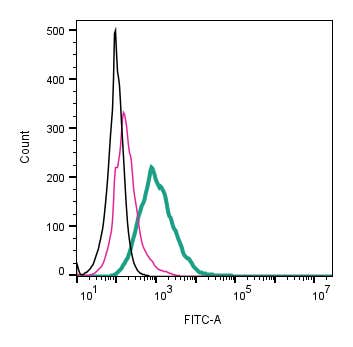 A Rabbit Polyclonal Antibody to Piezo1 (extracellular) conjugated to the fluorescent dye FITC
- Product Code: APC-087-F
- Short Description: A Rabbit Polyclonal Antibody to Piezo1 (extracellular) conjugated to the fluorescent dye FITC
- Host: Rabbit
- Label: FITC
- Reactivity: Rat, Mouse
- Applications: Live cell imaging, Flow cytometry
- Target: Piezo-type mechanosensitive ion channel component 1, Protein FAM38A, Mib, Membrane protein induced by beta-amyloid treatment
-
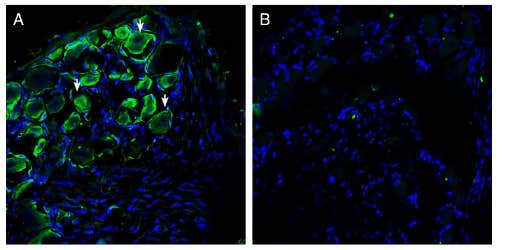 A Rabbit Polyclonal Antibody to Piezo2
- Product Code: APC-090
- Short Description: A Rabbit Polyclonal Antibody to Piezo2
- Host: Rabbit
- Label: Unconjugated
- Reactivity: Human, Rat, Mouse
- Applications: Western blot, Immunohistochemistry
- Target: Piezo-Type Mechanosensitive Ion Channel Component 2, Protein FAM38B
-
 A Rabbit Polyclonal Antibody to PMCA1 ATPase
- Product Code: ACP-005
- Short Description: A Rabbit Polyclonal Antibody to PMCA1 ATPase
- Host: Rabbit
- Label: Unconjugated
- Reactivity: Human, Rat, Mouse
- Applications: Western blot, Immunofluorescence, Immunohistochemistry
- Target: Plasma membrane Ca2+ ATPase 1, ATP2B1
Loading...