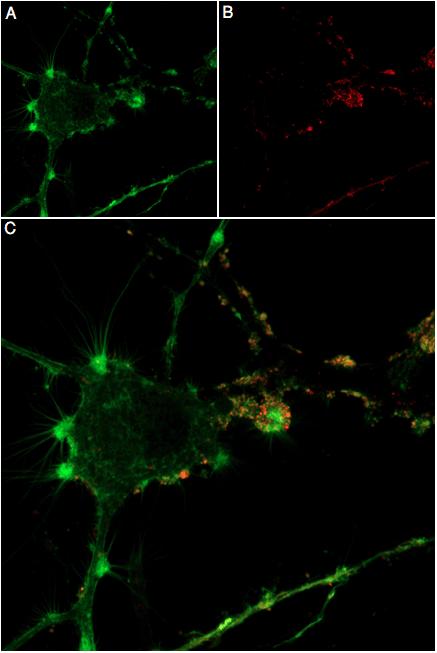
-

 A potent agonist for AT1 and AT2 G-protein coupled receptors
- Product Code: GPA-130
- Short Description: A potent agonist for AT1 and AT2 G-protein coupled receptors
- Applications: Aequorin functional assay, Western blot, Calcium imaging assay
- CAS No.: 13602-53-4
- MW: 931.1 Da
-
 A Blocking Peptide for Anti-Angiotensin-(1-7) Mas Receptor Antibody
- Product Code: BLP-AR013
- Short Description: A Blocking Peptide for Anti-Angiotensin-(1-7) Mas Receptor Antibody
- Applications: Western blot, Immunohistochemistry
- Target: MAS1
-
 A potent cardiotoxin that delays the inactivation of NaV channels
- Product Code: STA-400
- Short Description: A potent cardiotoxin that delays the inactivation of NaV channels
- Applications: Electrophysiology
- MW: 4877.6 Da
-
 A Rabbit Polyclonal Antibody to ABCB4/MDR3
- Product Code: AMT-023
- Short Description: A Rabbit Polyclonal Antibody to ABCB4/MDR3
- Host: Rabbit
- Label: Unconjugated
- Reactivity: Rat, Mouse
- Applications: Western blot
- Target: ATP binding cassette subfamily B member 4, Multidrug resistance protein 3, P-glycoprotein 2, Pgy2
-
 A Rabbit Polyclonal Antibody to ACE2 (extracellular)
- Product Code: AAC-012
- Short Description: A Rabbit Polyclonal Antibody to ACE2 (extracellular)
- Host: Rabbit
- Label: Unconjugated
- Reactivity: Human, Rat, Mouse
- Applications: Indirect flow cytometry, Live cell imaging, Western blot, Immunohistochemistry
- Target: Angiotensin-Converting Enzyme 2, ACE-Related Carboxypeptidase, Angiotensin-converting enzyme homolog, ACEH, Metalloprotease MPROT15
-
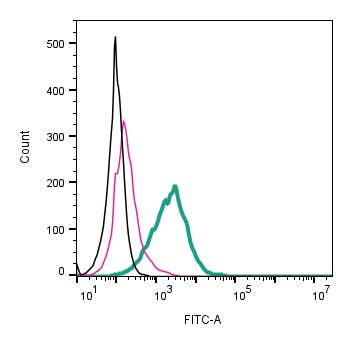 A Rabbit Polyclonal Antibody to ACE2 (extracellular) conjugated to the fluorescent dye FITC
- Product Code: AAC-012-F
- Short Description: A Rabbit Polyclonal Antibody to ACE2 (extracellular) conjugated to the fluorescent dye FITC
- Host: Rabbit
- Label: FITC
- Reactivity: Human, Rat, Mouse
- Applications: Live cell imaging, Flow cytometry
- Target: Angiotensin-Converting Enzyme 2, ACE-Related Carboxypeptidase, Angiotensin-converting enzyme homolog, ACEH, Metalloprotease MPROT15
-
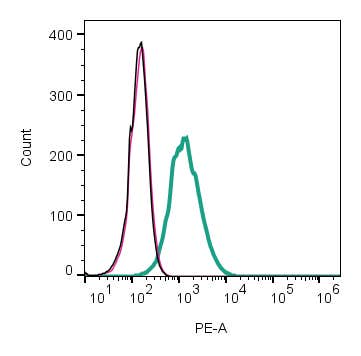 A Rabbit Polyclonal Antibody to ACVRL1
- Product Code: ABR-041
- Short Description: A Rabbit Polyclonal Antibody to ACVRL1
- Host: Rabbit
- Label: Unconjugated
- Reactivity: Rat, Mouse
- Applications: Indirect flow cytometry, Live cell imaging, Western blot
- Target: Activin A Receptor Like Type 1, ALK1, Serine/Threonine-Protein Kinase Receptor R3, SKR3, TGF-B Superfamily Receptor Type I, TSR-I
-
 A Rabbit Polyclonal antibody to Adenosine A1 Receptor (extracellular)
- Product Code: AAR-009
- Short Description: A Rabbit Polyclonal antibody to Adenosine A1 Receptor (extracellular)
- Host: Rabbit
- Label: Unconjugated
- Reactivity: Rat, Mouse
- Applications: Indirect flow cytometry, Live cell imaging, Western blot, Immunohistochemistry
- Target: Adenosine Receptor A1, Adenosine A1R, ADORA1
-
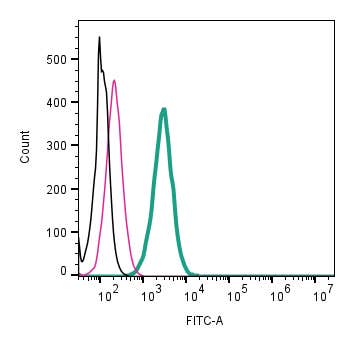 A Rabbit Polyclonal Antibody to Adenosine A1 Receptor (extracellular) conjugated to the fluorescent dye FITC
- Product Code: AAR-009-F
- Short Description: A Rabbit Polyclonal Antibody to Adenosine A1 Receptor (extracellular) conjugated to the fluorescent dye FITC
- Host: Rabbit
- Label: FITC
- Reactivity: Rat, Mouse
- Applications: Live cell imaging, Flow cytometry
- Target: Adenosine Receptor A1, Adenosine A1R, ADORA1
-

 A Rabbit Polyclonal Antibody to Adenosine A1 Receptor
- Product Code: AAR-006
- Short Description: A Rabbit Polyclonal Antibody to Adenosine A1 Receptor
- Host: Rabbit
- Label: Unconjugated
- Reactivity: Human, Rat, Mouse
- Applications: Western blot, Immunocytochemistry, Immunofluorescence, Immunohistochemistry
- Target: ADORA1, A1AR, Adenosine A1R
Loading...