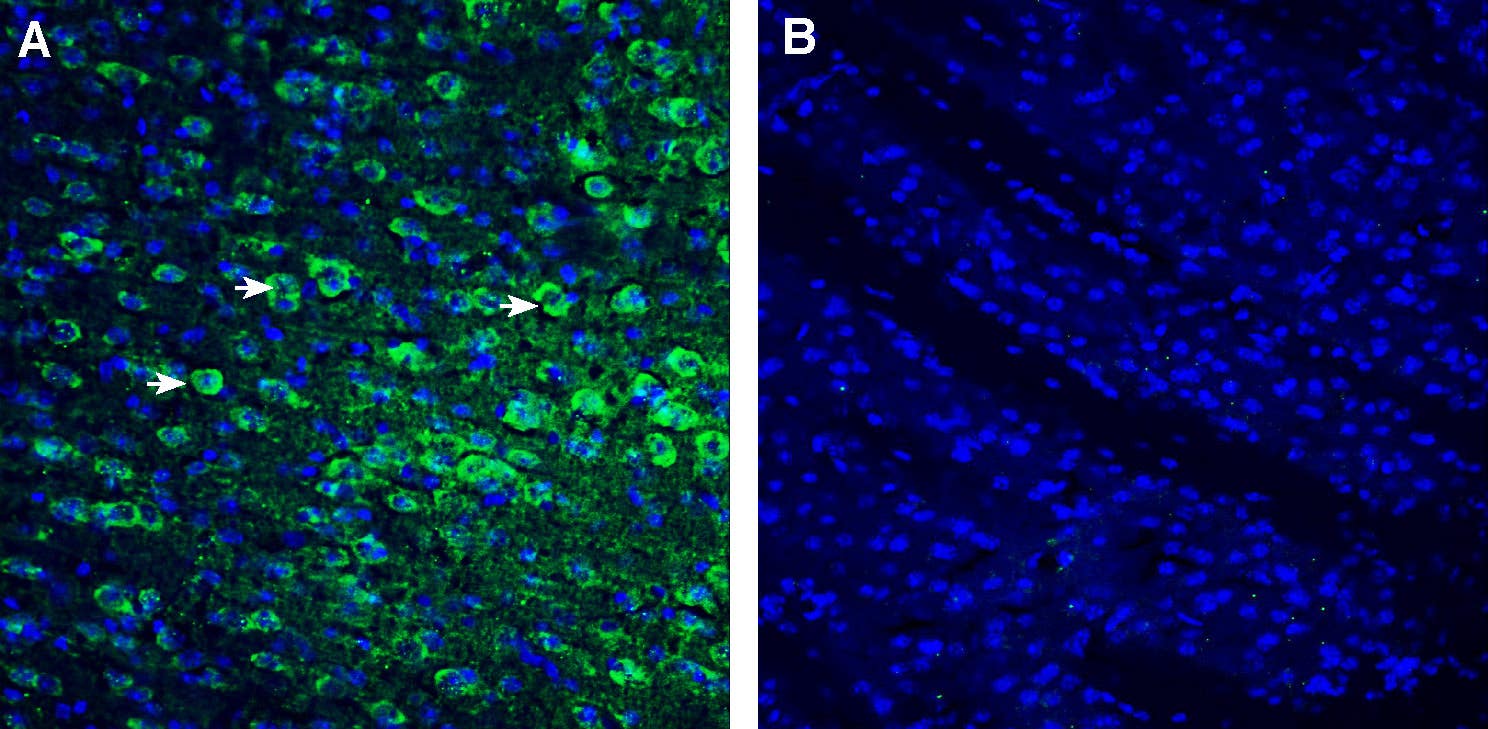
-
 A Rabbit Polyclonal Antibody to Sphingosine 1-Phosphate Receptor 3 Conjugated to the Fluorescent Dye ATTO-488
- Product Code: ASR-013-AG
- Short Description: A Rabbit Polyclonal Antibody to Sphingosine 1-Phosphate Receptor 3 Conjugated to the Fluorescent Dye ATTO-488
- Host: Rabbit
- Label: ATTO 488
- Reactivity: Human, Rat, Mouse
- Applications: Flow cytometry
- Target: Sphingosine 1-phosphate receptor 3, S1P3, Endothelial differentiation G-protein coupled receptor 3, Lysophospholipid receptor B3, LPB3
-
 A Rabbit Polyclonal Antibody to Sphingosine 1-Phosphate Receptor 3 Conjugated to the Fluorescent Dye FITC
- Product Code: ASR-013-F
- Short Description: A Rabbit Polyclonal Antibody to Sphingosine 1-Phosphate Receptor 3 Conjugated to the Fluorescent Dye FITC
- Host: Rabbit
- Label: FITC
- Reactivity: Human, Rat, Mouse
- Applications: Live cell imaging, Flow cytometry
- Target: Sphingosine 1-phosphate receptor 3, S1P3, Endothelial differentiation G-protein coupled receptor 3, Lysophospholipid receptor B3, LPB3
-
 A Rabbit Polyclonal Antibody to SLC11A1/NRAMP1
- Product Code: ANT-201
- Short Description: A Rabbit Polyclonal Antibody to SLC11A1/NRAMP1
- Host: Rabbit
- Label: Unconjugated
- Reactivity: Human, Rat, Mouse
- Applications: Indirect flow cytometry, Live cell imaging, Western blot, Immunohistochemistry
- Target: Natural Resistance-Associated Macrophage Protein 1, LSH, Solute Carrier Family 11 Member 1
-
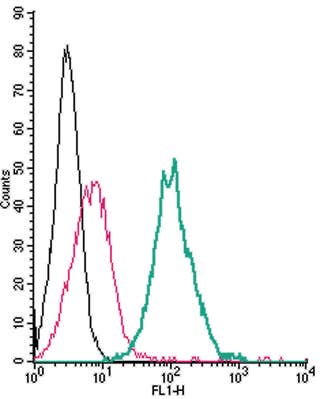 A Rabbit Polyclonal Antibody to SLC11A1/NRAMP1 (extracellular) conjugated to the fluorescent dye FITC
- Product Code: ANT-201-F
- Short Description: A Rabbit Polyclonal Antibody to SLC11A1/NRAMP1 (extracellular) conjugated to the fluorescent dye FITC
- Host: Rabbit
- Label: FITC
- Reactivity: Human, Rat, Mouse
- Applications: Live cell imaging, Flow cytometry
- Target: Natural Resistance-Associated Macrophage Protein 1, LSH, Solute Carrier Family 11 Member 1
-

 A Rabbit Polyclonal Antibody to Sortilin
- Product Code: ANT-009
- Short Description: A Rabbit Polyclonal Antibody to Sortilin
- Host: Rabbit
- Label: Unconjugated
- Reactivity: Human, Rat, Mouse
- Applications: Indirect flow cytometry, Live cell imaging, Western blot, Immunofluorescence, Immunohistochemistry
- Target: SORT1, Neurotensin receptor 3, NTR3, NT3, Glycoprotein 95, Gp95
-
 A Rabbit Polyclonal Antibody to Sortilin Conjugated to the Fluorescent Dye FITC
- Product Code: ANT-009-F
- Short Description: A Rabbit Polyclonal Antibody to Sortilin Conjugated to the Fluorescent Dye FITC
- Host: Rabbit
- Label: FITC
- Reactivity: Human, Rat, Mouse
- Applications: Flow cytometry
- Target: Sortilin 1, SORT1, Neurotensin receptor 3, NTR3, NT3, Glycoprotein 95, Gp95
-
 A Rabbit Polyclonal Antibody to Syntaxin 2
- Product Code: ANR-008
- Short Description: A Rabbit Polyclonal Antibody to Syntaxin 2
- Host: Rabbit
- Label: Unconjugated
- Reactivity: Mouse
- Applications: Western blot, Immunofluorescence, Immunohistochemistry
- Target: STX2, Epimorphin, EPIM
-
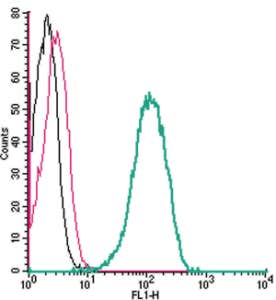 A Rabbit Polyclonal antibody to Thromboxane A2 Receptor (extracellular).
- Product Code: APR-095
- Short Description: A Rabbit Polyclonal antibody to Thromboxane A2 Receptor (extracellular).
- Host: Rabbit
- Label: Unconjugated
- Reactivity: Human, Rat, Mouse
- Applications: Indirect flow cytometry, Live cell imaging, Western blot
- Target: Prostanoid TP receptor, TXA2-R, TBXA2R
-
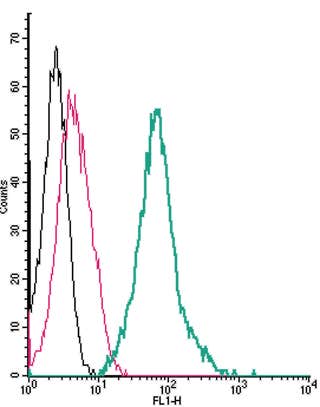 A Rabbit Polyclonal Antibody to Thromboxane A2 Receptor (extracellular) conjugated to the fluorescent dye FITC
- Product Code: APR-095-F
- Short Description: A Rabbit Polyclonal Antibody to Thromboxane A2 Receptor (extracellular) conjugated to the fluorescent dye FITC
- Host: Rabbit
- Label: FITC
- Reactivity: Human, Rat, Mouse
- Applications: Live cell imaging, Flow cytometry
- Target: Prostanoid TP receptor, TXA2-R, TBXA2R
-
 A Rabbit Polyclonal Antibody to Thromboxane A2 Receptor
- Product Code: APR-069
- Short Description: A Rabbit Polyclonal Antibody to Thromboxane A2 Receptor
- Host: Rabbit
- Label: Unconjugated
- Reactivity: Human, Rat, Mouse
- Applications: Western blot, Immunofluorescence, Immunohistochemistry
- Target: Prostanoid TP receptor, TXA2-R, TBXA2R
Loading...