-

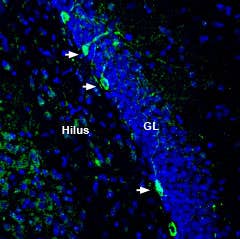
 A Rabbit Polyclonal Antibody to PACAP Type I Receptor
- Product Code: AVR-003
- Short Description: A Rabbit Polyclonal Antibody to PACAP Type I Receptor
- Host: Rabbit
- Label: Unconjugated
- Reactivity: Rat, Mouse
- Applications: Western blot, Immunofluorescence, Immunohistochemistry
- Target: PACAP type I receptor, Pituitary adenylate cyclase-activating polypeptide type I receptor, PACAP-R1, ADCYAP1R1
-
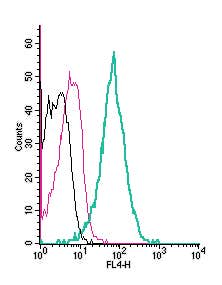 A Rabbit Polyclonal Antibody to VPAC2 Receptor
- Product Code: AVR-002
- Short Description: A Rabbit Polyclonal Antibody to VPAC2 Receptor
- Host: Rabbit
- Label: Unconjugated
- Reactivity: Human, Rat, Mouse
- Applications: Indirect flow cytometry, Live cell imaging, Western blot, Immunocytochemistry, Immunofluorescence
- Target: VIP and PACAP receptor 2, Vasoactive intestinal polypeptide receptor 2, Helodermin-preferring VIP receptor, Pituitary adenylate cyclase-activating polypeptide type III receptor, PACAP type III receptor, PACAP-R3
-
 A Rabbit Polyclonal Antibody to VPAC1 Receptor Conjugated to the Fluorescent Dye FITC
- Product Code: AVR-001-F
- Short Description: A Rabbit Polyclonal Antibody to VPAC1 Receptor Conjugated to the Fluorescent Dye FITC
- Host: Rabbit
- Label: FITC
- Reactivity: Human, Rat, Mouse
- Applications: Live cell imaging, Flow cytometry
- Target: VIP and PACAP receptor 1, Vasoactive intestinal polypeptide receptor 1, Pituitary adenylate cyclase-activating polypeptide type II receptor, PACAP type II receptor, PACAP-R2
-
 A Rabbit Polyclonal Antibody to VPAC1 Receptor
- Product Code: AVR-001
- Short Description: A Rabbit Polyclonal Antibody to VPAC1 Receptor
- Host: Rabbit
- Label: Unconjugated
- Reactivity: Human, Rat, Mouse
- Applications: Indirect flow cytometry, Live cell imaging, Western blot, Immunocytochemistry, Immunofluorescence, Immunohistochemistry
- Target: VIP and PACAP receptor 1, Vasoactive intestinal polypeptide receptor 1, Pituitary adenylate cyclase-activating polypeptide type II receptor, PACAP type II receptor, PACAP-R2
-
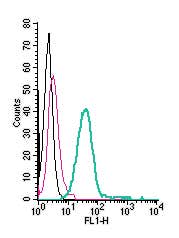 A Rabbit Polyclonal Antibody to MERTK (extracellular) conjugated to the fluorescent dye FITC
- Product Code: ATR-033-F
- Short Description: A Rabbit Polyclonal Antibody to MERTK (extracellular) conjugated to the fluorescent dye FITC
- Host: Rabbit
- Label: FITC
- Reactivity: Human, Rat, Mouse
- Applications: Live cell imaging, Flow cytometry
- Target: Receptor tyrosine kinase MerTK, C-Mer Proto-Oncogene Tyrosine Kinase, Mer, Proto-Oncogene C-Mer
-
 A Rabbit Polyclonal Antibody to MERTK Receptor
- Product Code: ATR-033
- Short Description: A Rabbit Polyclonal Antibody to MERTK Receptor
- Host: Rabbit
- Label: Unconjugated
- Reactivity: Human, Rat, Mouse
- Applications: Indirect flow cytometry, Western blot, Immunofluorescence, Immunohistochemistry
- Target: Receptor tyrosine kinase MerTK, C-Mer Proto-Oncogene Tyrosine Kinase, Mer, Proto-Oncogene C-Mer
-
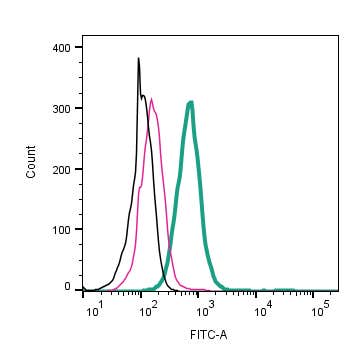 A Rabbit Polyclonal Antibody to AXL (extracellular) conjugated to the fluorescent dye FITC
- Product Code: ATR-032-F
- Short Description: A Rabbit Polyclonal Antibody to AXL (extracellular) conjugated to the fluorescent dye FITC
- Host: Rabbit
- Label: FITC
- Reactivity: Human, Rat, Mouse
- Applications: Live cell imaging, Flow cytometry
- Target: AXL Receptor Tyrosine Kinase, Tyrosine-Protein Kinase Receptor UFO, AXL Oncogene, Tyro7, UFO, ARK
-
 A Rabbit Polyclonal antibody to AXL (extracellular)
- Product Code: ATR-032
- Short Description: A Rabbit Polyclonal antibody to AXL (extracellular)
- Host: Rabbit
- Label: Unconjugated
- Reactivity: Human, Rat, Mouse
- Applications: Indirect flow cytometry, Live cell imaging, Western blot, Immunohistochemistry
- Target: AXL Receptor Tyrosine Kinase, Tyrosine-Protein Kinase Receptor UFO, AXL Oncogene, Tyro7, UFO
-
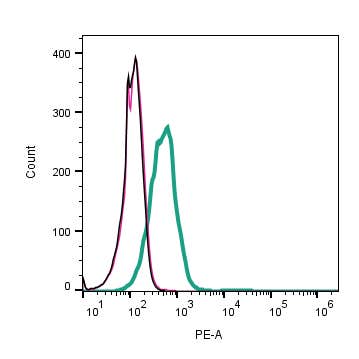 A Rabbit Polyclonal antibody to TYRO3 (extracellular)
- Product Code: ATR-031
- Short Description: A Rabbit Polyclonal antibody to TYRO3 (extracellular)
- Host: Rabbit
- Label: Unconjugated
- Reactivity: Human, Rat, Mouse
- Applications: Indirect flow cytometry, Live cell imaging, Western blot
- Target: Tyrosine-Protein Kinase Receptor TYRO3, Tyrosine-Protein Kinase DTK, Tyrosine-Protein Kinase RSE, Tyrosine-Protein Kinase SKY
-
 A Rabbit Polyclonal Antibody to Trace Amine Receptor 1
- Product Code: ATR-021
- Short Description: A Rabbit Polyclonal Antibody to Trace Amine Receptor 1
- Host: Rabbit
- Label: Unconjugated
- Reactivity: Human, Rat, Mouse
- Applications: Western blot
- Target: Trace amine-associated receptor 1, TaR-1, TA1, TRAR1
Loading...