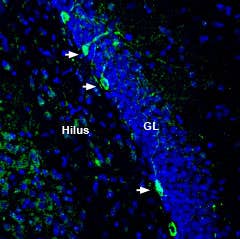
-
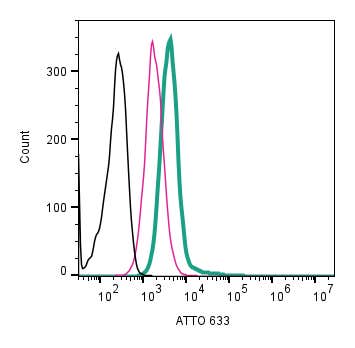
 A Rabbit Polyclonal Antibody to P2X7 Receptor Conjugated to the Fluorescent Dye ATTO-633
- Product Code: APR-008-FR
- Short Description: A Rabbit Polyclonal Antibody to P2X7 Receptor Conjugated to the Fluorescent Dye ATTO-633
- Host: Rabbit
- Label: ATTO 633
- Reactivity: Human, Rat, Mouse
- Applications: Live cell imaging, Immunocytochemistry, Immunofluorescence, Flow cytometry
- Target: Purinergic receptor P2X7, P2RX7, P2Z, ATP receptor
-
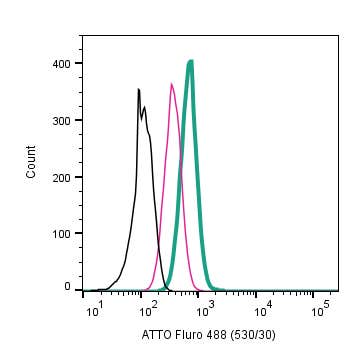 A Rabbit Polyclonal Antibody to P2X7 Receptor Conjugated to the Fluorescent Dye ATTO-488
- Product Code: APR-008-AG
- Short Description: A Rabbit Polyclonal Antibody to P2X7 Receptor Conjugated to the Fluorescent Dye ATTO-488
- Host: Rabbit
- Label: ATTO 488
- Reactivity: Human, Rat, Mouse
- Applications: Live cell imaging, Immunocytochemistry, Immunofluorescence, Flow cytometry, Immunohistochemistry
- Target: Purinergic receptor P2X7, P2RX7, P2Z, ATP receptor
-
 A Rabbit Polyclonal Antibody to P2X7 Receptor Conjugated to the Fluorescent Dye ATTO-550
- Product Code: APR-004-AO
- Short Description: A Rabbit Polyclonal Antibody to P2X7 Receptor Conjugated to the Fluorescent Dye ATTO-550
- Host: Rabbit
- Label: ATTO 550
- Reactivity: Human, Rat, Mouse
- Applications: Immunofluorescence, Immunohistochemistry
- Target: Purinergic receptor P2X7, P2RX7, P2Z, ATP receptor
-
 A Rabbit Polyclonal Antibody to P2X7 Receptor
- Product Code: APR-004
- Short Description: A Rabbit Polyclonal Antibody to P2X7 Receptor
- Host: Rabbit
- Label: Unconjugated
- Reactivity: Human, Rat, Mouse
- Applications: Western blot, Immunocytochemistry, Immunofluorescence, Immunoprecipitation, Immunohistochemistry
- Target: Purinergic receptor P2X7, P2RX7, P2Z, ATP receptor
-
 A Guinea Pig Polyclonal Antibody to P2X4 Receptor
- Product Code: APR-002-GP
- Short Description: A Guinea Pig Polyclonal Antibody to P2X4 Receptor
- Host: Guinea Pig
- Label: Unconjugated
- Reactivity: Human, Rat, Mouse
- Applications: Western blot
- Target: P2RX4, P2X purinoceptor 4, ATP receptor
-
 A Rabbit Polyclonal Antibody to P2X4 Receptor
- Product Code: APR-002
- Short Description: A Rabbit Polyclonal Antibody to P2X4 Receptor
- Host: Rabbit
- Label: Unconjugated
- Reactivity: Human, Rat, Mouse
- Applications: Indirect flow cytometry, Western blot, Immunocytochemistry, Immunofluorescence, Immunoprecipitation, Immunohistochemistry
- Target: P2RX4, P2X purinoceptor 4, ATP receptor
-
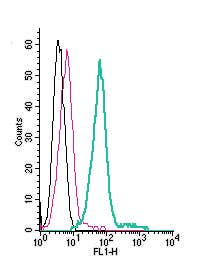 A Rabbit Polyclonal Antibody to KV7.1 (extracellular) conjugated to the fluorescent dye FITC
- Product Code: APC-168-F
- Short Description: A Rabbit Polyclonal Antibody to KV7.1 (extracellular) conjugated to the fluorescent dye FITC
- Host: Rabbit
- Label: FITC
- Reactivity: Human, Rat, Mouse
- Applications: Live cell imaging, Flow cytometry
- Target: KV7.1, Voltage-gated potassium channel QKT subfamily member 1, KvLQT1, KCNA9
-
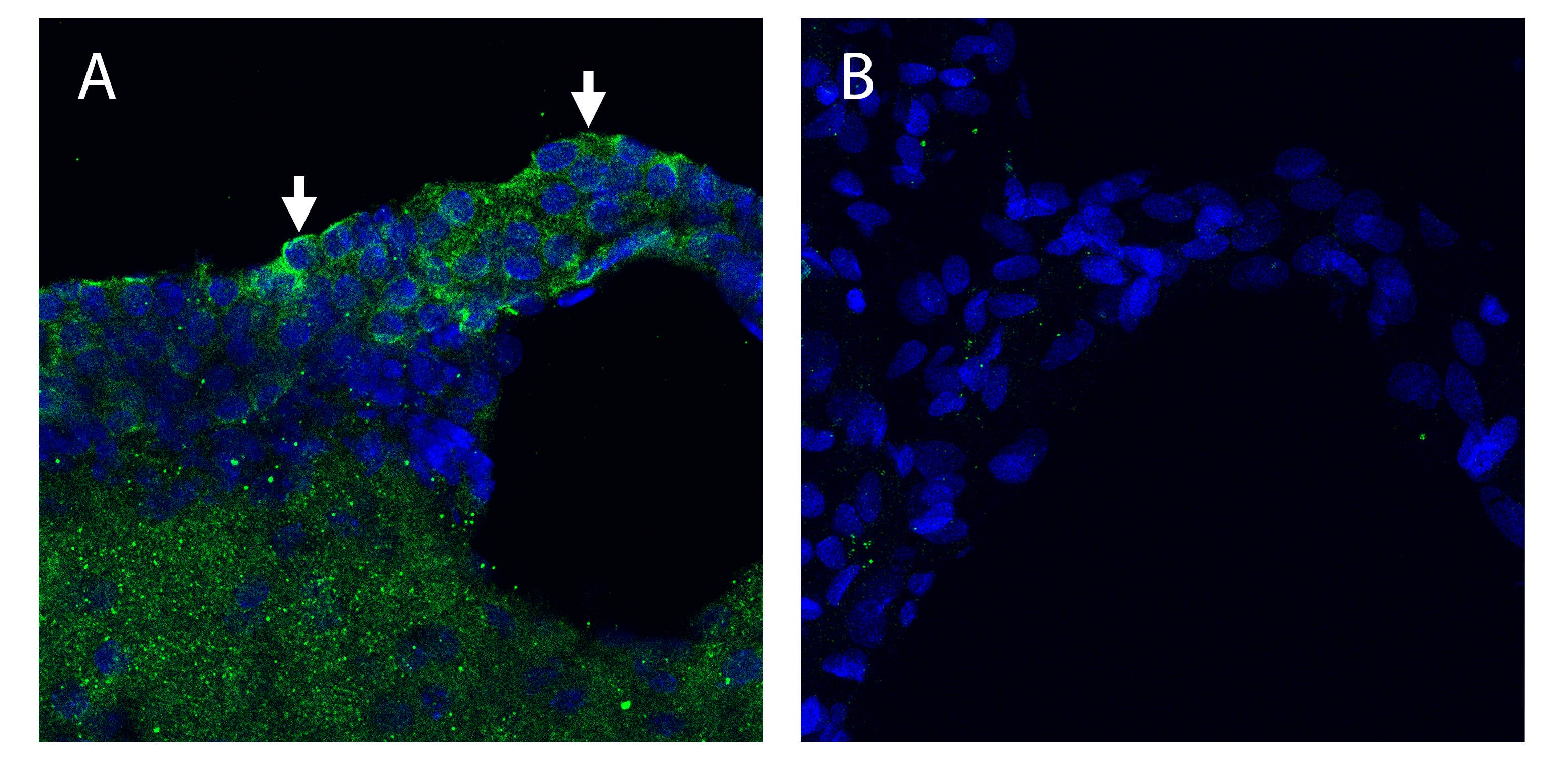 A Rabbit Polyclonal Antibody to KCNQ1 (KV7.1) Channel
- Product Code: APC-168
- Short Description: A Rabbit Polyclonal Antibody to KCNQ1 (KV7.1) Channel
- Host: Rabbit
- Label: Unconjugated
- Reactivity: Human, Rat, Mouse
- Applications: Indirect flow cytometry, Live cell imaging, Western blot, Immunocytochemistry, Immunofluorescence
- Target: KV7.1, Voltage-gated potassium channel QKT subfamily member 1, KvLQT1, KCNA9
-
 A Rabbit Polyclonal Antibody to Kir4.1 (KCNJ10) Channel
- Product Code: APC-165
- Short Description: A Rabbit Polyclonal Antibody to Kir4.1 (KCNJ10) Channel
- Host: Rabbit
- Label: Unconjugated
- Reactivity: Human, Rat, Mouse
- Applications: Live cell imaging, Western blot, Immunocytochemistry, Immunofluorescence, Immunohistochemistry
- Target: ATP-sensitive inward rectifier potassium channel 10, KAB-2, BIR10, BIRK1, Kir1.2, Potassium channel inwardly rectifying subfamily J member 10
-
 A Rabbit Polyclonal Antibody to KCNQ4 (KV7.4) Channel
- Product Code: APC-164
- Short Description: A Rabbit Polyclonal Antibody to KCNQ4 (KV7.4) Channel
- Host: Rabbit
- Label: Unconjugated
- Reactivity: Human, Rat, Mouse
- Applications: Western blot, Immunofluorescence, Immunohistochemistry
- Target: KV7.4, Potassium voltage-gated channel subfamily KQT member 4, KQT-like 4, KvLQT4, DFNA2
Loading...