-
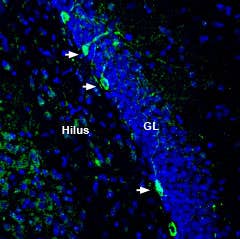
 A Rabbit Polyclonal Antibody to Dipeptidyl Peptidase 6
- Product Code: APC-146
- Short Description: A Rabbit Polyclonal Antibody to Dipeptidyl Peptidase 6
- Host: Rabbit
- Label: Unconjugated
- Reactivity: Human, Rat, Mouse
- Applications: Western blot, Immunofluorescence, Immunohistochemistry
- Target: Dipeptidyl peptidase 6, Dipeptidyl aminopeptidase-like protein 6, DPP VI, DPPX, VF2
-
 A Rabbit Polyclonal Antibody to KCNT1 (Slack)
- Product Code: APC-124
- Short Description: A Rabbit Polyclonal Antibody to KCNT1 (Slack)
- Host: Rabbit
- Label: Unconjugated
- Reactivity: Rat, Mouse
- Applications: Western blot, Immunohistochemistry
- Target: KCa4.1, KNa1.1, Slo2.2 Na+-activated K+ channel, Potassium channel subfamily T member 1
-

 A Rabbit Polyclonal Antibody to KCNE3 (MiRP2) Subunit
- Product Code: APC-118
- Short Description: A Rabbit Polyclonal Antibody to KCNE3 (MiRP2) Subunit
- Host: Rabbit
- Label: Unconjugated
- Reactivity: Human, Rat, Mouse
- Applications: Western blot, Immunocytochemistry, Immunofluorescence, Immunohistochemistry
- Target: Potassium channel subunit β MiRP2, MinK-related peptide 2, Potassium voltage-gated channel subfamily E member 3, HOKPP
-
 A Rabbit Polyclonal Antibody KV11.1 Channel Conjugated to the Fluorescent Dye FITC
- Product Code: APC-109-F
- Short Description: A Rabbit Polyclonal Antibody KV11.1 Channel Conjugated to the Fluorescent Dye FITC
- Host: Rabbit
- Label: FITC
- Reactivity: Human, Mouse
- Applications: Live cell imaging, Flow cytometry
- Target: KV11.1, Potassium voltage-gated channel subfamily H member 2, Ether-a-go-go-related channel 1
-
 A Rabbit Polyclonal Antibody to KV11.1 Channel
- Product Code: APC-109
- Short Description: A Rabbit Polyclonal Antibody to KV11.1 Channel
- Host: Rabbit
- Label: Unconjugated
- Reactivity: Human, Mouse
- Applications: Indirect flow cytometry, Live cell imaging, Western blot, Immunocytochemistry, Immunofluorescence, Immunoprecipitation, Immunohistochemistry
- Target: KV11.1, Potassium voltage-gated channel subfamily H member 2, Ether-a-go-go-related channel 1
-
 A Rabbit Polyclonal Antibody to KCNMA1 (KCa1.1) Channel
- Product Code: APC-107
- Short Description: A Rabbit Polyclonal Antibody to KCNMA1 (KCa1.1) Channel
- Host: Rabbit
- Label: Unconjugated
- Reactivity: Human, Rat, Mouse
- Applications: Western blot, Immunocytochemistry, Immunofluorescence, Immunoprecipitation, Immunohistochemistry
- Target: Large conductance calcium-activated potassium channel subfamily M subunit alpha-1, BKCa alpha, Maxi K+, Slo1
-
 A Rabbit Polyclonal Antibody to Kir6.1 (KCNJ8) Channel
- Product Code: APC-105
- Short Description: A Rabbit Polyclonal Antibody to Kir6.1 (KCNJ8) Channel
- Host: Rabbit
- Label: Unconjugated
- Reactivity: Human, Rat, Mouse
- Applications: Western blot, Immunofluorescence, Immunoprecipitation, Immunohistochemistry
- Target: ATP-sensitive inward rectifier potassium channel 8, uKATP-1
-
 A Rabbit Polyclonal Antibody to KCNN3 (KCa2.3, SK3) Channel
- Product Code: APC-103
- Short Description: A Rabbit Polyclonal Antibody to KCNN3 (KCa2.3, SK3) Channel
- Host: Rabbit
- Label: Unconjugated
- Reactivity: Human, Rat, Mouse
- Applications: Western blot
- Target: Small conductance calcium-activated potassium channel protein 3, SKCa3
-
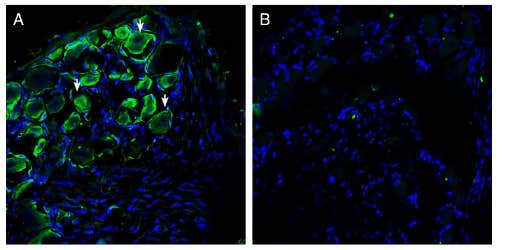 A Rabbit Polyclonal Antibody to Piezo2
- Product Code: APC-090
- Short Description: A Rabbit Polyclonal Antibody to Piezo2
- Host: Rabbit
- Label: Unconjugated
- Reactivity: Human, Rat, Mouse
- Applications: Western blot, Immunohistochemistry
- Target: Piezo-Type Mechanosensitive Ion Channel Component 2, Protein FAM38B
-
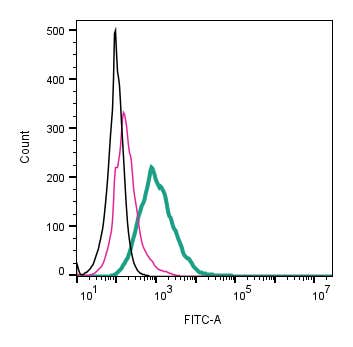 A Rabbit Polyclonal Antibody to Piezo1 (extracellular) conjugated to the fluorescent dye FITC
- Product Code: APC-087-F
- Short Description: A Rabbit Polyclonal Antibody to Piezo1 (extracellular) conjugated to the fluorescent dye FITC
- Host: Rabbit
- Label: FITC
- Reactivity: Rat, Mouse
- Applications: Live cell imaging, Flow cytometry
- Target: Piezo-type mechanosensitive ion channel component 1, Protein FAM38A, Mib, Membrane protein induced by beta-amyloid treatment
Loading...