-
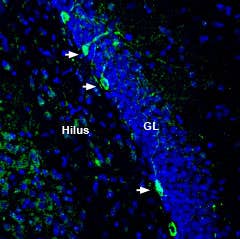
 A Guinea Pig Polyclonal Antibody to Homer1
- Product Code: APZ-026-GP
- Short Description: A Guinea Pig Polyclonal Antibody to Homer1
- Host: Guinea Pig
- Label: Unconjugated
- Reactivity: Human, Rat, Mouse
- Applications: Western blot, Immunohistochemistry
- Target: Homer protein homolog 1, Homer scaffolding protein 1, Vesl-1, Ves 1, PSD-Zip45, SYN47
-
 A Rabbit Polyclonal Antibody to Homer1
- Product Code: APZ-026
- Short Description: A Rabbit Polyclonal Antibody to Homer1
- Host: Rabbit
- Label: Unconjugated
- Reactivity: Human, Rat, Mouse
- Applications: Western blot, Immunofluorescence, Immunohistochemistry
- Target: Homer protein homolog 1, Homer scaffolding protein 1, Vesl-1, Ves 1, PSD-Zip45, SYN47
-
 A Rabbit Polyclonal Antibody to GRIP1
- Product Code: APZ-015
- Short Description: A Rabbit Polyclonal Antibody to GRIP1
- Host: Rabbit
- Label: Unconjugated
- Reactivity: Human, Rat, Mouse
- Applications: Western blot
- Target: Glutamate receptor interacting protein 1
-
 A Rabbit Polyclonal Antibody to PICK1
- Product Code: APZ-014
- Short Description: A Rabbit Polyclonal Antibody to PICK1
- Host: Rabbit
- Label: Unconjugated
- Reactivity: Human, Rat, Mouse
- Applications: Western blot, Immunofluorescence, Immunohistochemistry
- Target: PRKCA-binding protein, PRKCABP, Protein interacting with C kinase 1, Protein interacting with PRKCA1, Protein kinase C-alpha-binding protein
-
 A Rabbit Polyclonal Antibody to SAP-97
- Product Code: APZ-010
- Short Description: A Rabbit Polyclonal Antibody to SAP-97
- Host: Rabbit
- Label: Unconjugated
- Reactivity: Human, Rat, Mouse
- Applications: Western blot
- Target: Synapse-associated protein 97, Discs large homolog 1
-
 A Guinea Pig Polyclonal Antibody to PSD-95
- Product Code: APZ-009-GP
- Short Description: A Guinea Pig Polyclonal Antibody to PSD-95
- Host: Guinea Pig
- Label: Unconjugated
- Reactivity: Human, Rat, Mouse
- Applications: Western blot
- Target: Postsynaptic density protein 95, Discs large homolog 4, DLG4, Synapse-associated protein 90, SAP-90, Tax interaction protein 15, MRD62
-
 A Rabbit Polyclonal Antibody to SAP-102
- Product Code: APZ-003
- Short Description: A Rabbit Polyclonal Antibody to SAP-102
- Host: Rabbit
- Label: Unconjugated
- Reactivity: Mouse
- Applications: Western blot, Immunohistochemistry
- Target: Synapse-associated protein 102, SAP-102, Discs large homolog 3, DLG3, NE-DLG
-

 A Rabbit Polyclonal Antibody to PSD-93
- Product Code: APZ-002
- Short Description: A Rabbit Polyclonal Antibody to PSD-93
- Host: Rabbit
- Label: Unconjugated
- Reactivity: Rat, Mouse
- Applications: Western blot, Immunocytochemistry, Immunofluorescence, Immunoprecipitation, Immunohistochemistry
- Target: Discs large homolog 2, Dlg2, Chapsyn-110
-
 A Rabbit Polyclonal antibody to PepT2/SLC15A2 (extracellular)
- Product Code: APT-002
- Short Description: A Rabbit Polyclonal antibody to PepT2/SLC15A2 (extracellular)
- Host: Rabbit
- Label: Unconjugated
- Reactivity: Human, Rat, Mouse
- Applications: Indirect flow cytometry, Live cell imaging, Western blot, Immunohistochemistry
- Target: Peptide Transporter 2, Solute Carrier Family 15 Member 2, Oligopeptide Transporter - Kidney Isoform, Kidney H+/Peptide Cotransporter
-
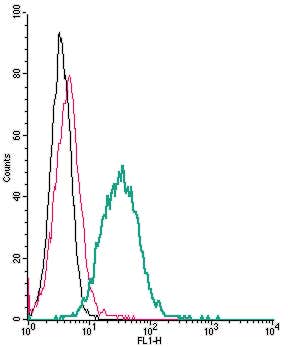 A Rabbit Polyclonal Antibody to P2Y13 Receptor (extracellular) conjugated to the fluorescent dye FITC
- Product Code: APR-103-F
- Short Description: A Rabbit Polyclonal Antibody to P2Y13 Receptor (extracellular) conjugated to the fluorescent dye FITC
- Host: Rabbit
- Label: FITC
- Reactivity: Human, Rat, Mouse
- Applications: Live cell imaging, Flow cytometry
- Target: Purinergic Receptor P2Y13, P2RY13, GPCR1, GPR86, GPR94, SP174
Loading...