
-
 A Rabbit Polyclonal Antibody to G-Protein Coupled Estrogen Receptor 1
- Product Code: AER-050
- Short Description: A Rabbit Polyclonal Antibody to G-Protein Coupled Estrogen Receptor 1
- Host: Rabbit
- Label: Unconjugated
- Reactivity: Rat, Mouse
- Applications: Western blot, Immunofluorescence, Immunohistochemistry
- Target: G-protein coupled estrogen receptor 1, GPER1, GPR41, Chemoattractant receptor-like 2, Cmkrl2
-
 A Rabbit Polyclonal Antibody to GPER1/GPR30
- Product Code: AER-049
- Short Description: A Rabbit Polyclonal Antibody to GPER1/GPR30
- Host: Rabbit
- Label: Unconjugated
- Reactivity: Human, Rat, Mouse
- Applications: Indirect flow cytometry, Western blot
- Target: G protein-coupled estrogen receptor 1, G protein-coupled receptor 30, Membrane estrogen receptor, Chemoattractant receptor-like 2, GPER
-
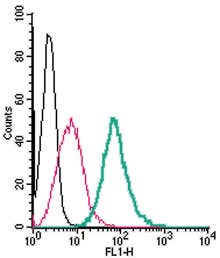 A Rabbit Polyclonal Antibody to GPER1 Conjugated to the Fluorescent Dye FITC
- Product Code: AER-049-F
- Short Description: A Rabbit Polyclonal Antibody to GPER1 Conjugated to the Fluorescent Dye FITC
- Host: Rabbit
- Label: FITC
- Reactivity: Human, Rat, Mouse
- Applications: Flow cytometry
- Target: G Protein-Coupled Estrogen Receptor 1, G Protein-Coupled Receptor 30, Membrane Estrogen Receptor, Chemoattractant Receptor-Like 2, GPER
-
 A Rabbit Polyclonal antibody to GPR109A/HCAR2 (extracellular)
- Product Code: AHR-012
- Short Description: A Rabbit Polyclonal antibody to GPR109A/HCAR2 (extracellular)
- Host: Rabbit
- Label: Unconjugated
- Reactivity: Human, Rat, Mouse
- Applications: Indirect flow cytometry, Live cell imaging, Western blot, Immunohistochemistry
- Target: Hydroxycarboxylic Acid Receptor 2, Niacin Receptor 1, G-Protein Coupled Receptor HM74A, HM74A, Nicotinic acid receptor, PUMAG
-
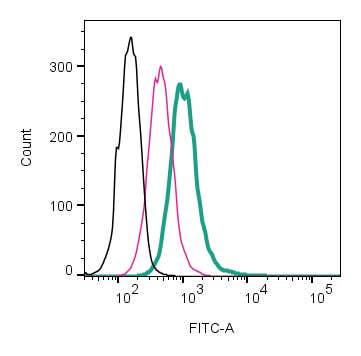 A Rabbit Polyclonal Antibody to GPR109A/HCAR2 (extracellular) conjugated to the fluorescent dye FITC
- Product Code: AHR-012-F
- Short Description: A Rabbit Polyclonal Antibody to GPR109A/HCAR2 (extracellular) conjugated to the fluorescent dye FITC
- Host: Rabbit
- Label: FITC
- Reactivity: Human, Rat, Mouse
- Applications: Live cell imaging, Flow cytometry
- Target: Hydroxycarboxylic Acid Receptor 2, Niacin Receptor 1, G-Protein Coupled Receptor HM74A, HM74A, Nicotinic acid receptor, PUMAG
-
 A Rabbit Polyclonal Antibody to Glucose-Dependent Insulinotropic Receptor (GPR119)
- Product Code: AGR-032
- Short Description: A Rabbit Polyclonal Antibody to Glucose-Dependent Insulinotropic Receptor (GPR119)
- Host: Rabbit
- Label: Unconjugated
- Reactivity: Rat, Mouse
- Applications: Western blot
- Target: Glucose-dependent insulinotropic receptor, GPCR2
-
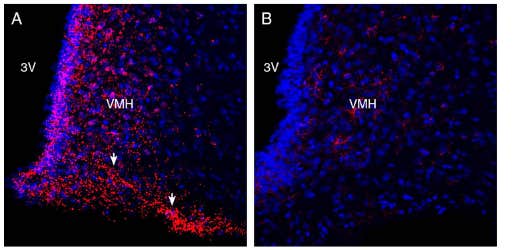 A Rabbit Polyclonal Antibody to Free Fatty Acid Receptor 4 (GPR120)
- Product Code: AFR-014
- Short Description: A Rabbit Polyclonal Antibody to Free Fatty Acid Receptor 4 (GPR120)
- Host: Rabbit
- Label: Unconjugated
- Reactivity: Human, Rat, Mouse
- Applications: Indirect flow cytometry, Live cell imaging, Western blot, Immunohistochemistry
- Target: G-protein coupled receptor 120, Free fatty acid receptor 4, FFA4 Receptor, G-protein coupled receptor GT01, Omega-3 fatty acid receptor 1, O3far1
-
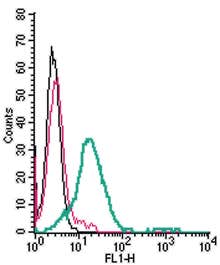 A Rabbit Polyclonal Antibody to GPR120/FFAR4 Conjugated to the Fluorescent Dye FITC
- Product Code: AFR-014-F
- Short Description: A Rabbit Polyclonal Antibody to GPR120/FFAR4 Conjugated to the Fluorescent Dye FITC
- Host: Rabbit
- Label: FITC
- Reactivity: Human, Rat, Mouse
- Applications: Flow cytometry
- Target: G-protein coupled receptor 120, Free fatty acid receptor 4, FFA4 Receptor, G-protein coupled receptor GT01, Omega-3 fatty acid receptor 1, O3far1
-
 A Rabbit Polyclonal antibody to GPR142 (extracellular)
- Product Code: AGR-082
- Short Description: A Rabbit Polyclonal antibody to GPR142 (extracellular)
- Host: Rabbit
- Label: Unconjugated
- Reactivity: Human, Rat, Mouse
- Applications: Indirect flow cytometry, Live cell imaging, Western blot, Immunohistochemistry
- Target: G-Protein Coupled Receptor 142, Probable G-Protein Coupled Receptor 142, PGR2
-
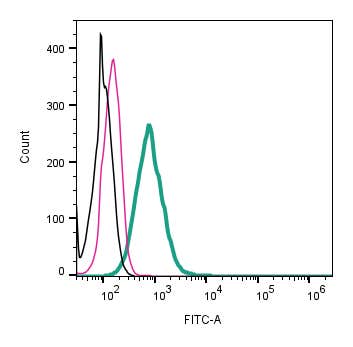 A Rabbit Polyclonal Antibody to GPR142 (extracellular) conjugated to the fluorescent dye FITC
- Product Code: AGR-082-F
- Short Description: A Rabbit Polyclonal Antibody to GPR142 (extracellular) conjugated to the fluorescent dye FITC
- Host: Rabbit
- Label: FITC
- Reactivity: Human, Rat, Mouse
- Applications: Live cell imaging, Flow cytometry
- Target: G-Protein Coupled Receptor 142, Probable G-Protein Coupled Receptor 142, PGR2
Loading...