-
 A Rabbit Polyclonal Antibody to TRPV5 Channel
- Product Code: ACC-035
- Short Description: A Rabbit Polyclonal Antibody to TRPV5 Channel
- Host: Rabbit
- Label: Unconjugated
- Reactivity: Human, Rat, Mouse
- Applications: Western blot, Immunocytochemistry, Immunofluorescence, Immunohistochemistry
- Target: Transient receptor potential cation channel subfamily V member 5, Calcium transport protein 2, CaT2, Epithelial calcium channel 1, ECaC1, OTRPC3
-
 A Rabbit Polyclonal Antibody to TRPV6 Channel
- Product Code: ACC-036
- Short Description: A Rabbit Polyclonal Antibody to TRPV6 Channel
- Host: Rabbit
- Label: Unconjugated
- Reactivity: Human, Rat, Mouse
- Applications: Western blot, Immunocytochemistry, Immunofluorescence, Immunoprecipitation, Immunohistochemistry
- Target: Epithelial calcium channel 2, ECaC2, Calcium transport protein 1, CaT1, CaT-like, CaT-L, Transient receptor potential cation channel subfamily V member 6
-
 A Rabbit Polyclonal Antibody to TSH Receptor
- Product Code: ATR-006
- Short Description: A Rabbit Polyclonal Antibody to TSH Receptor
- Host: Rabbit
- Label: Unconjugated
- Reactivity: Human, Rat, Mouse
- Applications: Indirect flow cytometry, Live cell imaging, Western blot, Immunohistochemistry
- Target: Thyrotropin receptor, Thyroid-stimulating hormone receptor, TSH-R
-
 A Rabbit Polyclonal Antibody to TSH Receptor Conjugated to the Fluorescent Dye ATTO-488
- Product Code: ATR-006-AG
- Short Description: A Rabbit Polyclonal Antibody to TSH Receptor Conjugated to the Fluorescent Dye ATTO-488
- Host: Rabbit
- Label: ATTO 488
- Reactivity: Human, Rat, Mouse
- Applications: Immunofluorescence, Immunohistochemistry
- Target: Thyrotropin receptor, Thyroid-stimulating hormone receptor, TSH-R
-
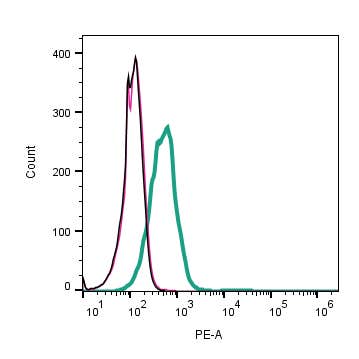 A Rabbit Polyclonal antibody to TYRO3 (extracellular)
- Product Code: ATR-031
- Short Description: A Rabbit Polyclonal antibody to TYRO3 (extracellular)
- Host: Rabbit
- Label: Unconjugated
- Reactivity: Human, Rat, Mouse
- Applications: Indirect flow cytometry, Live cell imaging, Western blot
- Target: Tyrosine-Protein Kinase Receptor TYRO3, Tyrosine-Protein Kinase DTK, Tyrosine-Protein Kinase RSE, Tyrosine-Protein Kinase SKY
-
 A Rabbit Polyclonal Antibody to Mitochondrial Uncoupling Protein 2
- Product Code: ANT-128
- Short Description: A Rabbit Polyclonal Antibody to Mitochondrial Uncoupling Protein 2
- Host: Rabbit
- Label: Unconjugated
- Reactivity: Human, Rat, Mouse
- Applications: Western blot, Immunocytochemistry, Immunofluorescence, Immunohistochemistry
- Target: Mitochondrial uncoupling protein 2, UCPH, Solute carrier family 25 member 8, SLC25A8, BMIQ4
-
 A Rabbit Ployclonal Antibody to Urotensin II Receptor
- Product Code: AER-003
- Short Description: A Rabbit Ployclonal Antibody to Urotensin II Receptor
- Host: Rabbit
- Label: Unconjugated
- Reactivity: Mouse
- Applications: Western blot, Immunohistochemistry
- Target: Urotensin 2 receptor, UR-II-R, UR2R, UTS2R, SENR, GPR14
-
 A Rabbit Polyclonal Antibody to VAMP-2
- Product Code: ANR-007
- Short Description: A Rabbit Polyclonal Antibody to VAMP-2
- Host: Rabbit
- Label: Unconjugated
- Reactivity: Rat, Mouse
- Applications: Western blot, Immunofluorescence, Immunohistochemistry
- Target: Vesicle-associated membrane protein 2, Synaptobrevin 2, Syb2
-
 A Rabbit Polyclonal Antibody to Vasopressin V1A Receptor
- Product Code: AVR-010
- Short Description: A Rabbit Polyclonal Antibody to Vasopressin V1A Receptor
- Host: Rabbit
- Label: Unconjugated
- Reactivity: Human, Rat, Mouse
- Applications: Western blot, Immunohistochemistry
- Target: V1aR, AVPR V1a, Antidiuretic hormone receptor 1a, Vascular/hepatic-type arginine vasopressin receptor
-
 A Rabbit Polyclonal Antibody to Vasopressin V1B Receptor
- Product Code: AVR-011
- Short Description: A Rabbit Polyclonal Antibody to Vasopressin V1B Receptor
- Host: Rabbit
- Label: Unconjugated
- Reactivity: Rat, Mouse
- Applications: Western blot
- Target: V1bR, AVPR V1b, AVPR V3, Antidiuretic hormone receptor 1b, Arginine vasopressin receptor 1B, Vasopressin V3 receptor
Loading...