-

 A Rabbit Polyclonal Antibody to Muscarinic Acetylcholine Receptor M3
- Product Code: AMR-006
- Short Description: A Rabbit Polyclonal Antibody to Muscarinic Acetylcholine Receptor M3
- Host: Rabbit
- Label: Unconjugated
- Reactivity: Human, Rat, Mouse
- Applications: Western blot, Immunocytochemistry, Immunofluorescence, Immunoprecipitation, Immunohistochemistry
- Target: Cholinergic muscarinic receptor 3, Muscarinic acetylcholine receptor M3, M3 mAChR
-
 A Rabbit Polyclonal Antibody to CLIC1 Channel
- Product Code: ACL-021
- Short Description: A Rabbit Polyclonal Antibody to CLIC1 Channel
- Host: Rabbit
- Label: Unconjugated
- Reactivity: Human, Rat, Mouse
- Applications: Western blot, Immunocytochemistry, Immunofluorescence
- Target: Cl- intracellular channel 1, Nuclear chloride ion channel 27, NCC27, Chloride channel ABP
-
 A Rabbit Polyclonal Antibody to CLIC4 Channel
- Product Code: ACL-024
- Short Description: A Rabbit Polyclonal Antibody to CLIC4 Channel
- Host: Rabbit
- Label: Unconjugated
- Reactivity: Human, Rat, Mouse
- Applications: Western blot, Immunocytochemistry, Immunofluorescence
- Target: Cl- intracellular channel 4, Intracellular chloride ion channel p64H1
-
 A Rabbit Polyclonal Antibody to CNTF Receptor α
- Product Code: ACR-051
- Short Description: A Rabbit Polyclonal Antibody to CNTF Receptor α
- Host: Rabbit
- Label: Unconjugated
- Reactivity: Human, Rat, Mouse
- Applications: Indirect flow cytometry, Live cell imaging, Western blot, Immunofluorescence, Immunohistochemistry
- Target: Ciliary neurotrophic factor receptor subunit alpha, CNTF receptor alpha, CNTFR alpha
-
 A Rabbit Polyclonal Antibody to Connexin-26
- Product Code: ACC-212
- Short Description: A Rabbit Polyclonal Antibody to Connexin-26
- Host: Rabbit
- Label: Unconjugated
- Reactivity: Human, Rat, Mouse
- Applications: Western blot, Immunocytochemistry, Immunofluorescence, Immunohistochemistry
- Target: CX26, Gap junction β2 protein
-
 A Rabbit Polyclonal Antibody to Connexin-32
- Product Code: ACC-211
- Short Description: A Rabbit Polyclonal Antibody to Connexin-32
- Host: Rabbit
- Label: Unconjugated
- Reactivity: Human, Rat, Mouse
- Applications: Western blot
- Target: CX32, Gap junction β1 protein, GJB1, CMTX
-
 A Rabbit Polyclonal Antibody to Connexin-40
- Product Code: ACC-205
- Short Description: A Rabbit Polyclonal Antibody to Connexin-40
- Host: Rabbit
- Label: Unconjugated
- Reactivity: Rat, Mouse
- Applications: Western blot
- Target: CX40, Gap junction α5 protein
-
 A Rabbit Polyclonal Antibody to Connexin-43
- Product Code: ACC-201
- Short Description: A Rabbit Polyclonal Antibody to Connexin-43
- Host: Rabbit
- Label: Unconjugated
- Reactivity: Human, Rat, Mouse
- Applications: Western blot, Immunocytochemistry, Immunofluorescence, Immunohistochemistry
- Target: CX43, Gap junction α1 protein, GJA1, GJAL, Gap junction 43 kDa heart protein
-
 A Rabbit Polyclonal Antibody to Contactin-1 (extracellular)
- Product Code: ANR-171
- Short Description: A Rabbit Polyclonal Antibody to Contactin-1 (extracellular)
- Host: Rabbit
- Label: Unconjugated
- Reactivity: Human, Rat, Mouse
- Applications: Western blot, Immunofluorescence, Immunohistochemistry
- Target: Neural cell surface protein F3, Glycoprotein GP135, CNTN1
-
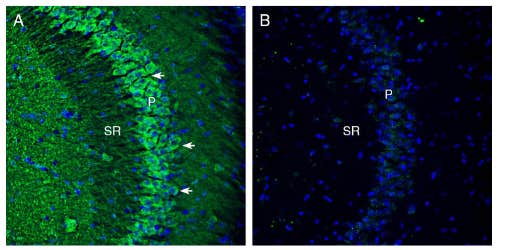 A Rabbit Polyclonal Antibody to Cortactin
- Product Code: APZ-018
- Short Description: A Rabbit Polyclonal Antibody to Cortactin
- Host: Rabbit
- Label: Unconjugated
- Reactivity: Human, Rat, Mouse
- Applications: Western blot, Immunohistochemistry
- Target: Src substrate cortactin, Oncogene EMS1, EMS1, Amplaxin, CTTN
Loading...