
-
 A Blocking Peptide for Anti-Angiotensin II Receptor Type-2 (extracellular) Antibody
- Product Code: BLP-AR012
- Short Description: A Blocking Peptide for Anti-Angiotensin II Receptor Type-2 (extracellular) Antibody
- Applications: Western blot, Immunohistochemistry
- Target: AGTR2
-

 A potent agonist for AT1 and AT2 G-protein coupled receptors
- Product Code: GPA-130
- Short Description: A potent agonist for AT1 and AT2 G-protein coupled receptors
- Applications: Aequorin functional assay, Western blot, Calcium imaging assay
- CAS No.: 13602-53-4
- MW: 931.1 Da
-
 A Blocking Peptide for Anti-Angiotensin-(1-7) Mas Receptor Antibody
- Product Code: BLP-AR013
- Short Description: A Blocking Peptide for Anti-Angiotensin-(1-7) Mas Receptor Antibody
- Applications: Western blot, Immunohistochemistry
- Target: MAS1
-
 A Rabbit Polyclonal Antibody to 5-Hydroxytryptamine Receptor 1A
- Product Code: ASR-021
- Short Description: A Rabbit Polyclonal Antibody to 5-Hydroxytryptamine Receptor 1A
- Host: Rabbit
- Label: Unconjugated
- Reactivity: Rat, Mouse
- Applications: Western blot, Immunofluorescence, Immunohistochemistry
- Target: 5-Hydroxytryptamine receptor 1A, Serotonin receptor 1A
-
 A Rabbit Polyclonal Antibody to 5-Hydroxytryptamine Receptor 1B
- Product Code: ASR-022
- Short Description: A Rabbit Polyclonal Antibody to 5-Hydroxytryptamine Receptor 1B
- Host: Rabbit
- Label: Unconjugated
- Reactivity: Human, Rat, Mouse
- Applications: Indirect flow cytometry, Western blot, Immunofluorescence, Immunohistochemistry
- Target: 5-Hydroxytryptamine receptor 1B, Serotonin receptor 1B, Serotonin 1D beta receptor, 5HT1D-beta, HTR1DB, HTR1D2
-
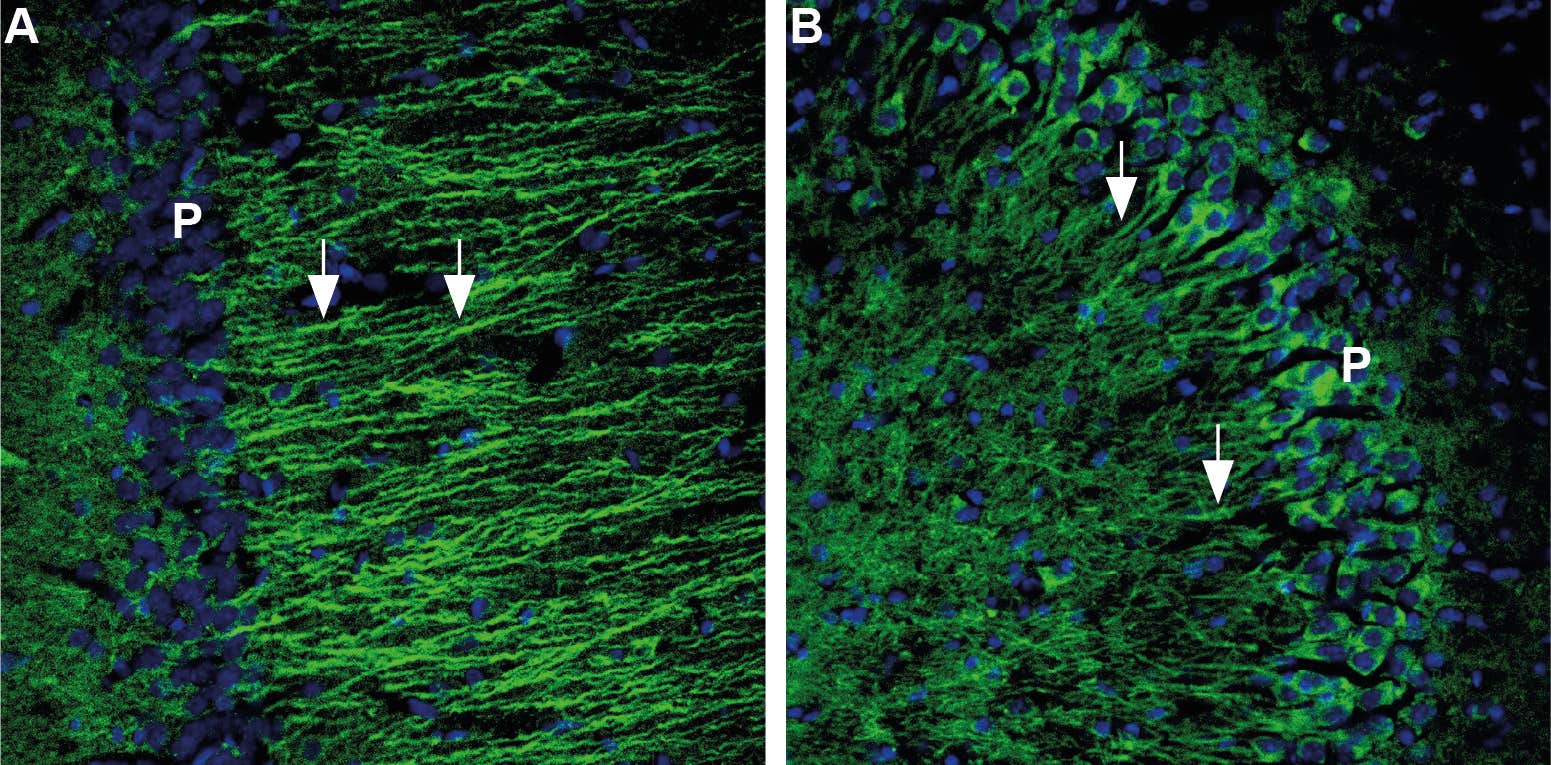 A Rabbit Polyclonal Antibody to 5-Hydroxytryptamine Receptor 1B Conjugated to the Fluorescent Dye ATTO-488
- Product Code: ASR-022-AG
- Short Description: A Rabbit Polyclonal Antibody to 5-Hydroxytryptamine Receptor 1B Conjugated to the Fluorescent Dye ATTO-488
- Host: Rabbit
- Label: ATTO 488
- Reactivity: Human, Rat, Mouse
- Applications: Live cell imaging, Immunofluorescence, Flow cytometry, Immunohistochemistry
- Target: 5-Hydroxytryptamine receptor 1B, Serotonin receptor 1B, Serotonin 1D beta receptor, 5HT1D-beta, HTR1DB, HTR1D2
-
 A Rabbit Polyclonal Antibody to 5-Hydroxytryptamine Receptor 2A
- Product Code: ASR-033
- Short Description: A Rabbit Polyclonal Antibody to 5-Hydroxytryptamine Receptor 2A
- Host: Rabbit
- Label: Unconjugated
- Reactivity: Human, Rat, Mouse
- Applications: Indirect flow cytometry, Western blot, Immunohistochemistry
- Target: 5-Hydroxytryptamine receptor 2A, Serotonin receptor 2A
-
 A Rabbit Polyclonal Antibody to 5-Hydroxytryptamine Receptor 2B
- Product Code: ASR-035
- Short Description: A Rabbit Polyclonal Antibody to 5-Hydroxytryptamine Receptor 2B
- Host: Rabbit
- Label: Unconjugated
- Reactivity: Human, Rat, Mouse
- Applications: Indirect flow cytometry, Live cell imaging, Western blot, Immunohistochemistry
- Target: 5-Hydroxytryptamine receptor 2B, Serotonin receptor 2B, 5-HT-2B, 5-HT2F, Stomach fundus serotonin receptor
-
 A Rabbit Polyclonal Antibody to 5-Hydroxytryptamine Receptor 2B Conjugated to the Fluorescent Dye ATTO-488
- Product Code: ASR-035-AG
- Short Description: A Rabbit Polyclonal Antibody to 5-Hydroxytryptamine Receptor 2B Conjugated to the Fluorescent Dye ATTO-488
- Host: Rabbit
- Label: ATTO 488
- Reactivity: Human, Rat, Mouse
- Applications: Live cell imaging, Flow cytometry, Immunohistochemistry
- Target: 5-Hydroxytryptamine receptor 2B, Serotonin receptor 2B, 5-HT-2B, 5-HT2F, Stomach fundus serotonin receptor
-
 A Rabbit Polyclonal antibody to 5HT2C Receptor (HTR2C)
- Product Code: ASR-034
- Short Description: A Rabbit Polyclonal antibody to 5HT2C Receptor (HTR2C)
- Host: Rabbit
- Label: Unconjugated
- Reactivity: Human, Rat, Mouse
- Applications: Western blot, Immunohistochemistry
- Target: 5-Hydroxytryptamine receptor 2C, Serotonin receptor 2C, 5-HT2C
Loading...