-
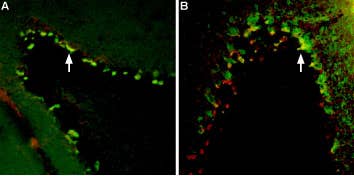
 A Rabbit Polyclonal Antibody to KV11.3 (ERG-3) Channel
- Product Code: APC-112
- Short Description: A Rabbit Polyclonal Antibody to KV11.3 (ERG-3) Channel
- Host: Rabbit
- Label: Unconjugated
- Reactivity: Human, Rat, Mouse
- Applications: Western blot, Immunocytochemistry, Immunofluorescence, Immunohistochemistry
- Target: KV11.3, Potassium voltage-gated channel subfamily H member 7, Ether-a-go-go-related channel 3, Eag-related protein 3, ERG-3, hERG3
-
 A Rabbit Polyclonal Antibody to KCNJ15 (Kir4.2) Channel
- Product Code: APC-058
- Short Description: A Rabbit Polyclonal Antibody to KCNJ15 (Kir4.2) Channel
- Host: Rabbit
- Label: Unconjugated
- Reactivity: Human, Rat, Mouse
- Applications: Western blot, Immunofluorescence, Immunohistochemistry
- Target: ATP-sensitive inward rectifier potassium channel 15, Potassium channel inwardly rectifying subfamily J member 15, Kir1.3, IRKK
-
 A Rabbit Polyclonal Antibody to KCNK1 Channel
- Product Code: APC-110
- Short Description: A Rabbit Polyclonal Antibody to KCNK1 Channel
- Host: Rabbit
- Label: Unconjugated
- Reactivity: Human, Rat, Mouse
- Applications: Western blot, Immunofluorescence, Immunohistochemistry
- Target: Potassium channel subfamily K member 1, Inward rectifying K+ channel protein TWIK-1, K2P1.1, HOHO1, KCNO1
-
 A Rabbit Polyclonal Antibody to KCNK10 Channel
- Product Code: APC-055
- Short Description: A Rabbit Polyclonal Antibody to KCNK10 Channel
- Host: Rabbit
- Label: Unconjugated
- Reactivity: Human, Mouse
- Applications: Western blot, Immunocytochemistry, Immunofluorescence, Immunohistochemistry
- Target: Potassium channel subfamily K member 10, K2P10.1, TWIK-related K+ channel 2
-

 A Rabbit Polyclonal Antibody to KCNK12 Channel
- Product Code: APC-169
- Short Description: A Rabbit Polyclonal Antibody to KCNK12 Channel
- Host: Rabbit
- Label: Unconjugated
- Reactivity: Human, Rat, Mouse
- Applications: Western blot, Immunofluorescence, Immunohistochemistry
- Target: Potassium channel subfamily K member 12, Tandem pore domain halothane-inhibited K+ channel 2, K2P12.1
-
 A Rabbit Polyclonal Antibody to KCNK13 Channel
- Product Code: APC-121
- Short Description: A Rabbit Polyclonal Antibody to KCNK13 Channel
- Host: Rabbit
- Label: Unconjugated
- Reactivity: Rat, Mouse
- Applications: Indirect flow cytometry, Live cell imaging, Western blot, Immunohistochemistry
- Target: Potassium channel subfamily K member 13, Tandem pore domain halothane-inhibited K+ channel 1, K2P13.1
-
 A Rabbit Polyclonal Antibody to KCNK15 Channel
- Product Code: APC-158
- Short Description: A Rabbit Polyclonal Antibody to KCNK15 Channel
- Host: Rabbit
- Label: Unconjugated
- Reactivity: Rat, Mouse
- Applications: Western blot
- Target: Potassium channel subfamily K member 15, Acid-sensitive K+ channel protein TASK-5, TWIK-related acid-sensitive K+ channel 5, K2P15.1
-
 A Rabbit Polyclonal Antibody to KCNK16 Channel
- Product Code: APC-170
- Short Description: A Rabbit Polyclonal Antibody to KCNK16 Channel
- Host: Rabbit
- Label: Unconjugated
- Reactivity: Human, Rat, Mouse
- Applications: Western blot, Immunohistochemistry
- Target: Potassium two pore domain channel subfamily K member 16, TWIK-related alkaline pH-activated K+ channel 1, K2P16.1
-
 A Rabbit Polyclonal Antibody to KCNK18 Channel
- Product Code: APC-122
- Short Description: A Rabbit Polyclonal Antibody to KCNK18 Channel
- Host: Rabbit
- Label: Unconjugated
- Reactivity: Rat, Mouse
- Applications: Live cell imaging, Western blot, Immunocytochemistry, Immunofluorescence, Immunohistochemistry
- Target: Potassium channel subfamily K member 18, TWIK-related spinal cord K+ channel, K2P18.1
-
 A Rabbit Polyclonal Antibody to KCNK2 Channel
- Product Code: APC-047
- Short Description: A Rabbit Polyclonal Antibody to KCNK2 Channel
- Host: Rabbit
- Label: Unconjugated
- Reactivity: Human, Rat, Mouse
- Applications: Western blot, Immunocytochemistry, Immunofluorescence, Immunohistochemistry
- Target: Potassium channel subfamily K member 2, Outward rectifying potassium channel protein TREK-1, Twik-related K+ channel 1, K2P2.1, TPKC1
Loading...