-
 A Rabbit Polyclonal Antibody to AMPA-Selective Glutamate Receptor 3 (GluR3)
- Product Code: AGC-010
- Short Description: A Rabbit Polyclonal Antibody to AMPA-Selective Glutamate Receptor 3 (GluR3)
- Host: Rabbit
- Label: Unconjugated
- Reactivity: Human, Rat, Mouse
- Applications: Live cell imaging, Western blot, Immunocytochemistry, Immunofluorescence, Immunoprecipitation, Immunohistochemistry
- Target: AMPA receptor 3, Glutamate receptor 3, Ionotropic glutamate receptor 3, AMPA-selective glutamate receptor 3, GRIA3, GluR-C, GluR-K3
-
 A Rabbit Polyclonal Antibody to AMPA-Selective Glutamate Receptor 4 (GluR4)
- Product Code: AGC-019
- Short Description: A Rabbit Polyclonal Antibody to AMPA-Selective Glutamate Receptor 4 (GluR4)
- Host: Rabbit
- Label: Unconjugated
- Reactivity: Human, Rat, Mouse
- Applications: Western blot, Immunofluorescence, Immunohistochemistry
- Target: AMPA Receptor 4, Glutamate receptor 4, Ionotropic glutamate receptor 4, AMPA-selective glutamate receptor 4, GRIA4, GluR-D
-
 A Rabbit Polyclonal antibody to GPR109A/HCAR2 (extracellular)
- Product Code: AHR-012
- Short Description: A Rabbit Polyclonal antibody to GPR109A/HCAR2 (extracellular)
- Host: Rabbit
- Label: Unconjugated
- Reactivity: Human, Rat, Mouse
- Applications: Indirect flow cytometry, Live cell imaging, Western blot, Immunohistochemistry
- Target: Hydroxycarboxylic Acid Receptor 2, Niacin Receptor 1, G-Protein Coupled Receptor HM74A, HM74A, Nicotinic acid receptor, PUMAG
-
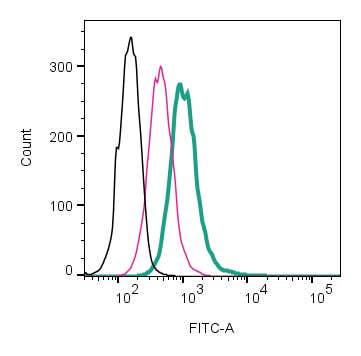 A Rabbit Polyclonal Antibody to GPR109A/HCAR2 (extracellular) conjugated to the fluorescent dye FITC
- Product Code: AHR-012-F
- Short Description: A Rabbit Polyclonal Antibody to GPR109A/HCAR2 (extracellular) conjugated to the fluorescent dye FITC
- Host: Rabbit
- Label: FITC
- Reactivity: Human, Rat, Mouse
- Applications: Live cell imaging, Flow cytometry
- Target: Hydroxycarboxylic Acid Receptor 2, Niacin Receptor 1, G-Protein Coupled Receptor HM74A, HM74A, Nicotinic acid receptor, PUMAG
-
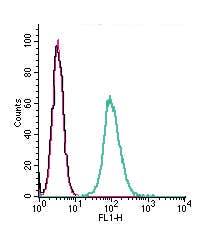 A Rabbit Polyclonal antibody to GPR132 (extracellular)
- Product Code: AGR-036
- Short Description: A Rabbit Polyclonal antibody to GPR132 (extracellular)
- Host: Rabbit
- Label: Unconjugated
- Reactivity: Rat, Mouse
- Applications: Indirect flow cytometry, Live cell imaging, Western blot
- Target: G Protein-Coupled Receptor 132, G2 Accumulation Protein, G2A
-
 A Rabbit Polyclonal Antibody to GPR17 Receptor
- Product Code: AGR-048
- Short Description: A Rabbit Polyclonal Antibody to GPR17 Receptor
- Host: Rabbit
- Label: Unconjugated
- Reactivity: Rat, Mouse
- Applications: Western blot, Immunofluorescence, Immunohistochemistry
- Target: G-protein coupled receptor 17, Uracil nucleotide/cysteinyl leukotriene receptor, UDP/CysLT Receptor, P2Y-like receptor
-
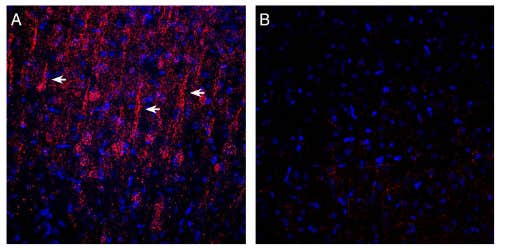 A Rabbit Polyclonal antibody to GPR183 (extracellular).
- Product Code: AGR-063
- Short Description: A Rabbit Polyclonal antibody to GPR183 (extracellular).
- Host: Rabbit
- Label: Unconjugated
- Reactivity: Human, Rat, Mouse
- Applications: Indirect flow cytometry, Western blot, Immunohistochemistry
- Target: G-Protein Coupled Receptor 183, Epstein-Barr Virus-Induced G-Protein Coupled Receptor 2, EBI2
-
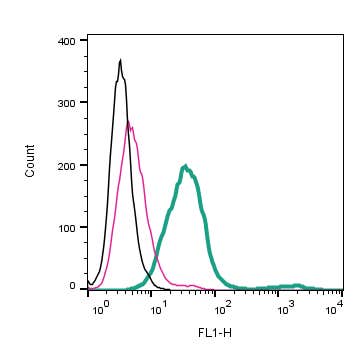 A Rabbit Polyclonal Antibody to GPR183 (extracellular) conjugated to the fluorescent dye FITC
- Product Code: AGR-063-F
- Short Description: A Rabbit Polyclonal Antibody to GPR183 (extracellular) conjugated to the fluorescent dye FITC
- Host: Rabbit
- Label: FITC
- Reactivity: Human, Rat, Mouse
- Applications: Live cell imaging, Flow cytometry
- Target: G-Protein Coupled Receptor 183, Epstein-Barr Virus-Induced G-Protein Coupled Receptor 2, EBI2
-
 A Rabbit Polyclonal antibody to GPR26
- Product Code: AGR-066
- Short Description: A Rabbit Polyclonal antibody to GPR26
- Host: Rabbit
- Label: Unconjugated
- Reactivity: Human, Rat, Mouse
- Applications: Western blot, Immunohistochemistry
- Target: G Protein-Coupled Receptor 26
-
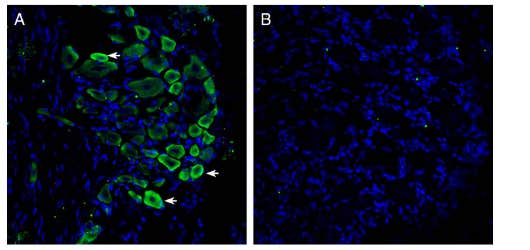 A Rabbit Polyclonal Antibody to GPR35 (extracellular)
- Product Code: AGR-051
- Short Description: A Rabbit Polyclonal Antibody to GPR35 (extracellular)
- Host: Rabbit
- Label: Unconjugated
- Reactivity: Rat, Mouse
- Applications: Indirect flow cytometry, Live cell imaging, Western blot, Immunohistochemistry
- Target: G-Protein Coupled Receptor 35, Kynurenic Acid Receptor
Loading...