-
 A Rabbit Polyclonal Antibody to Human Neurotrophin Receptor p75NTR Conjugated to the Fluorescent Dye ATTO-488
- Product Code: ANT-007-AG
- Short Description: A Rabbit Polyclonal Antibody to Human Neurotrophin Receptor p75NTR Conjugated to the Fluorescent Dye ATTO-488
- Host: Rabbit
- Label: ATTO 488
- Reactivity: Human, Rat, Mouse
- Applications: Live cell imaging, Immunocytochemistry, Immunofluorescence, Flow cytometry, Immunohistochemistry
- Target: p75NTR, p75 Neurotrophin receptor, Low affinity NGF receptor, TNFR superfamily member 16, TNFRSF16, CD271
-
 A Rabbit Polyclonal Antibody to Human Neurotrophin Receptor p75NTR Conjugated to the Fluorescent Dye ATTO-550
- Product Code: ANT-007-AO
- Short Description: A Rabbit Polyclonal Antibody to Human Neurotrophin Receptor p75NTR Conjugated to the Fluorescent Dye ATTO-550
- Host: Rabbit
- Label: ATTO 550
- Reactivity: Human, Rat, Mouse
- Applications: Live cell imaging, Immunocytochemistry, Immunofluorescence, Immunohistochemistry
- Target: p75NTR, p75 Neurotrophin receptor, Low affinity NGF receptor, TNFR superfamily member 16, TNFRSF16, CD271
-
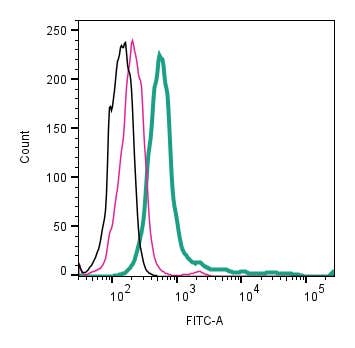 A Rabbit Polyclonal Antibody to Human Neurotrophin Receptor p75NTR Conjugated to the Fluorescent Dye FITC
- Product Code: ANT-007-F
- Short Description: A Rabbit Polyclonal Antibody to Human Neurotrophin Receptor p75NTR Conjugated to the Fluorescent Dye FITC
- Host: Rabbit
- Label: FITC
- Reactivity: Human, Rat, Mouse
- Applications: Live cell imaging, Flow cytometry
- Target: p75NTR, p75 Neurotrophin receptor, Low affinity NGF receptor, TNFR superfamily member 16, TNFRSF16, CD271
-
 A Rabbit Polyclonal Antibody to Human Neurotrophin Receptor p75NTR
- Product Code: ANT-011
- Short Description: A Rabbit Polyclonal Antibody to Human Neurotrophin Receptor p75NTR
- Host: Rabbit
- Label: Unconjugated
- Reactivity: Human, Rat, Mouse
- Applications: Western blot, Immunofluorescence, Immunohistochemistry
- Target: p75NTR, p75 Neurotrophin receptor, Low affinity NGF receptor, TNFR superfamily member 16, TNFRSF16, CD271
-
 A Rabbit Polyclonal Antibody to ASIC Channels (ASIC1, ASIC2, ASIC3, ASIC4)
- Product Code: ASC-031
- Short Description: A Rabbit Polyclonal Antibody to ASIC Channels (ASIC1, ASIC2, ASIC3, ASIC4)
- Host: Rabbit
- Label: Unconjugated
- Reactivity: Human, Rat, Mouse
- Applications: Indirect flow cytometry, Live cell imaging, Western blot, Immunocytochemistry, Immunofluorescence, Immunohistochemistry
- Target: Acid-sensing ion channel, Acid-sensing (proton-gated) ion channel, ACCN, ACCN2, ACCN3, ACCN4
-

 A Rabbit Polyclonal Antibody to Pannexin 1
- Product Code: ACC-234
- Short Description: A Rabbit Polyclonal Antibody to Pannexin 1
- Host: Rabbit
- Label: Unconjugated
- Reactivity: Human, Rat, Mouse
- Applications: Western blot, Immunofluorescence, Immunohistochemistry
- Target: PANX1, PX1, MRS1, UNQ2529
-
 A Rabbit Polyclonal antibody to Parkin
- Product Code: ANR-103
- Short Description: A Rabbit Polyclonal antibody to Parkin
- Host: Rabbit
- Label: Unconjugated
- Reactivity: Human, Rat, Mouse
- Applications: Western blot, Immunohistochemistry
- Target: E3 Ubiquitin-Protein Ligase Parkin, Parkin RBR E3 ubiquitin-protein ligase, Parkinson Juvenile Disease Protein 2, PARK2, PRKN
-
 A Rabbit Polyclonal Antibody to Periaxin
- Product Code: ANR-091
- Short Description: A Rabbit Polyclonal Antibody to Periaxin
- Host: Rabbit
- Label: Unconjugated
- Reactivity: Human, Rat, Mouse
- Applications: Western blot, Immunofluorescence, Immunohistochemistry
- Target: PRX, CMT4F
-
 A Rabbit Polyclonal Antibody to PICK1
- Product Code: APZ-014
- Short Description: A Rabbit Polyclonal Antibody to PICK1
- Host: Rabbit
- Label: Unconjugated
- Reactivity: Human, Rat, Mouse
- Applications: Western blot, Immunofluorescence, Immunohistochemistry
- Target: PRKCA-binding protein, PRKCABP, Protein interacting with C kinase 1, Protein interacting with PRKCA1, Protein kinase C-alpha-binding protein
-
 A Rabbit Polyclonal Antibody to Presenilin-1
- Product Code: AIP-011
- Short Description: A Rabbit Polyclonal Antibody to Presenilin-1
- Host: Rabbit
- Label: Unconjugated
- Reactivity: Human, Rat, Mouse
- Applications: Western blot, Immunofluorescence, Immunohistochemistry
- Target: PSEN1, PS-1, Psnl1
Loading...