-
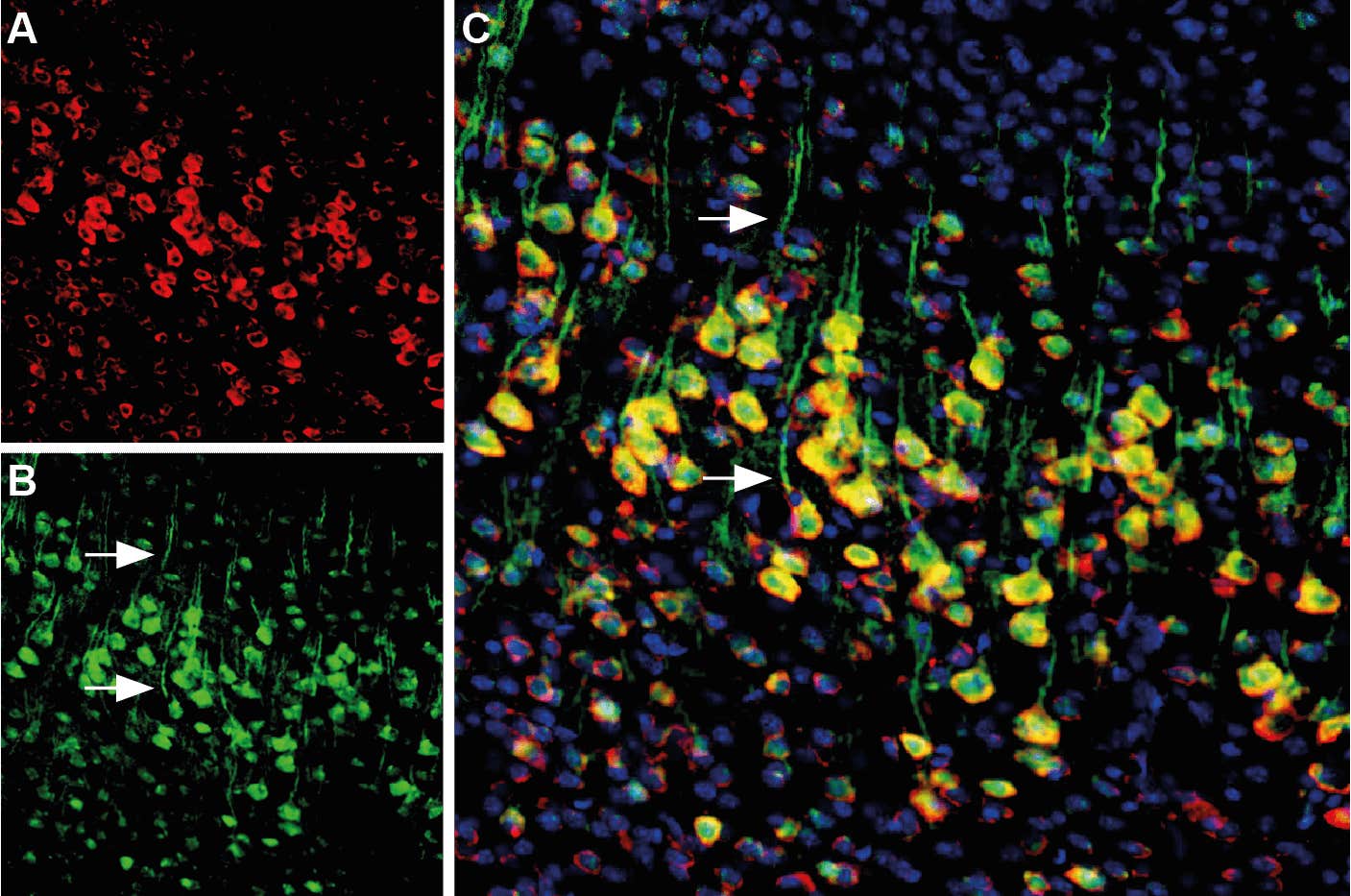 A Rabbit Polyclonal Antibody to Presenilin-1 Conjugated to the Fluorescent Dye ATTO-488
- Product Code: AIP-011-AG
- Short Description: A Rabbit Polyclonal Antibody to Presenilin-1 Conjugated to the Fluorescent Dye ATTO-488
- Host: Rabbit
- Label: ATTO 488
- Reactivity: Human, Rat, Mouse
- Applications: Immunofluorescence, Immunohistochemistry
- Target: PSEN1, PS-1, Psnl1
-
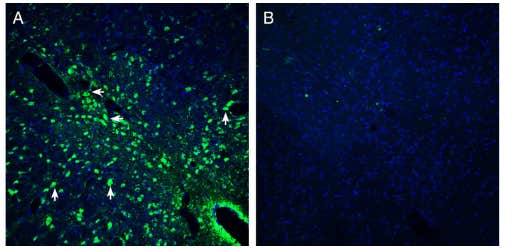 A Rabbit Polyclonal Antibody to Presenilin-2
- Product Code: AIP-012
- Short Description: A Rabbit Polyclonal Antibody to Presenilin-2
- Host: Rabbit
- Label: Unconjugated
- Reactivity: Human, Rat, Mouse
- Applications: Western blot, Immunohistochemistry
- Target: Psen2, Ps2, Psnl2, AD3LP, AD5, E5-1 STM-2
-
 A Rabbit Polyclonal Antibody to proGDNF
- Product Code: ANT-026
- Short Description: A Rabbit Polyclonal Antibody to proGDNF
- Host: Rabbit
- Label: Unconjugated
- Reactivity: Human, Rat, Mouse
- Applications: Western blot
- Target: Glial cell line-derived neurotrophic factor precursor
-
 A Rabbit Polyclonal antibody to Progranulin
- Product Code: ANR-178
- Short Description: A Rabbit Polyclonal antibody to Progranulin
- Host: Rabbit
- Label: Unconjugated
- Reactivity: Human, Rat, Mouse
- Applications: Western blot, Immunohistochemistry
- Target: Granulin Precursor, PGRN, Epithelin Precursor, Glycoprotein 88, GP88, PC Cell-Derived Growth Factor, PCDGF, GRN
-
 A Rabbit Polyclonal Antibody to proNGF
- Product Code: ANT-005
- Short Description: A Rabbit Polyclonal Antibody to proNGF
- Host: Rabbit
- Label: Unconjugated
- Reactivity: Human, Rat, Mouse
- Applications: Western blot, Immunofluorescence, Immunohistochemistry
- Target: Nerve growth factor precursor
-
 A Rabbit Polyclonal Antibody to proNT-3
- Product Code: ANT-012
- Short Description: A Rabbit Polyclonal Antibody to proNT-3
- Host: Rabbit
- Label: Unconjugated
- Reactivity: Human, Rat, Mouse
- Applications: Western blot, Immunofluorescence, Immunohistochemistry
- Target: pro-Neurotrophin 3, proNTF3
-

 A Rabbit Polyclonal Antibody to PSD-93
- Product Code: APZ-002
- Short Description: A Rabbit Polyclonal Antibody to PSD-93
- Host: Rabbit
- Label: Unconjugated
- Reactivity: Rat, Mouse
- Applications: Western blot, Immunocytochemistry, Immunofluorescence, Immunoprecipitation, Immunohistochemistry
- Target: Discs large homolog 2, Dlg2, Chapsyn-110
-
 A Rabbit Polyclonal Antibody to PSD-95
- Product Code: APZ-009
- Short Description: A Rabbit Polyclonal Antibody to PSD-95
- Host: Rabbit
- Label: Unconjugated
- Reactivity: Human, Rat, Mouse
- Applications: Western blot, Immunofluorescence, Immunohistochemistry
- Target: Postsynaptic density protein 95, Discs large homolog 4, DLG4, Synapse-associated protein 90, SAP-90, Tax interaction protein 15
-
 A Rabbit polyclonal antibody to PTGFRN (extracellular)
- Product Code: ANR-212
- Short Description: A Rabbit polyclonal antibody to PTGFRN (extracellular)
- Host: Rabbit
- Label: Unconjugated
- Reactivity: Human, Rat, Mouse
- Applications: Indirect flow cytometry, Live cell imaging, Western blot, Immunohistochemistry
- Target: Prostaglandin F2 Receptor Inhibitor, CD9 Partner 1, CD9P-1, FPRP, Glu-Trp-Ile EWI motif-containing protein F, EWI-F, CD315
-
 A Rabbit polyclonal antibody to RGMA (extracellular).
- Product Code: ANR-126
- Short Description: A Rabbit polyclonal antibody to RGMA (extracellular).
- Host: Rabbit
- Label: Unconjugated
- Reactivity: Human, Rat, Mouse
- Applications: Indirect flow cytometry, Live cell imaging, Western blot, Immunohistochemistry
- Target: Repulsive Guidance Molecule A, RGM Domain Family Member A, Repulsive Guidance Molecule BMP Co-Receptor A, RGMa
Loading...