-
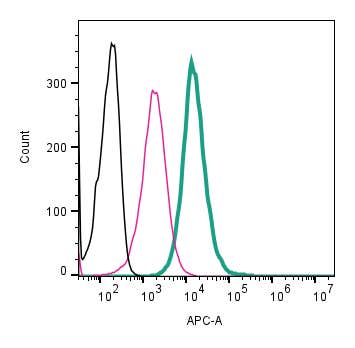 A Rabbit Polyclonal antibody to CD81 (extracellular) conjugated to the fluorescent dye Allophycocyanin (APC)
- Product Code: ANR-211-APC
- Short Description: A Rabbit Polyclonal antibody to CD81 (extracellular) conjugated to the fluorescent dye Allophycocyanin (APC)
- Host: Rabbit
- Label: APC
- Reactivity: Human, Rat, Mouse
- Applications: Live cell imaging, Flow cytometry
- Target: Tetraspanin-28, TSPAN28, Target of the Antiproliferative Antibody 1, TAPA-1
-
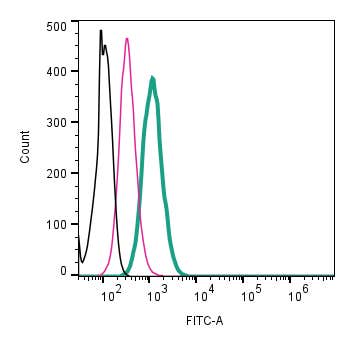 A Rabbit Polyclonal Antibody to CD81 (extracellular) (extracellular) conjugated to the fluorescent dye FITC
- Product Code: ANR-211-F
- Short Description: A Rabbit Polyclonal Antibody to CD81 (extracellular) (extracellular) conjugated to the fluorescent dye FITC
- Host: Rabbit
- Label: FITC
- Reactivity: Human, Rat, Mouse
- Applications: Live cell imaging, Flow cytometry
- Target: Tetraspanin-28, TSPAN28, Target of the Antiproliferative Antibody 1, TAPA-1
-
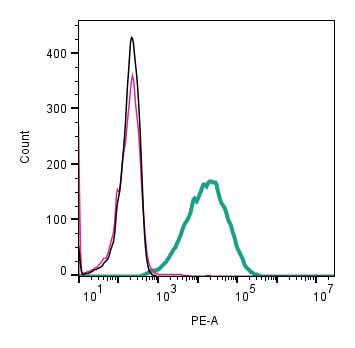 A Rabbit Polyclonal antibody to CD81 (extracellular) conjugated to the fluorescent dye Phycoerythrin (PE).
- Product Code: ANR-211-PE
- Short Description: A Rabbit Polyclonal antibody to CD81 (extracellular) conjugated to the fluorescent dye Phycoerythrin (PE).
- Host: Rabbit
- Label: R-PE
- Reactivity: Human, Rat, Mouse
- Applications: Live cell imaging, Flow cytometry
- Target: Tetraspanin-28, TSPAN28, Target of the Antiproliferative Antibody 1, TAPA-1
-
 A Rabbit Polyclonal Antibody to Cerebral Dopamine Neurotrophic Factor
- Product Code: ANT-027
- Short Description: A Rabbit Polyclonal Antibody to Cerebral Dopamine Neurotrophic Factor
- Host: Rabbit
- Label: Unconjugated
- Reactivity: Human, Rat
- Applications: Western blot, Immunofluorescence, Immunohistochemistry
- Target: Cerebral dopamine neurotrophic factor, Arginine-rich mutated in early stage tumors-like 1, ARMET-like protein 1, ARMETL1
-
 A Rabbit Polyclonal Antibody to Choline Transporter (SLC5A7)
- Product Code: ACT-001
- Short Description: A Rabbit Polyclonal Antibody to Choline Transporter (SLC5A7)
- Host: Rabbit
- Label: Unconjugated
- Reactivity: Human, Rat, Mouse
- Applications: Live cell imaging, Western blot, Immunocytochemistry, Immunofluorescence, Immunohistochemistry
- Target: Na+/Cl--Dependent high affinity choline transporter 1, Hemicholinium-3-sensitive choline transporter, CHT, CHT1
-
 A Rabbit Polyclonal Antibody to Muscarinic Acetylcholine Receptor M1
- Product Code: AMR-010
- Short Description: A Rabbit Polyclonal Antibody to Muscarinic Acetylcholine Receptor M1
- Host: Rabbit
- Label: Unconjugated
- Reactivity: Human, Rat, Mouse
- Applications: Western blot, Immunofluorescence, Immunohistochemistry
- Target: Cholinergic muscarinic receptor 1, Muscarinic acetylcholine receptor M1
-

 A Rabbit Polyclonal Antibody to Muscarinic Acetylcholine Receptor M1
- Product Code: AMR-001
- Short Description: A Rabbit Polyclonal Antibody to Muscarinic Acetylcholine Receptor M1
- Host: Rabbit
- Label: Unconjugated
- Reactivity: Human, Rat, Mouse
- Applications: Western blot, Immunocytochemistry, Immunofluorescence, Immunohistochemistry
- Target: Cholinergic muscarinic receptor 1, Muscarinic acetylcholine receptor M1
-
 A Rabbit Polyclonal Antibody to Muscarinic Acetylcholine Receptor M2
- Product Code: AMR-002
- Short Description: A Rabbit Polyclonal Antibody to Muscarinic Acetylcholine Receptor M2
- Host: Rabbit
- Label: Unconjugated
- Reactivity: Human, Rat, Mouse
- Applications: Western blot, Immunocytochemistry, Immunofluorescence, Immunoprecipitation, Immunohistochemistry
- Target: Muscarinic acetylcholine receptor M2, Cholinergic receptor muscarinic 2, mAChR M2
-
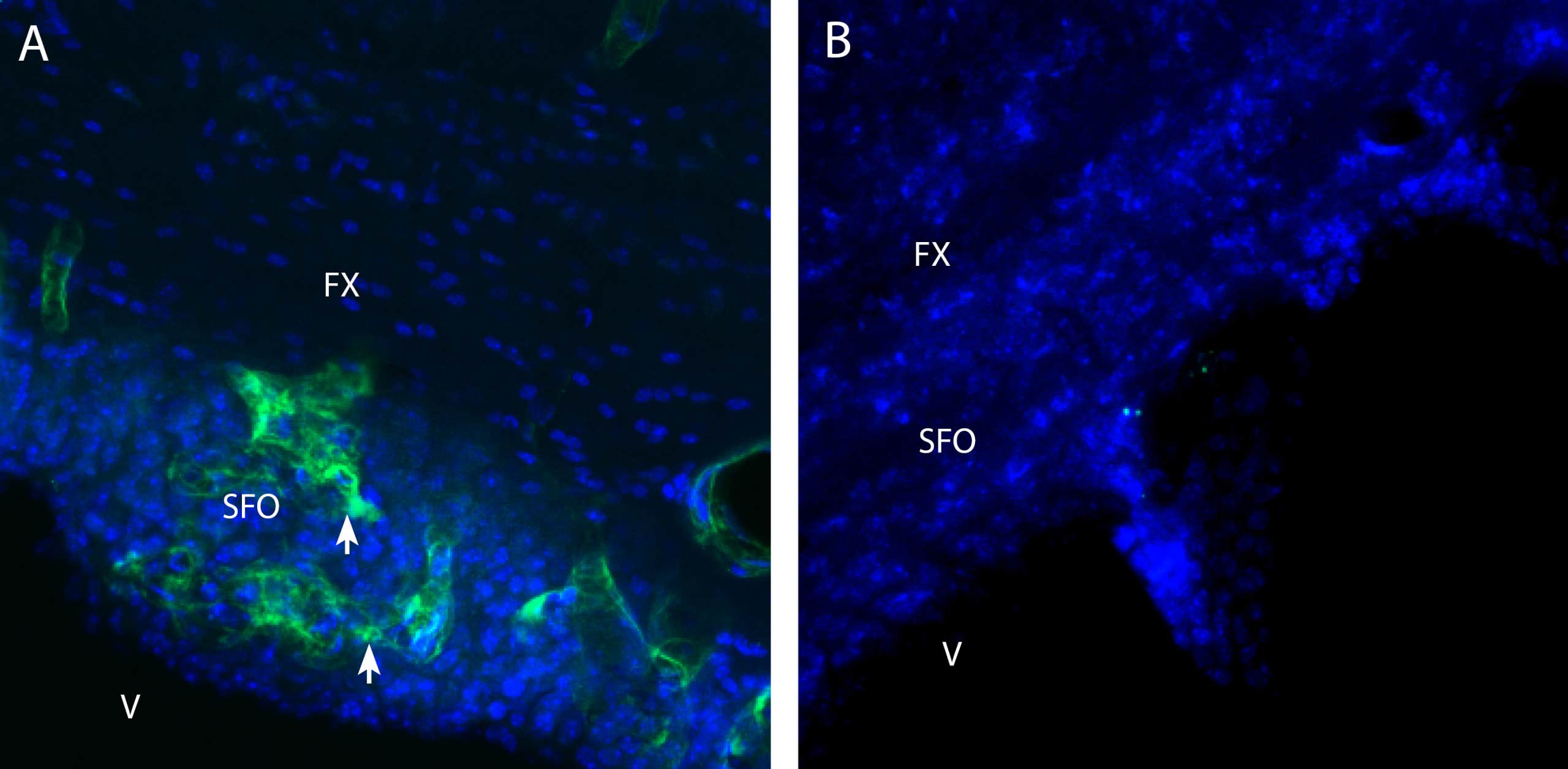 A Rabbit Polyclonal Antibody to CHRM3 (extracellular)
- Product Code: AMR-013
- Short Description: A Rabbit Polyclonal Antibody to CHRM3 (extracellular)
- Host: Rabbit
- Label: Unconjugated
- Reactivity: Human, Rat, Mouse
- Applications: Indirect flow cytometry, Western blot, Immunohistochemistry
- Target: CHRM3
-
 A Rabbit Polyclonal Antibody to Muscarinic Acetylcholine Receptor M3
- Product Code: AMR-006
- Short Description: A Rabbit Polyclonal Antibody to Muscarinic Acetylcholine Receptor M3
- Host: Rabbit
- Label: Unconjugated
- Reactivity: Human, Rat, Mouse
- Applications: Western blot, Immunocytochemistry, Immunofluorescence, Immunoprecipitation, Immunohistochemistry
- Target: Cholinergic muscarinic receptor 3, Muscarinic acetylcholine receptor M3, M3 mAChR
Loading...