-

 A potent blocker of neuronal NaV1.2 channels that also inhibits NaV1.4 and NaV1.6 channels
- Product Code: STC-450
- Short Description: A potent blocker of neuronal NaV1.2 channels that also inhibits NaV1.4 and NaV1.6 channels
- Applications: Electrophysiology
- MW: 2207.5 Da
-
 A potent blocker of KCa1.1 (BK) K+ channels and KV1.1, KV1.2 potassium channels
- Product Code: D-370
- Short Description: A potent blocker of KCa1.1 (BK) K+ channels and KV1.1, KV1.2 potassium channels
- Applications: Electrophysiology
- MW: ~7000 Da
-
 An Antagonist of NaV Channels, GABA(A) Receptors, NMDA Receptors and an Inhibitor of TrkB Receptor
- Product Code: A-260
- Short Description: An Antagonist of NaV Channels, GABA(A) Receptors, NMDA Receptors and an Inhibitor of TrkB Receptor
- CAS No.: 2883-98-9
- MW: 208.3
-
 A potent antagonist of muscle nAChRs, α7 nAChRs, and GABA(A) receptor subtypes
- Product Code: B-100
- Short Description: A potent antagonist of muscle nAChRs, α7 nAChRs, and GABA(A) receptor subtypes
- Applications: Electrophysiology
- CAS No.: 11032-79-4
- MW: 7984 Da
-
 A fluorescent probe for imaging and sensitive detection of neuromuscular junctions, GABA(A) receptors, nAChRs, and α-Bungarotoxin binding sites
- Product Code: B-100-AG
- Short Description: A fluorescent probe for imaging and sensitive detection of neuromuscular junctions, GABA(A) receptors, nAChRs, and α-Bungarotoxin binding sites
- Label: ATTO 488
- Applications: Electrophysiology, Direct flow cytometry, Fluorescence staining
- MW: ~9140 Da
-
 A fluorescent probe for imaging and sensitive detection of neuromuscular junctions, GABA(A) receptors, nAChRs, and α-Bungarotoxin binding sites
- Product Code: B-100-FR
- Short Description: A fluorescent probe for imaging and sensitive detection of neuromuscular junctions, GABA(A) receptors, nAChRs, and α-Bungarotoxin binding sites
- Label: ATTO 633
- Applications: Electrophysiology, Direct flow cytometry, Fluorescence staining, Live cell imaging, Immunofluorescence
- MW: ~9140 Da
-
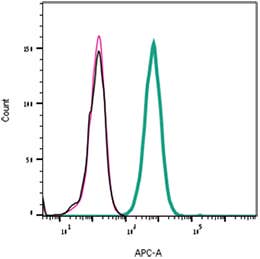 A fluorescent probe for imaging and sensitive detection of neuromuscular junctions, GABA(A) receptors, nAChRs, and α-Bungarotoxin binding sites
- Product Code: B-100-FRN
- Short Description: A fluorescent probe for imaging and sensitive detection of neuromuscular junctions, GABA(A) receptors, nAChRs, and α-Bungarotoxin binding sites
- Label: ATTO 647N
- Applications: Electrophysiology, Direct flow cytometry, Fluorescence staining, Live cell imaging, Immunofluorescence
- MW: ~8925 Da
-
 A biotinylated probe for imaging and sensitive detection of neuromuscular junctions, GABA(A) receptors, nAChRs, and α-Bungarotoxin binding sites
- Product Code: B-100-B
- Short Description: A biotinylated probe for imaging and sensitive detection of neuromuscular junctions, GABA(A) receptors, nAChRs, and α-Bungarotoxin binding sites
- Label: Biotin
- Applications: Electrophysiology, Immunofluorescence, Indirect flow cytometry
- MW: ~9030 Da
-
 A fluorescent probe for imaging and sensitive detection of neuromuscular junctions, GABA(A) receptors, nAChRs, and α-Bungarotoxin binding sites
- Product Code: B-100-F
- Short Description: A fluorescent probe for imaging and sensitive detection of neuromuscular junctions, GABA(A) receptors, nAChRs, and α-Bungarotoxin binding sites
- Label: FITC
- Applications: Electrophysiology, Fluorescence staining
- MW: ~8406 Da
-
 A selective antagonist of the neuronal α3/β4 nicotinic acetylcholine receptors (nAChRs)
- Product Code: STC-960
- Short Description: A selective antagonist of the neuronal α3/β4 nicotinic acetylcholine receptors (nAChRs)
- Applications: Electrophysiology
- CAS No.: 216299-20-6
- MW: 1726 Da
Loading...