-
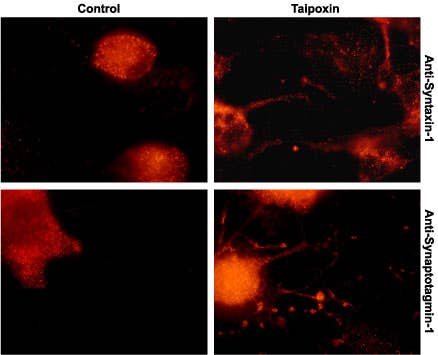
 A Rabbit Polyclonal Antibody to Connexin-31
- Product Code: ACC-213
- Short Description: A Rabbit Polyclonal Antibody to Connexin-31
- Host: Rabbit
- Label: Unconjugated
- Reactivity: Rat, Mouse
- Applications: Western blot
- Target: CX31, Gap junction β3 protein
-
 A Rabbit Polyclonal antibody to Connexin-47 (GJC2)
- Product Code: ACC-222
- Short Description: A Rabbit Polyclonal antibody to Connexin-47 (GJC2)
- Host: Rabbit
- Label: Unconjugated
- Reactivity: Human, Rat, Mouse
- Applications: Western blot, Immunohistochemistry
- Target: CX47, Gap Junction Gamma-2 Protein, Gap Junction Alpha-12 Protein, GJA12, Connexin-46.6
-
 A Rabbit Polyclonal Antibody to Prostanoid DP2 Receptor (CRTH2, GPR44)
- Product Code: APR-062
- Short Description: A Rabbit Polyclonal Antibody to Prostanoid DP2 Receptor (CRTH2, GPR44)
- Host: Rabbit
- Label: Unconjugated
- Reactivity: Rat, Mouse
- Applications: Indirect flow cytometry, Live cell imaging, Western blot, Immunofluorescence, Immunohistochemistry
- Target: Prostanoid DP2 receptor, Prostaglandin D2 receptor 2, PTGDR2, CD294
-
 A Rabbit Polyclonal Antibody to EphA6 Receptor
- Product Code: AER-016
- Short Description: A Rabbit Polyclonal Antibody to EphA6 Receptor
- Host: Rabbit
- Label: Unconjugated
- Reactivity: Human, Rat, Mouse
- Applications: Indirect flow cytometry, Live cell imaging, Western blot, Immunohistochemistry
- Target: Ephrin type-A receptor 6, EPH receptor A6, EPH homology kinase 2, EHK-2
-
 A Rabbit Polyclonal Antibody to Ephrin A5
- Product Code: AER-035
- Short Description: A Rabbit Polyclonal Antibody to Ephrin A5
- Host: Rabbit
- Label: Unconjugated
- Reactivity: Human, Rat, Mouse
- Applications: Western blot, Immunofluorescence, Immunohistochemistry
- Target: EPH-related receptor tyrosine kinase ligand 7, LERK7, AL-1, EFNA5
-
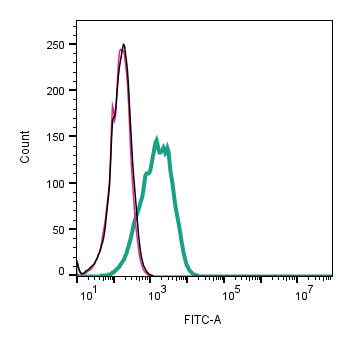 A Rabbit Polyclonal Antibody to Ephrin-B1
- Product Code: AER-041
- Short Description: A Rabbit Polyclonal Antibody to Ephrin-B1
- Host: Rabbit
- Label: Unconjugated
- Reactivity: Human, Rat
- Applications: Indirect flow cytometry, Live cell imaging, Western blot
- Target: EPH-related receptor tyrosine kinase ligand 2, LERK2, EFNB1
-
 A Rabbit Polyclonal antibody to Ephrin-B2 (extracellular)
- Product Code: AER-042
- Short Description: A Rabbit Polyclonal antibody to Ephrin-B2 (extracellular)
- Host: Rabbit
- Label: Unconjugated
- Reactivity: Human, Rat, Mouse
- Applications: Western blot, Immunohistochemistry
- Target: EFNB2, EPH-Related Receptor Tyrosine Kinase Ligand 5, LERK5, HTK ligand, HTKL
-
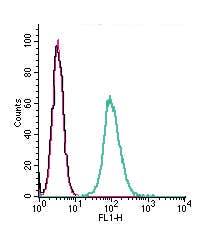 A Rabbit Polyclonal antibody to GPR132 (extracellular)
- Product Code: AGR-036
- Short Description: A Rabbit Polyclonal antibody to GPR132 (extracellular)
- Host: Rabbit
- Label: Unconjugated
- Reactivity: Rat, Mouse
- Applications: Indirect flow cytometry, Live cell imaging, Western blot
- Target: G Protein-Coupled Receptor 132, G2 Accumulation Protein, G2A
-
 A Rabbit Polyclonal antibody to Parkin
- Product Code: AGR-069
- Short Description: A Rabbit Polyclonal antibody to Parkin
- Host: Rabbit
- Label: Unconjugated
- Reactivity: Human, Rat, Mouse
- Applications: Western blot, Immunohistochemistry
- Target: G Protein-Coupled Receptor 139, PGR3, G(Q)-Coupled Orphan Receptor GPRg1, GPRG1
-
 A Rabbit Polyclonal Antibody to GPR34
- Product Code: AGR-055
- Short Description: A Rabbit Polyclonal Antibody to GPR34
- Host: Rabbit
- Label: Unconjugated
- Reactivity: Human, Rat, Mouse
- Applications: Indirect flow cytometry, Western blot
- Target: G-protein coupled receptor 34, LYPSR1
Loading...