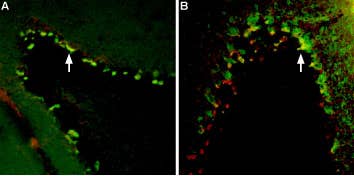
-
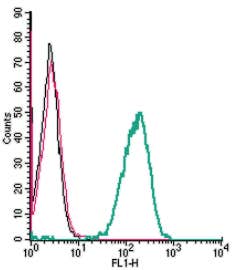 A Rabbit Polyclonal antibody to P2Y13 (extracellular).
- Product Code: APR-103
- Short Description: A Rabbit Polyclonal antibody to P2Y13 (extracellular).
- Host: Rabbit
- Label: Unconjugated
- Reactivity: Human, Rat, Mouse
- Applications: Indirect flow cytometry, Live cell imaging, Western blot
- Target: Purinergic Receptor P2Y13, P2RY13, GPCR1, GPR86, GPR94
-
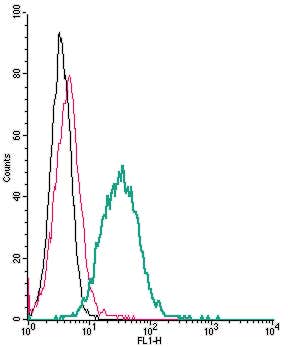 A Rabbit Polyclonal Antibody to P2Y13 Receptor (extracellular) conjugated to the fluorescent dye FITC
- Product Code: APR-103-F
- Short Description: A Rabbit Polyclonal Antibody to P2Y13 Receptor (extracellular) conjugated to the fluorescent dye FITC
- Host: Rabbit
- Label: FITC
- Reactivity: Human, Rat, Mouse
- Applications: Live cell imaging, Flow cytometry
- Target: Purinergic Receptor P2Y13, P2RY13, GPCR1, GPR86, GPR94, SP174
-

 A Rabbit Polyclonal Antibody to P2Y13 Receptor
- Product Code: APR-017
- Short Description: A Rabbit Polyclonal Antibody to P2Y13 Receptor
- Host: Rabbit
- Label: Unconjugated
- Reactivity: Human, Rat, Mouse
- Applications: Indirect flow cytometry, Western blot, Immunocytochemistry, Immunofluorescence, Immunohistochemistry
- Target: P2Y purinoceptor 13, P2RY13, GPCR1, GPR86, GPR94
-
 A Rabbit Polyclonal Antibody to ASIC Channels (ASIC1, ASIC2, ASIC3, ASIC4)
- Product Code: ASC-031
- Short Description: A Rabbit Polyclonal Antibody to ASIC Channels (ASIC1, ASIC2, ASIC3, ASIC4)
- Host: Rabbit
- Label: Unconjugated
- Reactivity: Human, Rat, Mouse
- Applications: Indirect flow cytometry, Live cell imaging, Western blot, Immunocytochemistry, Immunofluorescence, Immunohistochemistry
- Target: Acid-sensing ion channel, Acid-sensing (proton-gated) ion channel, ACCN, ACCN2, ACCN3, ACCN4
-
 A Rabbit polyclonal antibody to RGMA (extracellular).
- Product Code: ANR-126
- Short Description: A Rabbit polyclonal antibody to RGMA (extracellular).
- Host: Rabbit
- Label: Unconjugated
- Reactivity: Human, Rat, Mouse
- Applications: Indirect flow cytometry, Live cell imaging, Western blot, Immunohistochemistry
- Target: Repulsive Guidance Molecule A, RGM Domain Family Member A, Repulsive Guidance Molecule BMP Co-Receptor A, RGMa
-
 A Rabbit Polyclonal Antibody to Sphingosine 1-Phosphate Receptor 1
- Product Code: ASR-011
- Short Description: A Rabbit Polyclonal Antibody to Sphingosine 1-Phosphate Receptor 1
- Host: Rabbit
- Label: Unconjugated
- Reactivity: Human, Rat, Mouse
- Applications: Indirect flow cytometry, Live cell imaging, Western blot, Immunocytochemistry, Immunofluorescence, Immunohistochemistry
- Target: Sphingosine 1-phosphate receptor 1, S1P1, Endothelial differentiation G-protein coupled receptor 1, CD363, CHEDG1
-
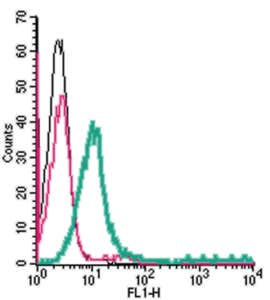 A Rabbit Polyclonal Antibody to Sphingosine 1-Phosphate Receptor 1 Conjugated to the Fluorescent Dye FITC
- Product Code: ASR-011-F
- Short Description: A Rabbit Polyclonal Antibody to Sphingosine 1-Phosphate Receptor 1 Conjugated to the Fluorescent Dye FITC
- Host: Rabbit
- Label: FITC
- Reactivity: Human, Rat, Mouse
- Applications: Live cell imaging, Flow cytometry
- Target: Sphingosine 1-phosphate receptor 1, S1P1, Endothelial differentiation G-protein coupled receptor 1, CHEDG1, CD363
-
 A Rabbit Polyclonal Antibody to Sphingosine 1-Phosphate Receptor 2
- Product Code: ASR-012
- Short Description: A Rabbit Polyclonal Antibody to Sphingosine 1-Phosphate Receptor 2
- Host: Rabbit
- Label: Unconjugated
- Reactivity: Human, Rat, Mouse
- Applications: Western blot, Immunohistochemistry
- Target: Sphingosine 1-phosphate receptor 2, S1P2, Endothelial differentiation G-protein coupled receptor 5, Lysophospholipid receptor B2, LPB2
-
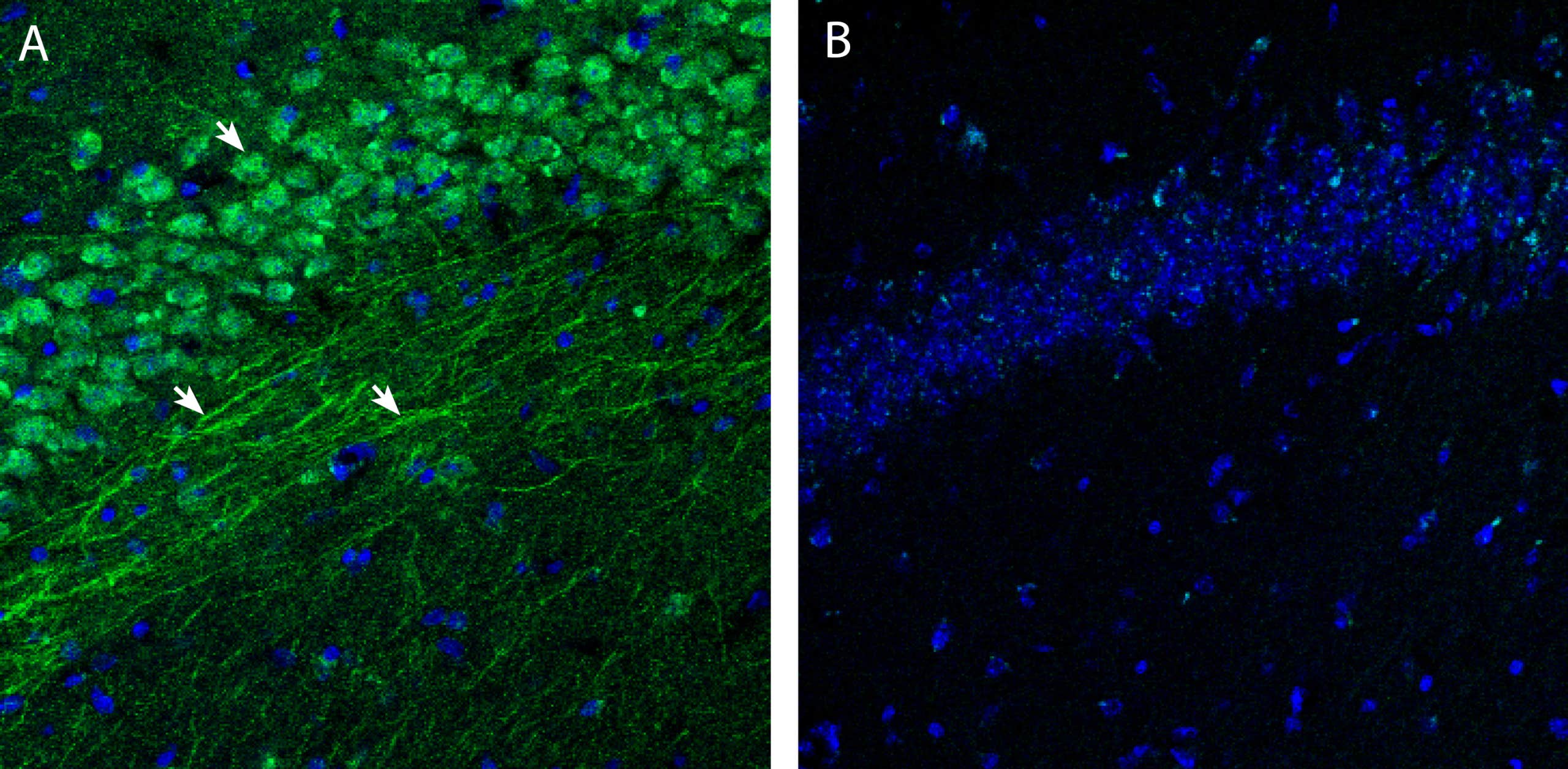 A Rabbit Polyclonal Antibody to Sphingosine 1-Phosphate Receptor 3
- Product Code: ASR-013
- Short Description: A Rabbit Polyclonal Antibody to Sphingosine 1-Phosphate Receptor 3
- Host: Rabbit
- Label: Unconjugated
- Reactivity: Human, Rat, Mouse
- Applications: Indirect flow cytometry, Live cell imaging, Western blot
- Target: Sphingosine 1-phosphate receptor 3, S1P3, Endothelial differentiation G-protein coupled receptor 3, Lysophospholipid receptor B3, LPB3
-
 A Rabbit Polyclonal Antibody to Sphingosine 1-Phosphate Receptor 3 Conjugated to the Fluorescent Dye ATTO-488
- Product Code: ASR-013-AG
- Short Description: A Rabbit Polyclonal Antibody to Sphingosine 1-Phosphate Receptor 3 Conjugated to the Fluorescent Dye ATTO-488
- Host: Rabbit
- Label: ATTO 488
- Reactivity: Human, Rat, Mouse
- Applications: Flow cytometry
- Target: Sphingosine 1-phosphate receptor 3, S1P3, Endothelial differentiation G-protein coupled receptor 3, Lysophospholipid receptor B3, LPB3
Loading...