-
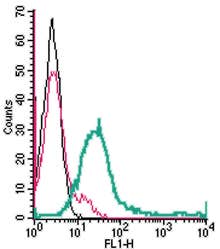 A Rabbit Polyclonal Antibody to GPR171
- Product Code: AGR-054
- Short Description: A Rabbit Polyclonal Antibody to GPR171
- Host: Rabbit
- Label: Unconjugated
- Reactivity: Human, Rat, Mouse
- Applications: Indirect flow cytometry, Live cell imaging, Western blot
- Target: G-Protein Coupled Receptor 171, Platelet Activating Receptor Homolog, G-protein coupled receptor H963
-
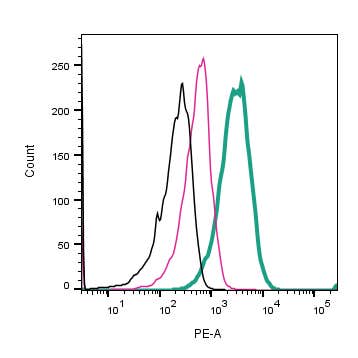 A Rabbit Polyclonal Antibody to GPR171 (extracellular) conjugated to the fluorescent dye Phycoerythrin (PE)
- Product Code: AGR-054-PE
- Short Description: A Rabbit Polyclonal Antibody to GPR171 (extracellular) conjugated to the fluorescent dye Phycoerythrin (PE)
- Host: Rabbit
- Label: R-PE
- Reactivity: Human, Rat, Mouse
- Applications: Live cell imaging, Flow cytometry
- Target: G-Protein Coupled Receptor 171, Platelet Activating Receptor Homolog, G-protein coupled receptor H963
-
 A Rabbit Polyclonal Antibody to Kainate Receptor GluK3
- Product Code: AGC-040
- Short Description: A Rabbit Polyclonal Antibody to Kainate Receptor GluK3
- Host: Rabbit
- Label: Unconjugated
- Reactivity: Human, Rat, Mouse
- Applications: Western blot, Immunofluorescence, Immunohistochemistry
- Target: Glutamate receptor ionotropic kainate 3, Glutamate receptor 7, GluR7
-
 A Rabbit Polyclonal Antibody to Kainate Receptor GluK5
- Product Code: AGC-042
- Short Description: A Rabbit Polyclonal Antibody to Kainate Receptor GluK5
- Host: Rabbit
- Label: Unconjugated
- Reactivity: Human, Rat, Mouse
- Applications: Western blot, Immunocytochemistry, Immunofluorescence, Immunohistochemistry
- Target: Glutamate receptor ionotropic kainate 5, Glutamate receptor KA-2, KA2
-
 A Rabbit Polyclonal Antibody to GSG1L
- Product Code: AGC-048
- Short Description: A Rabbit Polyclonal Antibody to GSG1L
- Host: Rabbit
- Label: Unconjugated
- Reactivity: Human, Rat, Mouse
- Applications: Western blot, Immunofluorescence, Immunohistochemistry
- Target: Germ cell-specific gene 1-like protein, GSG1-like protein
-
 A Rabbit Polyclonal Antibody to Zinc-Activated Ion Channel
- Product Code: AZC-001
- Short Description: A Rabbit Polyclonal Antibody to Zinc-Activated Ion Channel
- Host: Rabbit
- Label: Unconjugated
- Reactivity: Human
- Applications: Indirect flow cytometry, Live cell imaging, Western blot, Immunocytochemistry, Immunofluorescence
- Target: Zinc-activated ligand-gated ion channel, Ligand-gated ion channel zinc-activated 1, Ligand-gated ion-channel receptor L2, ZAC, LGICZ1
-
 A Rabbit Polyclonal Antibody to Kidins220
- Product Code: APZ-017
- Short Description: A Rabbit Polyclonal Antibody to Kidins220
- Host: Rabbit
- Label: Unconjugated
- Reactivity: Human, Rat, Mouse
- Applications: Western blot, Immunofluorescence, Immunohistochemistry
- Target: Kinase D-interacting substrate of 220 kDa, Ankyrin repeat-rich membrane-spanning protein, ARMS
-
 A Rabbit Polyclonal Antibody to LRRC26
- Product Code: APC-070
- Short Description: A Rabbit Polyclonal Antibody to LRRC26
- Host: Rabbit
- Label: Unconjugated
- Reactivity: Rat, Mouse
- Applications: Western blot
- Target: Leucine-rich repeat-containing protein 26, BK channel auxiliary gamma subunit LRRC26, Cytokeratin-associated protein in cancer, CAPC
-
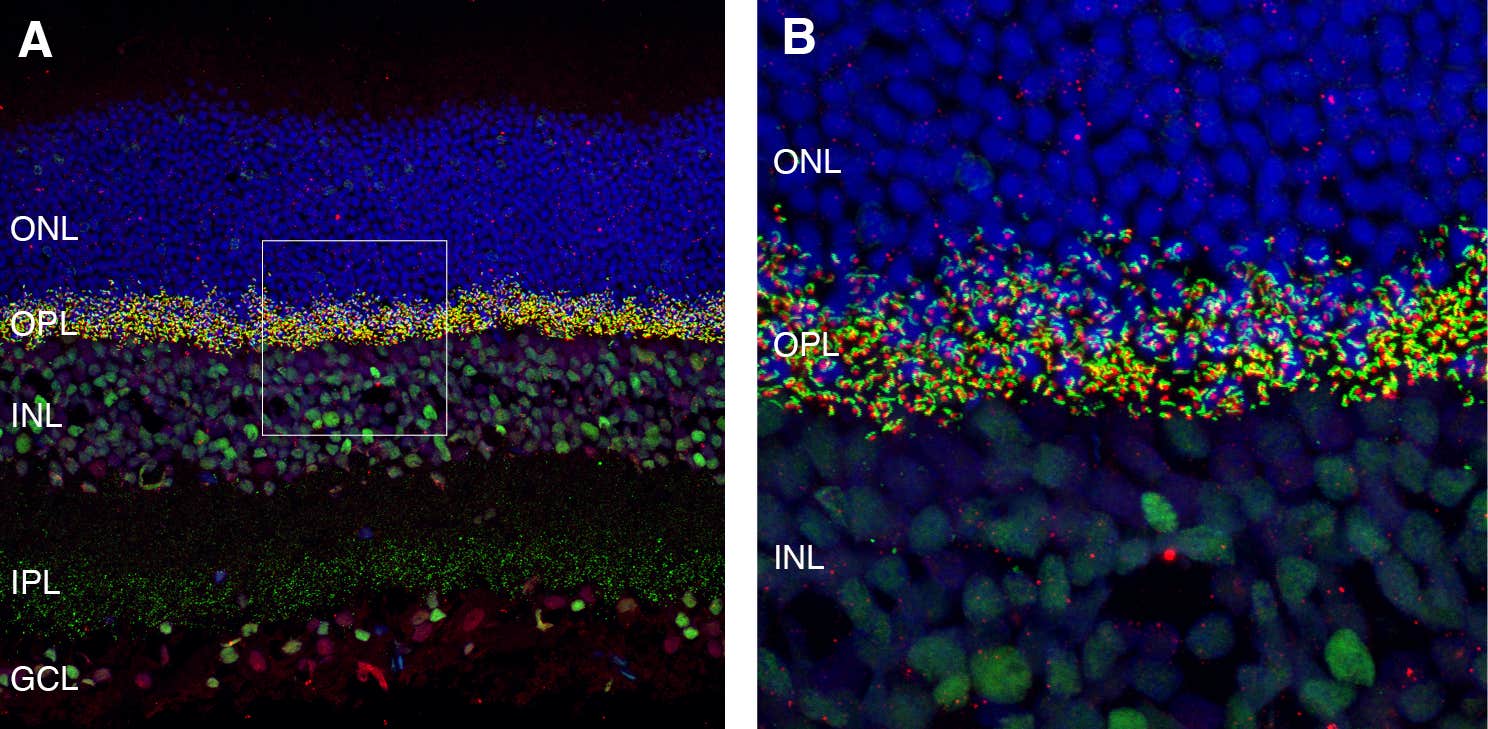 A Rabbit Polyclonal Antibody to Metabotropic Glutamate Receptor 6
- Product Code: AGC-026
- Short Description: A Rabbit Polyclonal Antibody to Metabotropic Glutamate Receptor 6
- Host: Rabbit
- Label: Unconjugated
- Reactivity: Human, Rat, Mouse
- Applications: Western blot
- Target: Metabotropic glutamate receptor 6, GRM6, mGlu6, Gprc1f
-
 A Rabbit Polyclonal Antibody to Sodium Leak Channel Non-Selective Protein (NALCN)
- Product Code: ASC-022
- Short Description: A Rabbit Polyclonal Antibody to Sodium Leak Channel Non-Selective Protein (NALCN)
- Host: Rabbit
- Label: Unconjugated
- Reactivity: Human, Rat, Mouse
- Applications: Live cell imaging, Western blot, Immunocytochemistry, Immunofluorescence, Immunohistochemistry
- Target: Sodium leak channel non-selective protein, Voltage gated channel-like protein 1, Four domain-type voltage-gated ion channel alpha-1 subunit, CanIon, Rb21-channel
Loading...