-
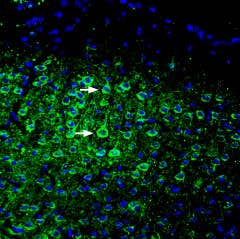
 A Rabbit Polyclonal Antibody to TRPV4 Channel
- Product Code: ACC-124
- Short Description: A Rabbit Polyclonal Antibody to TRPV4 Channel
- Host: Rabbit
- Label: Unconjugated
- Reactivity: Human, Mouse
- Applications: Indirect flow cytometry, Live cell imaging, Western blot, Immunocytochemistry, Immunofluorescence, Immunohistochemistry
- Target: OTRPC4, VRL-2, VR-OAC, TRP12
-
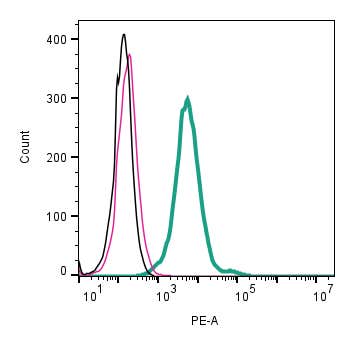 A Rabbit Polyclonal Antibody to TRPV4 (extracellular) conjugated to the fluorescent dye R-Phycoerythrin
- Product Code: ACC-124-PE
- Short Description: A Rabbit Polyclonal Antibody to TRPV4 (extracellular) conjugated to the fluorescent dye R-Phycoerythrin
- Host: Rabbit
- Label: R-PE
- Reactivity: Human, Rat, Mouse
- Applications: Live cell imaging, Flow cytometry
- Target: OTRPC4, VRL-2, VR-OAC, TRP12, Osm-9-Like TRP Channel 4
-
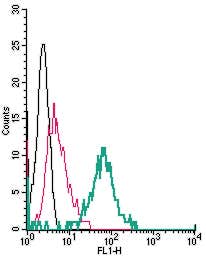 A Rabbit Polyclonal Antibody to TRPV4 Conjugated to the Fluorescent Dye FITC
- Product Code: ACC-124-F
- Short Description: A Rabbit Polyclonal Antibody to TRPV4 Conjugated to the Fluorescent Dye FITC
- Host: Rabbit
- Label: FITC
- Reactivity: Human, Rat, Mouse
- Applications: Live cell imaging, Flow cytometry
- Target: OTRPC4, VRL-2, VR-OAC, TRP12, Osm-9-Like TRP Channel 4
-

 A Rabbit Polyclonal Antibody to TRPV4 Channel
- Product Code: ACC-034
- Short Description: A Rabbit Polyclonal Antibody to TRPV4 Channel
- Host: Rabbit
- Label: Unconjugated
- Reactivity: Human, Rat, Mouse
- Applications: Indirect flow cytometry, Western blot, Immunocytochemistry, Immunofluorescence, Immunoprecipitation, Immunohistochemistry
- Target: OTRPC4, VRL-2, VR-OAC, TRP12
-
 A Rabbit Polyclonal Antibody to TRPV4 Channel Conjugated to the Fluorescent Dye ATTO-550
- Product Code: ACC-034-AO
- Short Description: A Rabbit Polyclonal Antibody to TRPV4 Channel Conjugated to the Fluorescent Dye ATTO-550
- Host: Rabbit
- Label: ATTO 550
- Reactivity: Human, Rat, Mouse
- Applications: Immunofluorescence, Immunohistochemistry
- Target: OTRPC4, VRL-2, VR-OAC, TRP12
-
 A Rabbit Polyclonal Antibody to Vasopressin V1B Receptor
- Product Code: AVR-011
- Short Description: A Rabbit Polyclonal Antibody to Vasopressin V1B Receptor
- Host: Rabbit
- Label: Unconjugated
- Reactivity: Rat, Mouse
- Applications: Western blot
- Target: V1bR, AVPR V1b, AVPR V3, Antidiuretic hormone receptor 1b, Arginine vasopressin receptor 1B, Vasopressin V3 receptor
-
 A Rabbit Polyclonal Antibody to Vasopressin V2 Receptor
- Product Code: AVR-012
- Short Description: A Rabbit Polyclonal Antibody to Vasopressin V2 Receptor
- Host: Rabbit
- Label: Unconjugated
- Reactivity: Rat, Mouse
- Applications: Western blot
- Target: V2R, AVPR V2, Antidiuretic hormone receptor, ADHR, Renal-type arginine vasopressin receptor, DIR3, Nephrogenic diabetes insipidus
-
 A Rabbit Polyclonal Antibody to Vesicular Acetylcholine Transporter
- Product Code: ACT-003
- Short Description: A Rabbit Polyclonal Antibody to Vesicular Acetylcholine Transporter
- Host: Rabbit
- Label: Unconjugated
- Reactivity: Rat, Mouse
- Applications: Western blot, Immunofluorescence, Immunohistochemistry
- Target: Solute carrier family 18 member 3, SLC18A3
-
 A Rabbit Polyclonal Antibody to Vesicular Glutamate Transporter 3
- Product Code: AGC-037
- Short Description: A Rabbit Polyclonal Antibody to Vesicular Glutamate Transporter 3
- Host: Rabbit
- Label: Unconjugated
- Reactivity: Rat, Mouse
- Applications: Western blot, Immunofluorescence, Immunohistochemistry
- Target: Vesicular glutamate transporter 3, SLC17A8
-
 A Rabbit Polyclonal Antibody to µ-Opioid Receptor (OPRM1)
- Product Code: AOR-011
- Short Description: A Rabbit Polyclonal Antibody to µ-Opioid Receptor (OPRM1)
- Host: Rabbit
- Label: Unconjugated
- Reactivity: Human, Rat, Mouse
- Applications: Indirect flow cytometry, Live cell imaging, Western blot, Immunocytochemistry, Immunofluorescence, Immunohistochemistry
- Target: Mu-type opioid receptor, Opioid receptor B, MOR-1, MOP, Mu-opiate receptor
Loading...