-
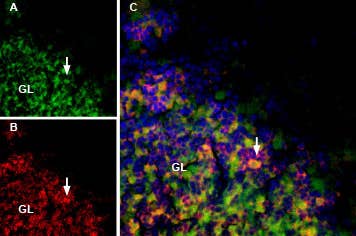
 A Rabbit Polyclonal Antibody to Homer1
- Product Code: APZ-026
- Short Description: A Rabbit Polyclonal Antibody to Homer1
- Host: Rabbit
- Label: Unconjugated
- Reactivity: Human, Rat, Mouse
- Applications: Western blot, Immunofluorescence, Immunohistochemistry
- Target: Homer protein homolog 1, Homer scaffolding protein 1, Vesl-1, Ves 1, PSD-Zip45, SYN47
-
 A Rabbit Polyclonal Antibody to Homer2
- Product Code: APZ-027
- Short Description: A Rabbit Polyclonal Antibody to Homer2
- Host: Rabbit
- Label: Unconjugated
- Reactivity: Human, Rat, Mouse
- Applications: Western blot, Immunofluorescence, Immunohistochemistry
- Target: Homer protein homolog 2, Cupidin, Vesl-2
-
 A Rabbit Polyclonal Antibody to Homer3
- Product Code: APZ-028
- Short Description: A Rabbit Polyclonal Antibody to Homer3
- Host: Rabbit
- Label: Unconjugated
- Reactivity: Human, Rat, Mouse
- Applications: Western blot, Immunofluorescence, Immunohistochemistry
- Target: Homer protein homolog 3, Homer scaffold protein 3, VESL3, Homer-3
-
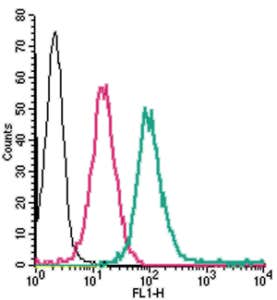
 A Rabbit Polyclonal Antibody to Adenosine A2A Receptor
- Product Code: AAR-007
- Short Description: A Rabbit Polyclonal Antibody to Adenosine A2A Receptor
- Host: Rabbit
- Label: Unconjugated
- Reactivity: Human
- Applications: Indirect flow cytometry, Live cell imaging, Western blot
- Target: Adenosine receptor A2A, A2AR, ADORA2A
-
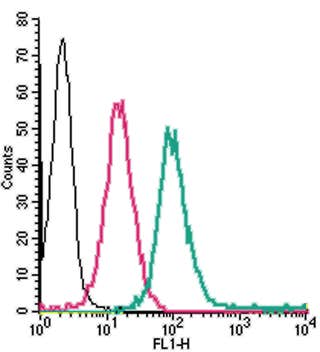 A Rabbit Polyclonal Antibody to Adenosine A2A Receptor Conjugated to the Fluorescent Dye FITC
- Product Code: AAR-007-F
- Short Description: A Rabbit Polyclonal Antibody to Adenosine A2A Receptor Conjugated to the Fluorescent Dye FITC
- Host: Rabbit
- Label: FITC
- Reactivity: Human
- Applications: Flow cytometry
- Target: Adenosine receptor A2A, A2AR, ADORA2A
-
 A Rabbit Polyclonal Antibody to Cannabinoid Receptor 2
- Product Code: ACR-003
- Short Description: A Rabbit Polyclonal Antibody to Cannabinoid Receptor 2
- Host: Rabbit
- Label: Unconjugated
- Reactivity: Human
- Applications: Indirect flow cytometry, Live cell imaging, Western blot, Immunocytochemistry, Immunofluorescence
- Target: CB2, CNR2
-
 A Rabbit Polyclonal Antibody to Human CaV1.2 (CACNA1C) Channel
- Product Code: ACC-022
- Short Description: A Rabbit Polyclonal Antibody to Human CaV1.2 (CACNA1C) Channel
- Host: Rabbit
- Label: Unconjugated
- Reactivity: Human, Rat, Mouse
- Applications: Western blot, Immunocytochemistry, Immunofluorescence
- Target: Human α1C, Voltage-dependent L-type calcium channel subunit alpha-1C.
-
 A Rabbit Polyclonal Antibody to GPR55
- Product Code: ACR-061
- Short Description: A Rabbit Polyclonal Antibody to GPR55
- Host: Rabbit
- Label: Unconjugated
- Reactivity: Human
- Applications: Indirect flow cytometry, Western blot
- Target: G-protein coupled receptor 55
-
 A Rabbit Polyclonal Antibody to Human NaV1.7 (SCN9A)
- Product Code: ASC-029
- Short Description: A Rabbit Polyclonal Antibody to Human NaV1.7 (SCN9A)
- Host: Rabbit
- Label: Unconjugated
- Reactivity: Human
- Applications: Indirect flow cytometry, Live cell imaging, Western blot, Immunocytochemistry
- Target: Voltage-gated sodium channel type IX subunit alpha, PN1
-
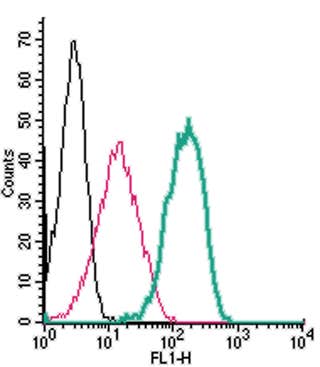 A Rabbit Polyclonal antibody to Human TRPV1 (extracellular)
- Product Code: ACC-334
- Short Description: A Rabbit Polyclonal antibody to Human TRPV1 (extracellular)
- Host: Rabbit
- Label: Unconjugated
- Reactivity: Human
- Applications: Indirect flow cytometry, Live cell imaging, Western blot
- Target: Transient receptor potential cation channel subfamily V member 1, Capsaicin receptor, Vanilloid receptor 1, VR1, OTRPC1
Loading...