-

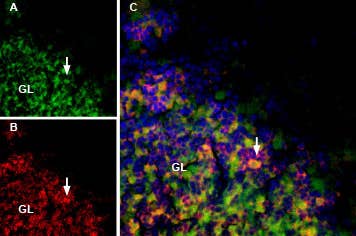
 A Rabbit Polyclonal Antibody to AMPA-Selective Glutamate Receptor 2 (GluR2)
- Product Code: AGC-005
- Short Description: A Rabbit Polyclonal Antibody to AMPA-Selective Glutamate Receptor 2 (GluR2)
- Host: Rabbit
- Label: Unconjugated
- Reactivity: Rat, Mouse
- Applications: Live cell imaging, Western blot, Immunocytochemistry, Immunofluorescence, Immunoprecipitation, Immunohistochemistry
- Target: AMPA receptor 2, Glutamate receptor 2, Ionotropic glutamate receptor 2, AMPA-selective glutamate receptor 2, GRIA2, GluR-B, GluR-K2
-
 A Rabbit Polyclonal Antibody to AMPA-Selective Glutamate Receptor 2 (GluR2) Conjugated to the Fluorescent Dye ATTO-488
- Product Code: AGC-005-AG
- Short Description: A Rabbit Polyclonal Antibody to AMPA-Selective Glutamate Receptor 2 (GluR2) Conjugated to the Fluorescent Dye ATTO-488
- Host: Rabbit
- Label: ATTO 488
- Reactivity: Rat, Mouse
- Applications: Immunofluorescence, Immunohistochemistry
- Target: AMPA receptor 2, Glutamate receptor 2, Ionotropic glutamate receptor 2, AMPA-selective glutamate receptor 2, GRIA2, GluR-B, GluR-K2
-
 A Rabbit Polyclonal Antibody to AMPA-Selective Glutamate Receptor 3 (GluR3)
- Product Code: AGC-010
- Short Description: A Rabbit Polyclonal Antibody to AMPA-Selective Glutamate Receptor 3 (GluR3)
- Host: Rabbit
- Label: Unconjugated
- Reactivity: Human, Rat, Mouse
- Applications: Live cell imaging, Western blot, Immunocytochemistry, Immunofluorescence, Immunoprecipitation, Immunohistochemistry
- Target: AMPA receptor 3, Glutamate receptor 3, Ionotropic glutamate receptor 3, AMPA-selective glutamate receptor 3, GRIA3, GluR-C, GluR-K3
-
 A Rabbit Polyclonal Antibody to AMPA-Selective Glutamate Receptor 4 (GluR4)
- Product Code: AGC-019
- Short Description: A Rabbit Polyclonal Antibody to AMPA-Selective Glutamate Receptor 4 (GluR4)
- Host: Rabbit
- Label: Unconjugated
- Reactivity: Human, Rat, Mouse
- Applications: Western blot, Immunofluorescence, Immunohistochemistry
- Target: AMPA Receptor 4, Glutamate receptor 4, Ionotropic glutamate receptor 4, AMPA-selective glutamate receptor 4, GRIA4, GluR-D
-
 A Rabbit Polyclonal Antibody to Glycine Receptor α1
- Product Code: AGR-001
- Short Description: A Rabbit Polyclonal Antibody to Glycine Receptor α1
- Host: Rabbit
- Label: Unconjugated
- Reactivity: Rat, Mouse
- Applications: Western blot, Immunofluorescence, Immunohistochemistry
- Target: Glycine receptor subunit alpha-1, Glycine receptor 48 kDa subunit, Glycine receptor strychnine-binding subunit, GLRA1, Glyr
-
 A Rabbit Polyclonal Antibody to Glycine Receptor α4
- Product Code: AGR-015
- Short Description: A Rabbit Polyclonal Antibody to Glycine Receptor α4
- Host: Rabbit
- Label: Unconjugated
- Reactivity: Human, Rat, Mouse
- Applications: Live cell imaging, Western blot, Immunocytochemistry, Immunofluorescence
- Target: Glycine receptor subunit alpha-4, GLRA4
-
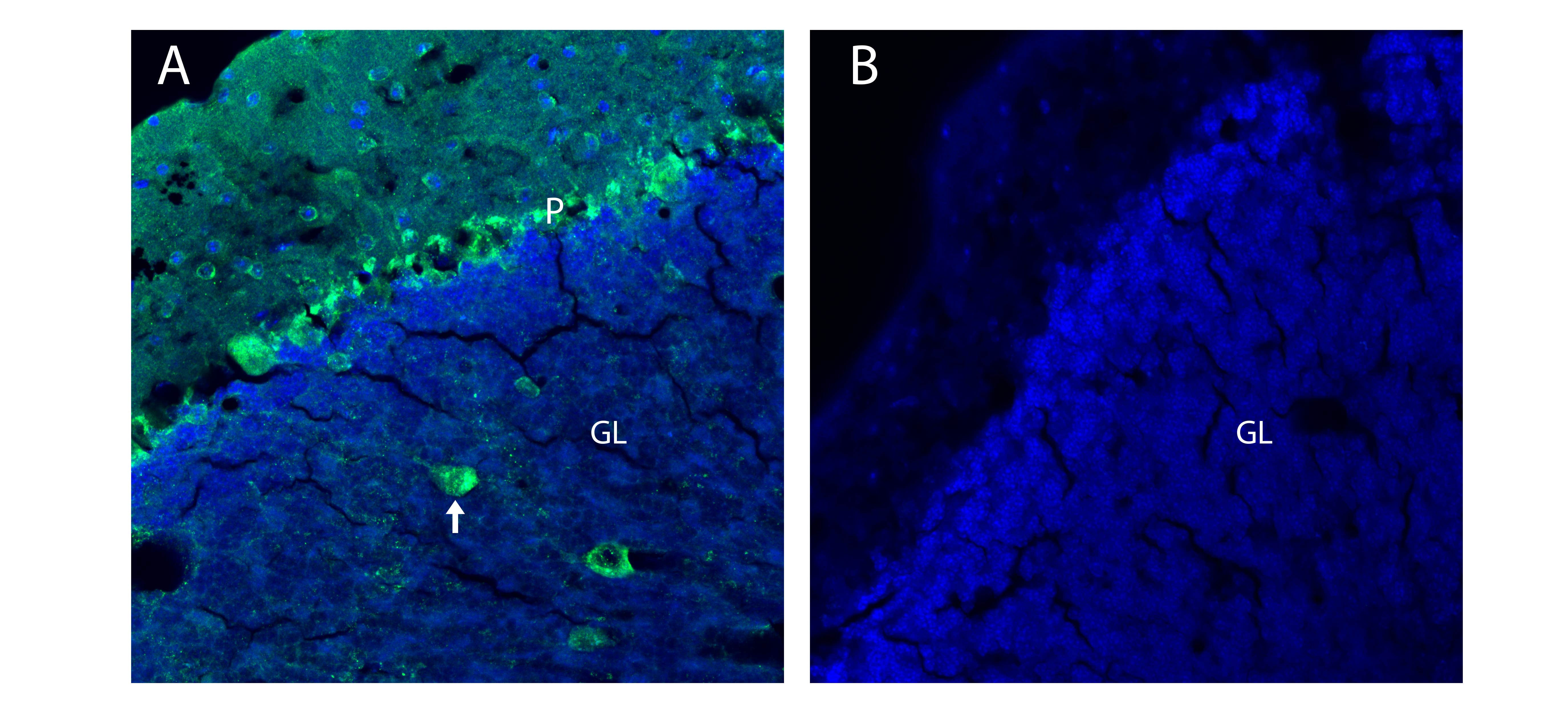 A Rabbit Polyclonal Antibody to Glycine Receptor β
- Product Code: AGR-014
- Short Description: A Rabbit Polyclonal Antibody to Glycine Receptor β
- Host: Rabbit
- Label: Unconjugated
- Reactivity: Human, Rat, Mouse
- Applications: Western blot
- Target: Glycine receptor subunit beta, Glycine receptor 58 kDa subunit, GLRB, GlyRβ
-
 A Rabbit Polyclonal Antibody to Glucose-Dependent Insulinotropic Receptor (GPR119)
- Product Code: AGR-032
- Short Description: A Rabbit Polyclonal Antibody to Glucose-Dependent Insulinotropic Receptor (GPR119)
- Host: Rabbit
- Label: Unconjugated
- Reactivity: Rat, Mouse
- Applications: Western blot
- Target: Glucose-dependent insulinotropic receptor, GPCR2
-
 A Rabbit Polyclonal antibody to SORCS2
- Product Code: AGR-062
- Short Description: A Rabbit Polyclonal antibody to SORCS2
- Host: Rabbit
- Label: Unconjugated
- Reactivity: Rat, Mouse
- Applications: Western blot, Immunohistochemistry
- Target: G-Protein Coupled Receptor 12, GPCR21
-
 A Rabbit Polyclonal Antibody to GPR173
- Product Code: AGR-093
- Short Description: A Rabbit Polyclonal Antibody to GPR173
- Host: Rabbit
- Label: Unconjugated
- Reactivity: Human, Rat, Mouse
- Applications: Western blot, Immunohistochemistry
- Target: G-Protein Coupled Receptor 173, Super Conserved Receptor Expressed In Brain 3, SREB3
Loading...