-
 A Rabbit Polyclonal Antibody to Parathyroid Hormone 2 Receptor
- Product Code: APR-052
- Short Description: A Rabbit Polyclonal Antibody to Parathyroid Hormone 2 Receptor
- Host: Rabbit
- Label: Unconjugated
- Reactivity: Rat, Mouse
- Applications: Western blot
- Target: Parathyroid hormone 2 receptor, PTH2 receptor, PTHR2
-
 A Rabbit Polyclonal Antibody to Parathyroid Hormone 2 Receptor Conjugated to the Fluorescent Dye ATTO-488
- Product Code: APR-052-AG
- Short Description: A Rabbit Polyclonal Antibody to Parathyroid Hormone 2 Receptor Conjugated to the Fluorescent Dye ATTO-488
- Host: Rabbit
- Label: ATTO 488
- Reactivity: Rat, Mouse
- Applications: Immunofluorescence, Immunohistochemistry
- Target: Parathyroid hormone 2 receptor, PTH2 receptor, PTHR2
-
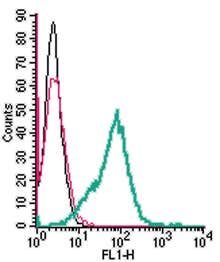 A Rabbit Polyclonal Antibody to RAGE
- Product Code: ANR-176
- Short Description: A Rabbit Polyclonal Antibody to RAGE
- Host: Rabbit
- Label: Unconjugated
- Reactivity: Human, Rat, Mouse
- Applications: Indirect flow cytometry, Western blot
- Target: Advanced Glycosylation End Product-Specific Receptor, AGER, Receptor For Advanced Glycosylation End Products, SCARJ1
-
 A Rabbit Polyclonal Antibody to RAMP2
- Product Code: ARR-022
- Short Description: A Rabbit Polyclonal Antibody to RAMP2
- Host: Rabbit
- Label: Unconjugated
- Reactivity: Rat, Mouse
- Applications: Indirect flow cytometry, Live cell imaging, Western blot
- Target: Receptor activity-modifying protein 2, CRLR activity-modifying protein 2, Calcitonin receptor-like receptor activity-modifying protein 2
-
 A Rabbit Polyclonal Antibody to Chemerin Receptor 1
- Product Code: ACR-033
- Short Description: A Rabbit Polyclonal Antibody to Chemerin Receptor 1
- Host: Rabbit
- Label: Unconjugated
- Reactivity: Mouse
- Applications: Western blot, Immunohistochemistry
- Target: Chemokine-like receptor 1, Cmklr1, Chemerin1, Gpcr27, G-protein coupled receptor ChemR23, CHEMERINR, G-protein coupled chemoattractant-like receptor, G-protein coupled receptor DEZ
-
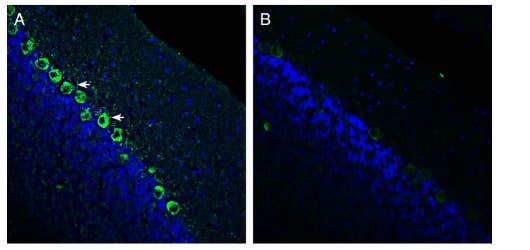 A Rabbit Polyclonal Antibody to Renin Receptor
- Product Code: AAR-014
- Short Description: A Rabbit Polyclonal Antibody to Renin Receptor
- Host: Rabbit
- Label: Unconjugated
- Reactivity: Human, Rat, Mouse
- Applications: Indirect flow cytometry, Western blot, Immunohistochemistry
- Target: Prorenin Receptor, Renin/prorenin receptor, PRR, (pro)renin receptor, ATPase H+ Transporting Accessory Protein 2, ATP6IP2
-
 A Rabbit Polyclonal Antibody to Ret Receptor
- Product Code: ANT-025
- Short Description: A Rabbit Polyclonal Antibody to Ret Receptor
- Host: Rabbit
- Label: Unconjugated
- Reactivity: Human, Rat, Mouse
- Applications: Indirect flow cytometry, Live cell imaging, Western blot, Immunocytochemistry, Immunofluorescence, Immunohistochemistry
- Target: Proto-oncogene tyrosine-protein kinase receptor Ret, Proto-oncogene c-Ret, Cadherin family member 12, CDHF12
-
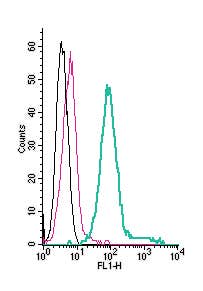 A Rabbit Polyclonal Antibody to Ret receptor (extracellular) conjugated to the fluorescent dye FITC
- Product Code: ANT-025-F
- Short Description: A Rabbit Polyclonal Antibody to Ret receptor (extracellular) conjugated to the fluorescent dye FITC
- Host: Rabbit
- Label: FITC
- Reactivity: Human, Rat, Mouse
- Applications: Live cell imaging, Flow cytometry
- Target: Proto-oncogene tyrosine-protein kinase receptor Ret, Proto-oncogene c-Ret, Cadherin family member 12, CDHF12, PTC, RET51
-
 A Rabbit polyclonal antibody to RGMA (extracellular).
- Product Code: ANR-126
- Short Description: A Rabbit polyclonal antibody to RGMA (extracellular).
- Host: Rabbit
- Label: Unconjugated
- Reactivity: Human, Rat, Mouse
- Applications: Indirect flow cytometry, Live cell imaging, Western blot, Immunohistochemistry
- Target: Repulsive Guidance Molecule A, RGM Domain Family Member A, Repulsive Guidance Molecule BMP Co-Receptor A, RGMa
-
 A Rabbit Polyclonal Antibody to Robo1
- Product Code: ANR-181
- Short Description: A Rabbit Polyclonal Antibody to Robo1
- Host: Rabbit
- Label: Unconjugated
- Reactivity: Human, Rat, Mouse
- Applications: Indirect flow cytometry, Live cell imaging, Western blot, Immunofluorescence, Immunohistochemistry
- Target: Roundabout Guidance Receptor 1, Roundabout Homolog 1, Deleted In U Twenty Twenty, DUTT1
Loading...