-
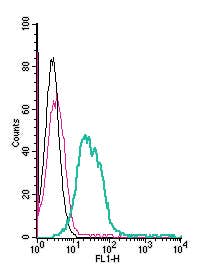 A Rabbit Polyclonal Antibody to ZIP6 (extracellular) conjugated to the fluorescent dye FITC
- Product Code: AZT-006-F
- Short Description: A Rabbit Polyclonal Antibody to ZIP6 (extracellular) conjugated to the fluorescent dye FITC
- Host: Rabbit
- Label: FITC
- Reactivity: Human, Rat, Mouse
- Applications: Live cell imaging, Flow cytometry
- Target: Zinc transporter ZIP6, Zrt- and Irt-like protein 6, Estrogen-regulated protein LIV-1, LIV1, Solute carrier family 39 member 6
-
 A Rabbit Polyclonal Antibody to Zinc Transporter ZIP8
- Product Code: AZT-008
- Short Description: A Rabbit Polyclonal Antibody to Zinc Transporter ZIP8
- Host: Rabbit
- Label: Unconjugated
- Reactivity: Human, Rat, Mouse
- Applications: Indirect flow cytometry, Live cell imaging, Western blot, Immunofluorescence, Immunohistochemistry
- Target: Zinc transporter ZIP8, Zrt- and Irt-like protein 8, Solute carrier family 39 member 8, BIGM103
-
 A Rabbit Polyclonal Antibody to Zinc Transporter ZIP8 Conjugated to the Fluorescent Dye FITC
- Product Code: AZT-008-F
- Short Description: A Rabbit Polyclonal Antibody to Zinc Transporter ZIP8 Conjugated to the Fluorescent Dye FITC
- Host: Rabbit
- Label: FITC
- Reactivity: Human, Rat, Mouse
- Applications: Flow cytometry
- Target: Zinc transporter ZIP8, Zrt- and Irt-like protein 8, Solute carrier family 39 member 8, BIGM103
-
 A Rabbit Polyclonal Antibody to Zinc Transporter 1
- Product Code: AZT-011
- Short Description: A Rabbit Polyclonal Antibody to Zinc Transporter 1
- Host: Rabbit
- Label: Unconjugated
- Reactivity: Rat, Mouse
- Applications: Western blot, Immunofluorescence, Immunohistochemistry
- Target: Zinc transporter 1, ZRC 1
-
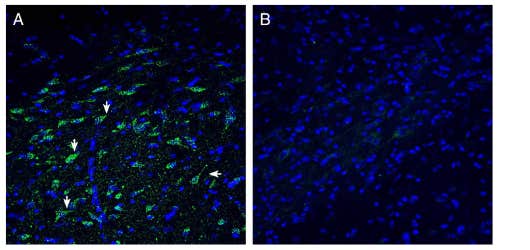 A Rabbit Polyclonal Antibody to ZnT10 (SLC30A10)
- Product Code: AZT-020
- Short Description: A Rabbit Polyclonal Antibody to ZnT10 (SLC30A10)
- Host: Rabbit
- Label: Unconjugated
- Reactivity: Human, Rat, Mouse
- Applications: Western blot, Immunohistochemistry
- Target: Zinc Transporter 10, Manganese Transporter SLC30A10, Solute carrier family 30 member 10
-
 A Rabbit Polyclonal Antibody to Zinc Transporter 2
- Product Code: AZT-012
- Short Description: A Rabbit Polyclonal Antibody to Zinc Transporter 2
- Host: Rabbit
- Label: Unconjugated
- Reactivity: Rat, Mouse
- Applications: Western blot
- Target: Zinc transporter 2
-
 A Rabbit Polyclonal antibody to GPRC5B receptor
- Product Code: AZT-014
- Short Description: A Rabbit Polyclonal antibody to GPRC5B receptor
- Host: Rabbit
- Label: Unconjugated
- Reactivity: Human, Rat, Mouse
- Applications: Western blot, Immunohistochemistry
- Target: Zinc transporter 4, Solute carrier family 30 member 4
-
 A Rabbit Polyclonal Antibody to α1-Syntrophin (SNTA1)
- Product Code: APZ-021
- Short Description: A Rabbit Polyclonal Antibody to α1-Syntrophin (SNTA1)
- Host: Rabbit
- Label: Unconjugated
- Reactivity: Human, Rat, Mouse
- Applications: Western blot, Immunofluorescence, Immunohistochemistry
- Target: Syntrophin alpha 1, Syntrophin-1, 59 kDa dystrophin-associated protein A1 acidic component 1
-
 A Rabbit Polyclonal Antibody to ?1A-Adrenergic Receptor
- Product Code: AAR-015
- Short Description: A Rabbit Polyclonal Antibody to ?1A-Adrenergic Receptor
- Host: Rabbit
- Label: Unconjugated
- Reactivity: Human, Mouse
- Applications: Indirect flow cytometry, Live cell imaging, Western blot, Immunofluorescence, Immunohistochemistry
- Target: Alpha-1A adrenoceptor, Alpha-1C adrenergic receptor, α1A-AR, ADRA1A
-
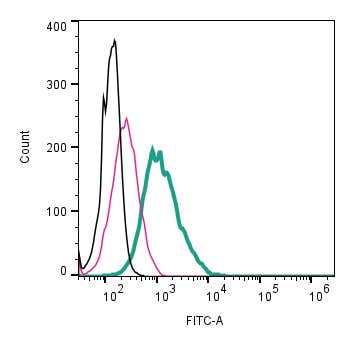 A Rabbit Polyclonal Antibody to ?1A-Adrenergic Receptor Conjugated to the Fluorescent Dye FITC
- Product Code: AAR-015-F
- Short Description: A Rabbit Polyclonal Antibody to ?1A-Adrenergic Receptor Conjugated to the Fluorescent Dye FITC
- Host: Rabbit
- Label: FITC
- Reactivity: Human, Rat, Mouse
- Applications: Live cell imaging, Flow cytometry
- Target: Adrenoceptor Alpha 1A, Alpha-1A adrenergic receptor, ADRA1A
Loading...