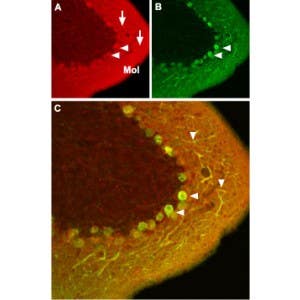
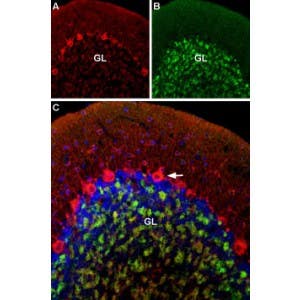
-
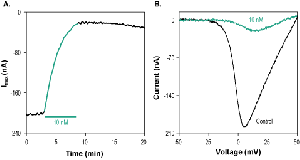
 A potent and selective blocker of neuronal N-type (CaV2.2) calcium channels
- Product Code: STC-760
- Short Description: A potent and selective blocker of neuronal N-type (CaV2.2) calcium channels
- Applications: Electrophysiology
- MW: 2639 Da
-
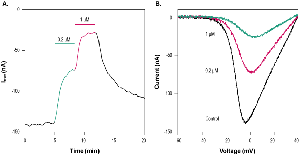 A potent and selective blocker of neuronal N-type (CaV2.2) calcium channels
- Product Code: STC-751
- Short Description: A potent and selective blocker of neuronal N-type (CaV2.2) calcium channels
- Applications: Electrophysiology
- CAS No.: 153887-08-2
- MW: 2695 Da
-
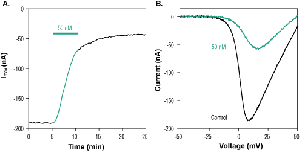 A potent and selective blocker of neuronal N-type (CaV2.2) calcium channels
- Product Code: STC-750
- Short Description: A potent and selective blocker of neuronal N-type (CaV2.2) calcium channels
- Applications: Electrophysiology
- MW: 2642 Da
-
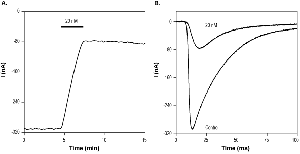 A potent blocker of NaV1.3 and NaV1.4 sodium channels that also inhibits NaV1.1 and NaV1.2 subtypes
- Product Code: STC-661
- Short Description: A potent blocker of NaV1.3 and NaV1.4 sodium channels that also inhibits NaV1.1 and NaV1.2 subtypes
- Applications: Electrophysiology
- MW: 2763 Da
-
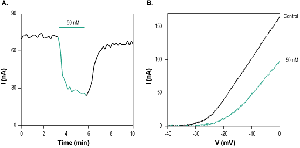 A potent blocker that is highly selective for heteromeric KV1.2/KV1.1 and KV1.2/KV1.6 potassium channels
- Product Code: STC-660
- Short Description: A potent blocker that is highly selective for heteromeric KV1.2/KV1.1 and KV1.2/KV1.6 potassium channels
- Applications: Electrophysiology
- MW: 2807 Da
-
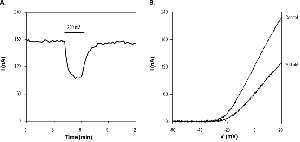 A specific potent blocker of KV1.2 K+ channels
- Product Code: STC-650
- Short Description: A specific potent blocker of KV1.2 K+ channels
- Applications: Electrophysiology
- CAS No.: 740843-55-4
- MW: 2649 Da
-
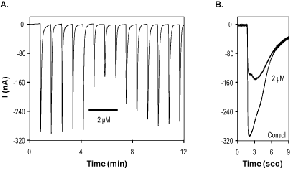 A potent and selective antagonist of the α3/β2 nicotinic acetylcholine receptor (nAChR)
- Product Code: STC-550
- Short Description: A potent and selective antagonist of the α3/β2 nicotinic acetylcholine receptor (nAChR)
- Applications: Electrophysiology
- MW: 1601.9 Da
-
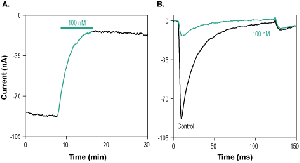 A potent blocker of neuronal NaV1.2 and skeletal muscle NaV1.4 voltage-gated sodium channels
- Product Code: STC-540
- Short Description: A potent blocker of neuronal NaV1.2 and skeletal muscle NaV1.4 voltage-gated sodium channels
- Applications: Electrophysiology
- MW: 2751 Da
-
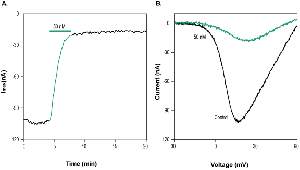 A potent and selective blocker of neuronal N-type (CaV2.2) calcium channels
- Product Code: STC-470
- Short Description: A potent and selective blocker of neuronal N-type (CaV2.2) calcium channels
- Applications: Electrophysiology
- CAS No.: 441284-32-8
- MW: 2561 Da
-
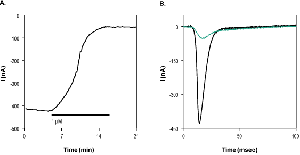 A potent blocker of neuronal NaV1.2 channels that also inhibits NaV1.4 and NaV1.6 channels
- Product Code: STC-450
- Short Description: A potent blocker of neuronal NaV1.2 channels that also inhibits NaV1.4 and NaV1.6 channels
- Applications: Electrophysiology
- MW: 2207.5 Da
Loading...