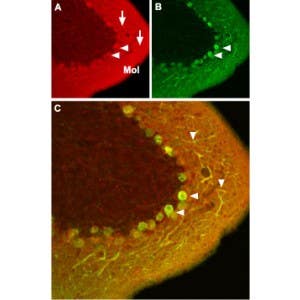
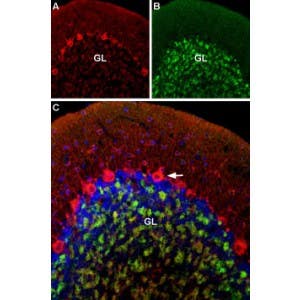
-
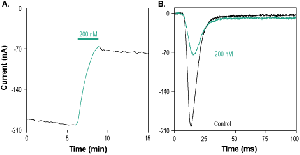
 A blocker/gating modifier of NaV1.7 channels
- Product Code: STP-370
- Short Description: A blocker/gating modifier of NaV1.7 channels
- Applications: Electrophysiology
- MW: 4140.8 Da
-
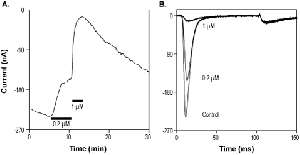 A blocker/gating modifier of NaV1.7 channels
- Product Code: STP-350
- Short Description: A blocker/gating modifier of NaV1.7 channels
- Applications: Electrophysiology
- MW: 4106.8 Da
-
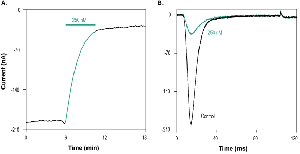 A potent blocker/gating modifier of NaV1.7 channels
- Product Code: STP-150
- Short Description: A potent blocker/gating modifier of NaV1.7 channels
- Applications: Electrophysiology
- MW: 3802.5 Da
-
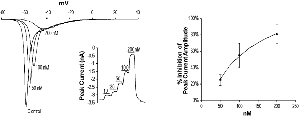 A highly potent gating modifier of NaV1.7 channels with weaker activity on CaV3.2 T-type channels
- Product Code: STP-100
- Short Description: A highly potent gating modifier of NaV1.7 channels with weaker activity on CaV3.2 T-type channels
- Applications: Electrophysiology
- CAS No.: 484598-36-9
- MW: 3826.6 Da
-
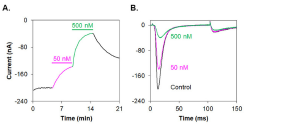 A selective blocker/gating modifier of NaV1.7 channels
- Product Code: STP-050
- Short Description: A selective blocker/gating modifier of NaV1.7 channels
- Applications: Electrophysiology
- MW: 3975.5 Da
-
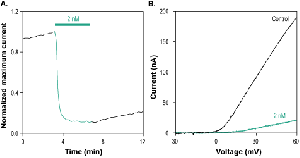 A highly potent blocker of KV1.3 K+ channels and a moderate blocker of KCa3.1 K+ channels
- Product Code: STO-150
- Short Description: A highly potent blocker of KV1.3 K+ channels and a moderate blocker of KCa3.1 K+ channels
- Applications: Electrophysiology
- CAS No.: 183815-75-0
- MW: 4205 Da
-
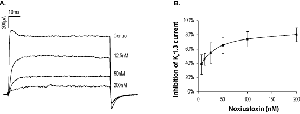 A potent blocker of KV1.3 and KV1.2 K+ channels
- Product Code: STN-340
- Short Description: A potent blocker of KV1.3 and KV1.2 K+ channels
- Applications: Electrophysiology
- CAS No.: 85205-49-8
- MW: 4195 Da
-
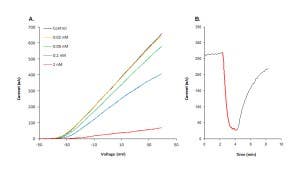 A potent blocker of KV1.2 and KCa3.1 K+ channels
- Product Code: STM-340
- Short Description: A potent blocker of KV1.2 and KCa3.1 K+ channels
- Applications: Electrophysiology
- CAS No.: 188240-41-7
- MW: 3612 Da
-
 A highly potent blocker of KV1.2 and KV1.3 K+ channels (a T-cell ion-channel blocker)
- Product Code: STM-325
- Short Description: A highly potent blocker of KV1.2 and KV1.3 K+ channels (a T-cell ion-channel blocker)
- Applications: Electrophysiology
- CAS No.: 145808-47-5
- MW: 4179 Da
-
 A potent and selective blocker of KV1.1 and KV1.2 channels
- Product Code: STM-250
- Short Description: A potent and selective blocker of KV1.1 and KV1.2 channels
- Applications: Electrophysiology
- CAS No.: 32908-73-9
- MW: 2587 Da
Loading...