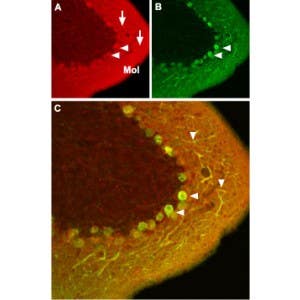
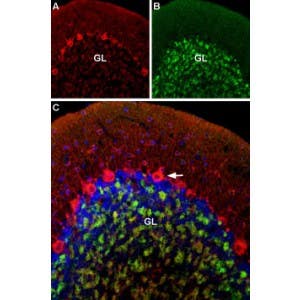
-
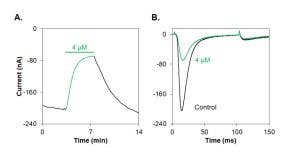
 An activator of NaV1.9 and an inhibitor of KV4.2 and NaV1.7
- Product Code: STH-320
- Short Description: An activator of NaV1.9 and an inhibitor of KV4.2 and NaV1.7
- Applications: Electrophysiology
- MW: 3910.4 Da
-
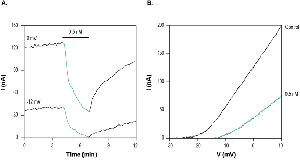 A potent blocker of KV1.3 K+ channels
- Product Code: STH-300
- Short Description: A potent blocker of KV1.3 K+ channels
- Applications: Electrophysiology
- MW: 3818.5 Da
-
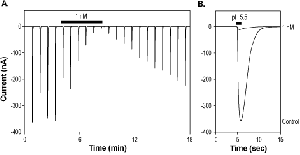 A highly potent ASIC1a blocker and ASIC1b activator
- Product Code: STH-250
- Short Description: A highly potent ASIC1a blocker and ASIC1b activator
- Applications: Electrophysiology
- MW: 4287 Da
-
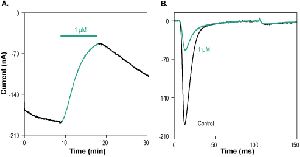 A potent and selective blocker of NaV1.7 channels
- Product Code: STH-200
- Short Description: A potent and selective blocker of NaV1.7 channels
- Applications: Electrophysiology
- MW: 3822.4 Da
-
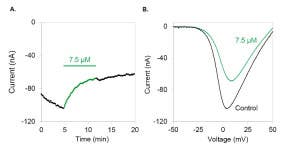 A potent and selective blocker of neuronal N-type (CaV2.2) calcium channels
- Product Code: STH-105
- Short Description: A potent and selective blocker of neuronal N-type (CaV2.2) calcium channels
- Applications: Electrophysiology
- CAS No.: 1600543-88-1
- MW: 4437 Da
-
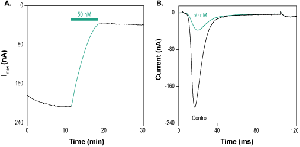 A highly potent blocker of the neuronal NaV1.7 voltage-gated sodium channels, with high affinity for other neuronal TTX-sensitive (NaV) subtypes
- Product Code: STH-102
- Applications: Electrophysiology
- MW: 3986 Da
-
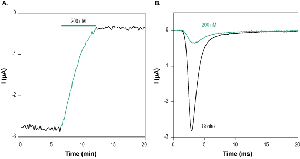 A presynaptic blocker of N-type (CaV2.2) calcium channels, TTX-sensitive (NaV) sodium, and muscle nAChR channels
- Product Code: STH-050
- Applications: Electrophysiology
- MW: 3750 Da
-
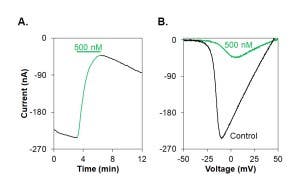 A potent blocker of N-type (CaV2.2) and P/Q-type (CaV2.1) voltage-gated calcium channels
- Product Code: STG-450
- Short Description: A potent blocker of N-type (CaV2.2) and P/Q-type (CaV2.1) voltage-gated calcium channels
- Applications: Electrophysiology
- CAS No.: 152617-90-8
- MW: 4109.8 Da
-
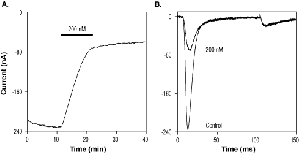 A potent and selective blocker of the neuronal NaV1.7 voltage-gated sodium channels
- Product Code: STG-400
- Short Description: A potent and selective blocker of the neuronal NaV1.7 voltage-gated sodium channels
- Applications: Electrophysiology
- MW: 4073.9 Da
-
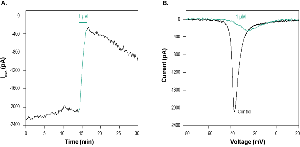 A potent gating modifier of tetrodotoxin-sensitive (TTX-s) neuronal voltage-gated sodium (NaV) channels that also blocks hERG1 potassium channels
- Product Code: STG-350
- Short Description: A potent gating modifier of tetrodotoxin-sensitive (TTX-s) neuronal voltage-gated sodium (NaV) channels that also blocks hERG1 potassium channels
- Applications: Electrophysiology
- MW: 3979.8 Da
Loading...