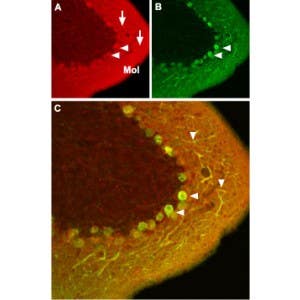
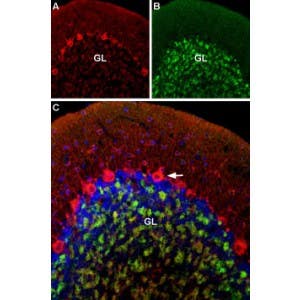
-
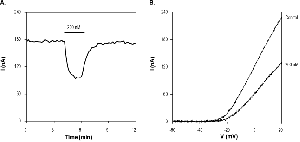
 A specific potent blocker of KV1.2 K+ channels
- Product Code: STC-650
- Short Description: A specific potent blocker of KV1.2 K+ channels
- Applications: Electrophysiology
- CAS No.: 740843-55-4
- MW: 2649 Da
-
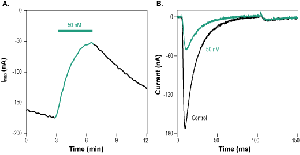 A potent blocker of the skeletal muscle NaV1.4 channel, with moderate activity on neuronal NaV1.1, NaV1.2, and NaV1.6 channels
- Product Code: STC-645
- Applications: Electrophysiology
- MW: 2271.7 Da
-
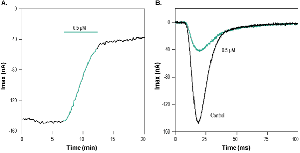 A potent blocker of skeletal muscle NaV1.4 and neuronal NaV1.2 sodium channels, which also inhibits the α3/β2 nAChR
- Product Code: STC-640
- Applications: Electrophysiology
- MW: 2376 Da
-
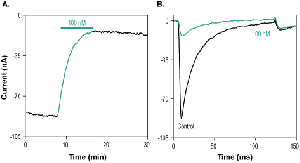 A potent blocker of neuronal NaV1.2 and skeletal muscle NaV1.4 voltage-gated sodium channels
- Product Code: STC-540
- Short Description: A potent blocker of neuronal NaV1.2 and skeletal muscle NaV1.4 voltage-gated sodium channels
- Applications: Electrophysiology
- MW: 2751 Da
-
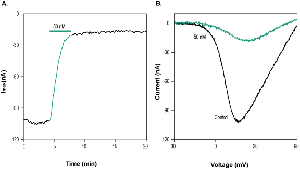 A potent and selective blocker of neuronal N-type (CaV2.2) calcium channels
- Product Code: STC-470
- Short Description: A potent and selective blocker of neuronal N-type (CaV2.2) calcium channels
- Applications: Electrophysiology
- CAS No.: 441284-32-8
- MW: 2561 Da
-
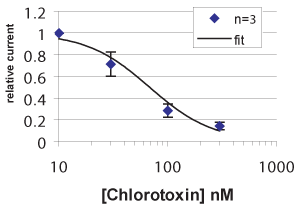 A potent scorpion toxin that preferentially binds to tumor cells by targeting multiple receptors including chloride channels,MMP-2, and Neuropilin-1
- Product Code: STC-460
- Applications: Cell-Based Assays, Electrophysiology, Calcium imaging assay
- CAS No.: 163515-35-3
- MW: 3995.8 Da
-
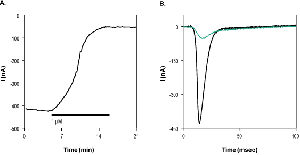 A potent blocker of neuronal NaV1.2 channels that also inhibits NaV1.4 and NaV1.6 channels
- Product Code: STC-450
- Short Description: A potent blocker of neuronal NaV1.2 channels that also inhibits NaV1.4 and NaV1.6 channels
- Applications: Electrophysiology
- MW: 2207.5 Da
-
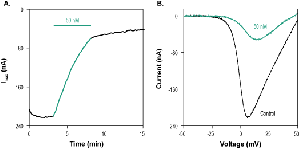 A potent blocker of N-type (CaV2.2) and P/Q-type (CaV2.1) voltage-gated calcium channels
- Product Code: STC-420
- Short Description: A potent blocker of N-type (CaV2.2) and P/Q-type (CaV2.1) voltage-gated calcium channels
- Applications: Electrophysiology
- MW: 2783 Da
-
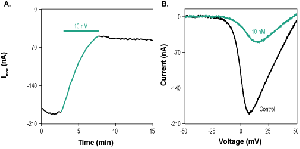 A potent blocker of N-type (CaV2.2) and P/Q-type (CaV2.1) voltage-gated calcium channels
- Product Code: STC-410
- Short Description: A potent blocker of N-type (CaV2.2) and P/Q-type (CaV2.1) voltage-gated calcium channels
- Applications: Electrophysiology
- MW: 2710 Da
-
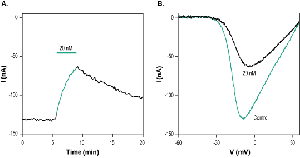 A potent blocker of the skeletal muscle voltage-gated sodium NaV1.4 channel that also inhibits other TTX-sensitive neuronal NaV channels
- Product Code: STC-400
- Short Description: A potent blocker of the skeletal muscle voltage-gated sodium NaV1.4 channel that also inhibits other TTX-sensitive neuronal NaV channels
- Applications: Electrophysiology
- MW: 2604 Da
Loading...