-

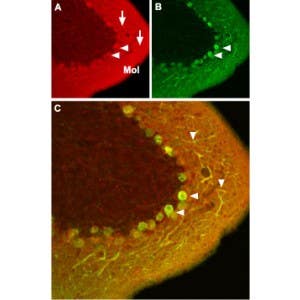
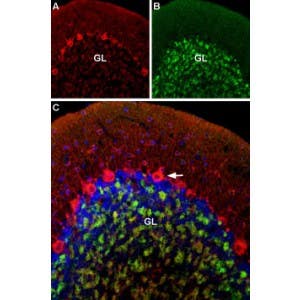
 A potent broad-spectrum blocker of K+ channels, including KV1.2, KV1.3, KV1.6, KCa1.1 and KCa3.1 channels
- Product Code: STC-325
- Applications: Electrophysiology
- CAS No.: 95751-30-7
- MW: 4296 Da
-
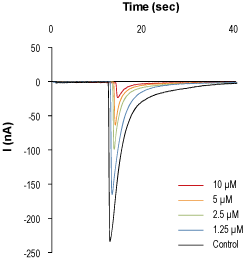 An antagonist of mammalian α3/β4 neuronal nAChR that also inhibits N-type (CaV2.2) calcium channels via GABA(B) receptor activation
- Product Code: STC-310
- Short Description: An antagonist of mammalian α3/β4 neuronal nAChR that also inhibits N-type (CaV2.2) calcium channels via GABA(B) receptor activation
- Applications: Electrophysiology
- CAS No.: 216299-21-7
- MW: 1572.8 Da
-
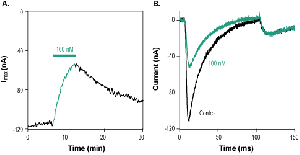 A potent and selective blocker of skeletal muscle NaV1.4 voltage-gated sodium channels
- Product Code: STC-280
- Short Description: A potent and selective blocker of skeletal muscle NaV1.4 voltage-gated sodium channels
- Applications: Electrophysiology
- CAS No.: 129129-65-3
- MW: 2609 Da
-
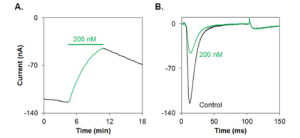 A potent blocker of NaV1.7 voltage-gated sodium channels and modest blocker of N-type (CaV2.2) calcium channels
- Product Code: STC-260
- Short Description: A potent blocker of NaV1.7 voltage-gated sodium channels and modest blocker of N-type (CaV2.2) calcium channels
- Applications: Electrophysiology
- MW: 4030.6 Da
-
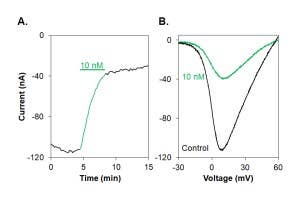 A potent and specific blocker of N-type (CaV2.2) calcium channels
- Product Code: STC-180
- Short Description: A potent and specific blocker of N-type (CaV2.2) calcium channels
- Applications: Electrophysiology
- MW: 2753 Da
-
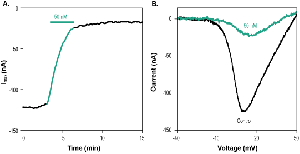 A potent, reversible N-type (CaV2.2) and irreversible P/Q-type (CaV2.1) voltage-gated calcium channel blocker
- Product Code: STC-160
- Applications: Electrophysiology
- MW: 2739 Da
-
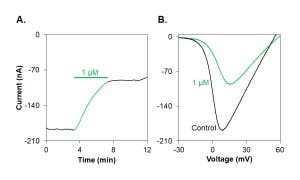 A potent and selective blocker of neuronal N-type (CaV2.2) calcium channels
- Product Code: STC-150
- Short Description: A potent and selective blocker of neuronal N-type (CaV2.2) calcium channels
- Applications: Electrophysiology
- MW: 3607 Da
-
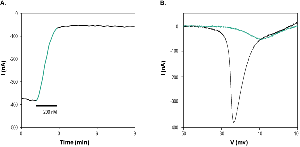 A potent blocker of central nervous system voltage-gated Na+ channels
- Product Code: STC-100
- Short Description: A potent blocker of central nervous system voltage-gated Na+ channels
- Applications: Electrophysiology
- MW: 4092.7 Da
-
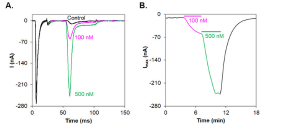 A potent and selective activator of NaV1.6 channels
- Product Code: STC-060
- Short Description: A potent and selective activator of NaV1.6 channels
- Applications: Electrophysiology
- MW: 7588.6 Da
-
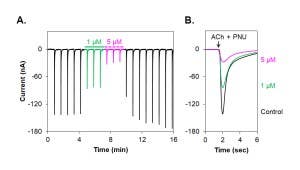 A potent antagonist of α9α10 nAChRs that also inhibits N-type (CaV2.2) calcium channels via GABA(B) receptor activation
- Product Code: STC-010
- Short Description: A potent antagonist of α9α10 nAChRs that also inhibits N-type (CaV2.2) calcium channels via GABA(B) receptor activation
- Applications: Electrophysiology
- MW: 1571 Da
Loading...