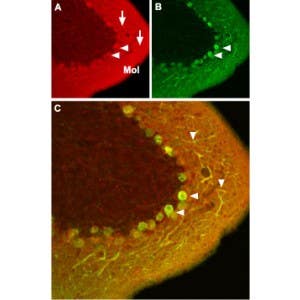
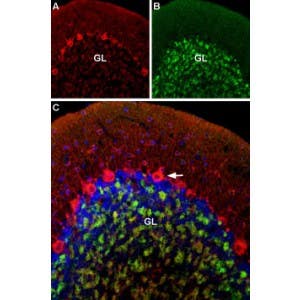
-
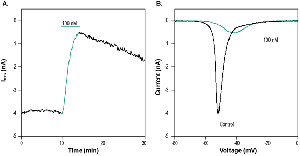
 A potent and selective blocker of the neuronal NaV1.7 voltage-gated sodium channels
- Product Code: STH-101
- Short Description: A potent and selective blocker of the neuronal NaV1.7 voltage-gated sodium channels
- Applications: Electrophysiology
- MW: 4088.8 Da
-
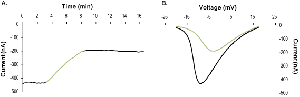 A potent and selective blocker of the neuronal NaV1.7 voltage-gated sodium channels
- Product Code: STH-100
- Short Description: A potent and selective blocker of the neuronal NaV1.7 voltage-gated sodium channels
- Applications: Electrophysiology
- CAS No.: 526224-73-7
- MW: 4106.8 Da
-
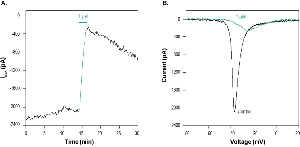 A potent gating modifier of tetrodotoxin-sensitive (TTX-s) neuronal voltage-gated sodium (NaV) channels that also blocks hERG1 potassium channels
- Product Code: STG-350
- Short Description: A potent gating modifier of tetrodotoxin-sensitive (TTX-s) neuronal voltage-gated sodium (NaV) channels that also blocks hERG1 potassium channels
- Applications: Electrophysiology
- MW: 3979.8 Da
-
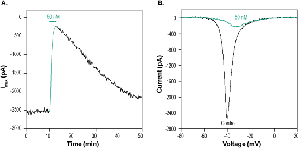 A potent gating modifier of tetrodotoxin-sensitive (TTX-s) neuronal voltage-gated sodium (NaV) channels that also blocks hERG1 potassium channels
- Product Code: STG-300
- Short Description: A potent gating modifier of tetrodotoxin-sensitive (TTX-s) neuronal voltage-gated sodium (NaV) channels that also blocks hERG1 potassium channels
- Applications: Electrophysiology
- MW: 3707.5 Da
-
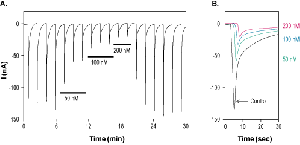 An antagonist of neuronal nAChRs (α9α10, α6-containing, and α3/β2) that also inhibits N-type (CaV2.2) calcium channels via GABA(B) receptor activation
- Product Code: STC-970
- Applications: Electrophysiology
- CAS No.: 866876-88-2
- MW: 1652 Da
-
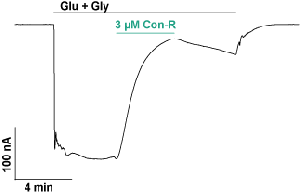 A potent, competitive antagonist of NMDARs containing either the GluN2A or GluN2B receptor subunit
- Product Code: STC-777
- Applications: Electrophysiology
- CAS No.: 202925-60-8
- MW: 3098 Da
-
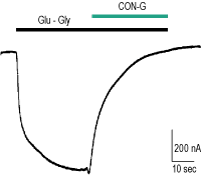 A selective and competitive antagonist of the GluN2B receptor
- Product Code: STC-666
- Short Description: A selective and competitive antagonist of the GluN2B receptor
- Applications: Electrophysiology
- CAS No.: 93438-65-4
- MW: 2264.2 Da
-
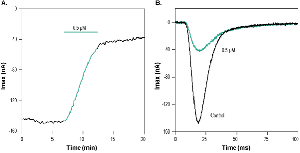 A potent blocker of skeletal muscle NaV1.4 and neuronal NaV1.2 sodium channels, which also inhibits the α3/β2 nAChR
- Product Code: STC-640
- Applications: Electrophysiology
- MW: 2376 Da
-
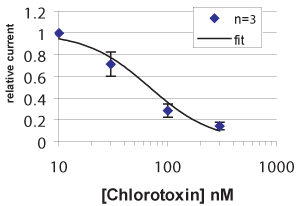 A potent scorpion toxin that preferentially binds to tumor cells by targeting multiple receptors including chloride channels,MMP-2, and Neuropilin-1
- Product Code: STC-460
- Applications: Cell-Based Assays, Electrophysiology, Calcium imaging assay
- CAS No.: 163515-35-3
- MW: 3995.8 Da
-
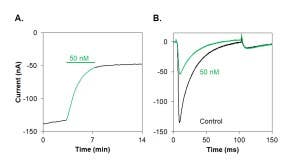 A potent blocker of multiple voltage-gated sodium NaV channels, showing highest affinity for the skeletal muscle NaV1.4 subtype
- Product Code: STC-130
- Applications: Electrophysiology
- MW: 2437 Da
Loading...