-
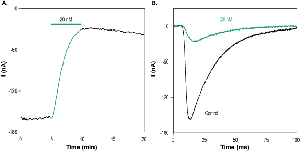
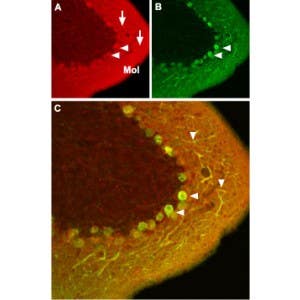
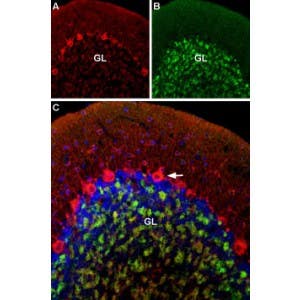
 A potent and selective blocker of skeletal muscle NaV1.4 voltage-gated sodium channels
- Product Code: STC-690
- Short Description: A potent and selective blocker of skeletal muscle NaV1.4 voltage-gated sodium channels
- Applications: Electrophysiology
- MW: 3006 Da
-
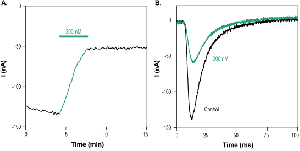 A potent blocker of neuronal NaV1.2 voltage-gated sodium channels that also inhibits NaV1.1, NaV1.4, NaV1.5 and NaV1.7 channels
- Product Code: STC-680
- Applications: Electrophysiology
- MW: 4044.6 Da
-
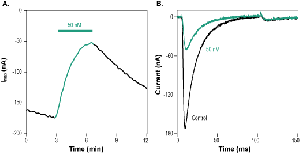 A potent blocker of the skeletal muscle NaV1.4 channel, with moderate activity on neuronal NaV1.1, NaV1.2, and NaV1.6 channels
- Product Code: STC-645
- Applications: Electrophysiology
- MW: 2271.7 Da
-
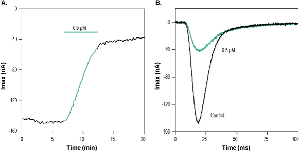 A potent blocker of skeletal muscle NaV1.4 and neuronal NaV1.2 sodium channels, which also inhibits the α3/β2 nAChR
- Product Code: STC-640
- Applications: Electrophysiology
- MW: 2376 Da
-
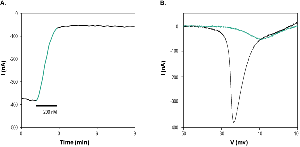 A potent blocker of central nervous system voltage-gated Na+ channels
- Product Code: STC-100
- Short Description: A potent blocker of central nervous system voltage-gated Na+ channels
- Applications: Electrophysiology
- MW: 4092.7 Da
-
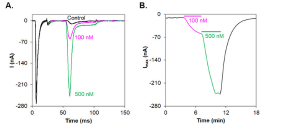 A potent and selective activator of NaV1.6 channels
- Product Code: STC-060
- Short Description: A potent and selective activator of NaV1.6 channels
- Applications: Electrophysiology
- MW: 7588.6 Da
-
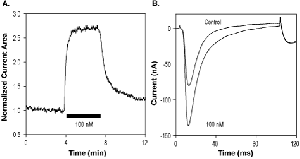 A blocker of KV potassium channels and a modulator that slows the inactivation of NaV sodium channels (particularly NaV1.7)
- Product Code: STB-400
- Short Description: A blocker of KV potassium channels and a modulator that slows the inactivation of NaV sodium channels (particularly NaV1.7)
- Applications: Electrophysiology
- CAS No.: 207621-38-3
- MW: 4708 Da
-
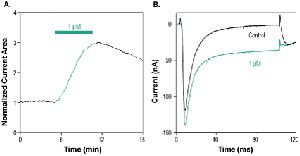 A potent activator/modulator that delays the fast inactivation of NaV1.5, NaV1.6, and NaV1.3 voltage-gated sodium channels
- Product Code: STB-100
- Applications: Electrophysiology
- MW: 7217 Da
-
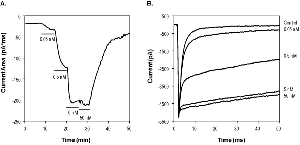 A potent activator of voltage-gated sodium NaV channels that primarily targets cardiac NaV1.5 channels by delaying their fast inactivation
- Product Code: STA-700
- Short Description: A potent activator of voltage-gated sodium NaV channels that primarily targets cardiac NaV1.5 channels by delaying their fast inactivation
- Applications: Electrophysiology
- CAS No.: 60748-45-0
- MW: 4935 Da
-
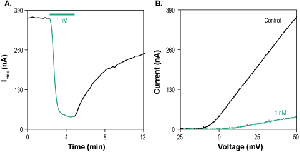 A potent blocker of KV1.3, KV1.1, and KV1.6 voltage-gated potassium channels
- Product Code: STA-420
- Applications: Electrophysiology
- CAS No.: 168147-41-9
- MW: 4091 Da
Loading...